Filter
654
Text search:
MEASURE
Evaluation
Tanzania
Featured
Recommendations
62
New Publications
171
Language
Document type
No document type
405
Studies & Reports
113
Guidelines
71
Manuals
27
Strategic & Response Plan
21
Training Material
9
Fact sheets
7
Situation Updates
1
Countries / Regions
Tanzania
70
Global
39
Kenya
32
Africa
27
Uganda
22
Malawi
18
Zambia
16
Ethiopia
14
Zimbabwe
10
Rwanda
10
Congo, Democratic Republic of
8
South Africa
8
Nigeria
7
Mozambique
7
East and Southern Africa
7
Liberia
6
Ghana
6
Nepal
6
Sierra Leone
5
India
5
West and Central Africa
5
Senegal
4
Haiti
4
Indonesia
3
Bangladesh
3
Namibia
3
Eswatini/ Swaziland
3
Botswana
3
Lesotho
3
Latin America and the Carribbean
3
Burkina Faso
2
Cameroon
2
Middle East and North Africa
2
Western and Central Europe
2
Southern Africa
2
Guinea
1
Mali
1
Côte d’Ivoire / Ivory Coast
1
Pakistan
1
Afghanistan
1
Lebanon
1
Cambodia
1
Benin
1
Brazil
1
Burundi
1
Ecuador
1
Angola
1
Madagascar
1
Myanmar / Burma
1
South–East Asia Region
1
Eastern Europe and Central Asia
1
Asia
1
Authors & Publishers
Publication Years
Category
Countries
222
Clinical Guidelines
59
Public Health
58
Women & Child Health
56
Key Resources
38
Capacity Building
19
Pharmacy & Technologies
10
Toolboxes
HIV
95
TB
38
Disability
33
NTDs
32
Global Health Education
22
Planetary Health
21
Malaria
18
Mental Health
17
Caregiver
15
Pharmacy
13
AMR
12
Health Financing Toolbox
8
Refugee
7
COVID-19
7
NCDs
7
Rapid Response
6
Ebola & Marburg
5
2.0 Rapid Response
5
Cholera
4
Zika
4
Conflict
3
Natural Hazards
3
Polio
2
Social Ethics
2
Specific Hazards
1
BMJ Open2018;8:e020423. doi:10.1136/bmjopen-2017-02042
EC has been increasingly used in the evaluation of maternal and child health programmes.12–15 For instance, Nesbitt et al compared crude coverage and EC of pregnant women with facility-based
...
The African Palliative Care Association is pleased to publish the first edition of Palliative Care Standards for Africa. The development of these standards was achieved through wide consultation with service beneficiaries and providers, and they have been developed to suit different levels of
...
This study, and similar studies in Kenya, Mozambique, Swaziland, Uganda, and Zambia is the outcome of close collaborative by a team in Swaziland, with technical and financial support from the UNAIDS Regional Support Team for Eastern and Southern Africa, UNAIDS Geneva, and the World Bank's Global HIV
...
This report is the first of its kind. It brings together various data sets to present the current status of hand hygiene, highlight lagging progress, and call governments and supporting agencies to action, offering numerous inspiring examples of change.
During the COVID-19 pandemic, hand hygiene
...
BACKGROUND: Growing political attention to antimicrobial resistance (AMR) offers a rare opportunity for achieving meaningful action. Many governments have developed national AMR action plans, but most have not yet implemented policy interventions to reduce antimicrobial overuse. A systematic evidenc
...
Malar J (2017) 16:174 DOI 10.1186/s12936-017-1808-x
Background: Since 2004, artemisinin-based combination therapy (ACT) has been the first-line treatment for uncomplicated malaria in Benin. In 2016, a medicine outlet survey was implemented to investigate the availability, price, and market share of
...
Front. Med., 27 November 2020 | https://doi.org/10.3389/fmed.2020.594728. The Checklist included eight actions for implementing rural pathways in LMICs: establishing community needs; policies and partners; exploring existing workers and scope; selecting health workers; education and training; workin
...
Rabies is a global public health problem with important socioeconomic impacts. Human rabies is preventable; almost all cases are transmitted through the bite of a rabid dog. Elimination of human rabies is possible. Technical support and tools are available. This report covers:
- Why investment ...
This document contains a series of desk reviews for the eight ENGAGE-TB priority countries supported by the Global Fund (DRC, Kenya, Indonesia, Mozambique, Myanmar, Nigeria, Pakistan and Tanzania). The document provides a situation assessment and ga
...
The Malaria Ministerial Conference, co-hosted by WHO and the Government of Cameroon on 6 March 2024, brought together more than 400 stakeholders, including Ministers of Health and senior representatives from the African countries hardest hit by malaria, global health leaders, scientists, civil socie
...
The Guidelines for the Use of the APCA African Palliative Outcome Scale (POS) has been developed by the APCA, in collaboration with
stakeholders, to help appropriately trained health practitioners and researchers across the region to utilise the APCA African POS in their work place (Powell et
...
Building on the WHO guidelines for disclosure to children up to age 12 in 2011, this implementation guidance provides evidence on existing interventions that support children and adolescents living with HIV in the process of disclosure. It includes interventions that focuses on safe disclosure, as w
...
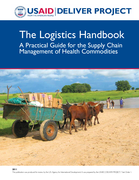
This resource offers practical guidance in managing the supply chain, with emphasis on health comodities. The handbook is particularly useful for program managers who design, manage, and assess logistics system for health program. The document includes detailed information about the design and imple
...
DHS Analytical Studies No. 39
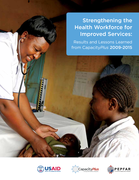
Results and Lessons Learned from CapacityPlus 2009-2015
A study set out to investigate the factors affecting the prevalence of the practice among cross-border communities in East Africa and the Horn of Africa and the extent to which people cross borders to practise or undergo FGM and the effects of the practice on the women and girls in those communities
...
A MANUAL FOR WASH IMPLEMENTERS, BOTSWANA
Sightsavers | Department for International Development | The International Trachoma Initiative | Children Without Worms | WaterAid | WASH Advocates | Center for Global Safe Water, Emory University | CARE USA
This document presents an evidence-informed Checklist for implementing rural pathways to train and support the rural
health workforce in low and middle income countries (LMIC). Rural areas are the most underserviced around the world.