
Filter
1043
Text search:
value
perceptions
Featured
73
289
Language
Document type
572
219
104
75
29
23
11
7
3
Countries
38
33
29
29
26
26
25
22
22
18
17
16
16
15
14
14
14
13
12
12
12
11
11
10
9
8
8
7
7
7
7
7
6
6
6
6
6
6
6
5
5
5
5
4
4
4
4
3
3
3
3
3
2
2
2
2
2
2
2
2
2
2
2
2
2
1
1
1
1
1
1
1
1
1
1
1
1
1
1
1
1
1
1
1
1
1
1
1
1
1
1
1
1
1
1
1
Authors & Publishers
Publication Years
Category
354
118
72
69
63
19
2
Toolboxes
98
76
64
56
49
42
36
25
24
23
19
17
17
17
16
15
11
11
10
8
8
8
6
5
2
1

Although Kenyans enjoy comparatively good health, the prevalence of
chronic disease is increasing and our ageing population is placing evergrowing pressures on the finite resources of our health system.
The Atlas of Palliative Care in the Eastern Mediterranean Region is the first systematic attempt to assess the status of resources, activities, and needs of palliative care in the region. It provides a comparative picture of the current state of palliative care in simple and clear graphics, utilisin
...
Global Health Science and Practice February 2022, https://doi.org/10.9745/GHSP-D-21-00237
Key Findings: Exposure to vaccination information from faith leaders and health facilities was associated with increased likelihood of vaccination uptake. The significant association between exposure to a
...
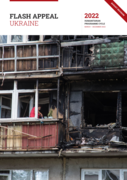
This document is the third iteration of the Flash Appeal for Ukraine, which was originally published on 1 March 2022 and revised once in mid-April. This updated Flash Appeal covers the period of 10 months following the onset of the war in Ukraine that started on 24 February 2022 (i.e., from March to
...

In 2018 and early 2019, the WHO Regional Office for Europe’s cultural contexts of health and well-being project worked alongside the University of Exeter’s WHO Collaborating Centre on Culture and Health, the Minsk Regional Centre for Psychiatry and Addiction, and the Institute of Mental Health o
...
The toolbox contains guidance and tools (sample templates) for data collection in M&E of PSS programmes. The tools can be adapted to PSS programme, depending upon target group, activities and scope. These are tools that may be useful for your programme and many are drawn from existing PSS programme
...

This report reviews and analyses the Affordable Medicines Programme, which was introduced in Ukraine in April 2017 to provide patients with improved access to 23 outpatient medicines for the treatment of chronic noncommunicable diseases. The evaluation combines both quantitative and qualitative anal
...

Working towards better COVID-19 outcomes in the WHO European Region.From the first COVID-19 cases in Europe reported on
24 January 2020, the pandemic reached 1 million cases
within 3 months, 10 million cases within 8 months, and
100 million cases in Europe alone within 2 years. Over
the course o
...
WHO's Health in the Green Economy sector briefings examine the health impacts of climate change mitigation strategies considered by the Intergovernmental Panel on Climate Change in their Fourth Assessment Report (Climate Change, 2007). Large, immediate health benefits from some climate change strate
...
Religion and Development 01/2019. Discussion Paper Series of the Research Programme on Religious Communities and Sustainable Development

This guideline covers road-traffic-related air pollution and its links to ill health. It aims to improve air quality and so prevent a range of health conditions and deaths.

Current Environmental Health Reports volume 7, pages 363–370 (2020)
Climate change has direct impacts on human health, but those impacts vary widely by location. Local health impacts depend on a large number of factors including specific regional climate impacts, demographics and human vulnerabil
...
Findings, interpretations and conclusions
expressed in this document are based on infor-
mation gathered by GIZ and its consultants,
partners and contributors from reliable sources.
The World Climate and Security Report (WCSR) 2021 from the Expert Group of the International
Military Council on Climate and Security is a global assessment of the security dimensions of a changing
climate and effective means to address them. It is intended to inform timely climate and security po
...

The World Climate and Security Report (WCSR) 2021 from the Expert Group of the International Military Council on Climate and Security is a global assessment of the security dimensions of a changing climate and effective means to address them. It is intended to inform timely climate and security poli
...
This brief summarizes the lessons learned across Europe on the redevelopment of contaminated sites as a part of urban planning and renewal. Specifically, it aims to provide information on the health and environmental impacts to be considered during site redevelopment projects, and to identify good p
...
This report, which involved input from across WaterAid, in particular from the Programme Support Unit (PSU) of WaterAid UK, includes case studies from a variety of countries, including Bangladesh, Burkina Faso, Eswatini, Ethiopia, Ghana, India and Nepal, each demonstrating what must be done now to i
...

