
Filter
2896
Text search:
vulnerability
Featured
207
791
Language
2734
73
71
47
44
38
22
18
10
6
4
3
3
2
2
2
2
2
2
2
2
2
2
1
1
1
1
1
1
1
1
1
1
1
1
1
1
1
1
1
1
1
1
1
1
1
1
1
1
1
Document type
1525
620
263
170
163
58
42
28
9
8
4
2
1
Countries
146
94
90
73
64
62
59
57
54
54
50
50
50
48
46
42
40
39
33
33
28
27
27
27
26
25
24
23
22
21
20
19
19
17
17
16
16
15
14
14
14
14
13
13
13
11
11
10
10
10
9
9
8
7
7
7
6
6
6
6
6
6
6
5
5
5
5
5
4
4
4
4
4
4
3
3
3
3
3
2
2
2
2
2
2
2
2
2
2
2
2
2
2
2
2
2
2
2
2
1
1
1
1
1
1
1
1
1
1
1
1
1
1
1
1
1
1
1
1
1
1
1
1
1
1
1
1
1
Authors & Publishers
273
91
65
60
55
54
48
42
42
40
31
27
26
24
22
20
19
18
18
17
17
16
16
16
16
14
14
14
13
13
13
13
12
12
12
12
10
10
10
10
9
9
9
9
9
9
9
8
8
8
8
8
8
8
8
7
7
7
7
7
7
7
7
6
6
6
6
6
6
6
6
6
6
5
5
5
5
5
5
5
5
5
5
5
5
5
5
5
5
5
5
5
5
5
4
4
4
4
4
4
4
4
4
4
4
4
4
4
4
4
4
4
4
4
4
4
4
4
4
4
4
4
4
4
4
4
4
4
4
4
4
4
4
4
3
3
3
3
3
3
3
3
3
3
3
3
3
3
3
3
3
3
3
3
3
3
3
3
3
3
3
3
3
3
3
3
3
3
3
3
3
3
3
3
3
3
3
3
3
3
3
3
3
3
3
3
3
3
3
3
3
3
3
3
3
3
3
3
3
3
3
3
3
3
3
3
3
3
3
3
3
3
2
2
2
2
2
2
2
2
2
2
2
2
2
2
2
2
2
2
2
2
2
2
2
2
2
2
2
2
2
2
2
2
2
2
2
2
2
2
2
2
2
2
2
2
2
2
2
2
2
2
2
2
2
2
2
2
2
2
2
2
2
2
2
2
2
2
2
2
2
2
2
2
2
2
2
2
2
2
2
2
2
2
2
2
2
2
2
2
2
2
2
2
2
2
2
2
2
2
2
2
2
2
2
2
2
2
2
2
2
2
2
2
2
2
2
2
2
2
2
2
2
2
2
2
2
2
2
2
2
2
2
2
2
2
2
2
2
2
2
2
2
2
2
2
2
2
2
2
2
2
2
2
2
2
2
2
2
2
2
2
2
2
2
2
2
2
2
2
2
1
1
1
1
1
1
1
1
1
1
1
1
1
1
1
1
1
1
1
1
1
1
1
1
1
1
1
1
1
1
1
1
1
1
1
1
1
1
1
1
1
1
1
1
1
1
1
1
1
1
1
1
1
1
1
1
1
1
1
1
1
1
1
1
1
1
1
1
1
1
1
1
1
1
1
1
1
1
1
1
1
1
1
1
1
1
1
1
1
1
1
1
1
1
1
1
1
1
1
1
1
1
1
1
1
1
1
1
1
1
1
1
1
1
1
1
1
1
1
1
1
1
1
1
1
1
1
1
1
1
1
1
1
1
1
1
1
1
1
1
1
1
1
1
1
1
1
1
1
1
1
1
1
1
1
1
1
1
1
1
1
1
1
1
1
1
1
1
1
1
1
1
1
1
1
1
1
1
1
1
1
1
1
1
1
1
1
1
1
1
1
1
1
1
1
1
1
1
1
1
1
1
1
1
1
1
1
1
1
1
1
1
1
1
1
1
1
1
1
1
1
1
1
1
1
1
1
1
1
1
1
1
1
1
1
1
1
1
1
1
1
1
1
1
1
1
1
1
1
1
1
1
1
1
1
1
1
1
1
1
1
1
1
1
1
1
1
1
1
1
1
1
1
1
1
1
1
1
1
1
1
1
1
1
1
1
1
1
1
1
1
1
1
1
1
1
1
1
1
1
1
1
1
1
1
1
1
1
1
1
1
1
1
1
1
1
1
1
1
1
1
1
1
1
1
1
1
1
1
1
1
1
1
1
1
1
1
1
1
1
1
1
1
1
1
1
1
1
1
1
1
1
1
1
1
1
1
1
1
1
1
1
1
1
1
1
1
1
1
1
1
1
1
1
1
1
1
1
1
1
1
1
1
1
1
1
1
1
1
1
1
1
1
1
1
1
1
1
1
1
1
1
1
1
1
1
1
1
1
1
1
1
1
1
1
1
1
1
1
1
1
1
1
1
1
1
1
1
1
1
1
1
1
1
1
1
1
1
1
1
1
1
1
1
1
1
1
1
1
1
1
1
1
1
1
1
1
1
1
1
1
1
1
1
1
1
1
1
1
1
1
1
1
1
1
1
1
1
1
1
1
1
1
1
1
1
1
1
1
1
1
1
1
1
1
1
1
1
1
1
1
1
1
1
1
1
1
1
1
1
1
1
1
1
1
1
1
1
1
1
1
1
1
1
1
1
1
1
1
1
1
1
1
1
1
1
1
1
1
1
1
1
1
1
1
1
1
1
1
1
1
1
1
1
1
1
1
1
1
1
1
1
1
1
1
1
1
1
1
1
1
1
1
1
1
1
1
1
1
1
1
1
1
1
1
1
1
1
1
1
1
1
1
1
1
1
1
1
1
1
1
1
1
1
1
1
1
1
1
1
1
1
1
1
1
1
1
1
1
1
1
1
1
1
1
1
1
1
1
1
1
1
1
1
1
1
1
1
1
1
1
1
1
1
1
1
1
1
1
1
1
1
1
1
1
1
1
1
1
1
1
1
1
1
1
1
1
1
1
1
1
1
1
1
1
1
1
1
1
1
1
1
1
1
1
1
1
1
1
1
1
1
1
1
1
1
1
1
1
1
1
1
1
1
1
1
1
1
1
1
1
1
1
1
1
1
1
1
1
1
1
1
1
1
1
1
1
1
1
1
1
1
1
1
1
1
1
1
1
1
1
1
1
1
1
1
1
1
1
1
1
1
1
1
1
1
1
1
1
1
1
1
1
1
1
1
1
1
1
1
1
1
1
1
1
1
1
1
1
1
1
1
1
1
1
1
1
1
1
1
1
1
1
1
1
1
1
1
1
1
1
1
1
1
1
1
1
1
1
1
1
1
1
1
1
1
1
1
1
1
1
1
1
1
1
1
1
1
1
1
1
1
1
1
1
1
1
1
1
1
1
1
1
1
1
1
1
1
1
1
1
1
1
1
1
1
1
1
1
1
1
1
1
1
1
1
1
1
1
1
1
1
1
1
1
1
1
1
1
1
1
1
1
1
1
1
1
1
1
1
1
1
1
1
1
1
1
1
1
1
1
1
1
1
1
1
1
1
1
1
1
1
1
1
1
1
1
1
1
1
1
1
1
1
1
1
1
1
1
1
1
1
1
1
1
1
1
1
1
1
1
1
1
1
1
1
1
1
1
1
1
1
1
1
1
1
1
1
1
1
1
1
1
1
1
1
1
1
1
1
1
1
1
1
1
1
1
1
1
1
1
1
1
1
1
1
1
1
1
1
1
1
1
1
1
1
1
1
1
1
1
1
1
1
1
1
1
1
1
1
1
1
1
1
1
1
1
1
1
1
1
1
1
1
1
1
1
1
1
1
1
1
1
1
1
1
1
1
1
1
1
1
1
1
1
1
1
1
1
1
1
1
1
1
1
1
1
1
1
1
1
1
1
1
1
1
1
1
1
1
1
1
1
1
1
1
1
1
1
1
1
1
1
1
1
1
1
1
1
1
1
1
1
1
1
1
1
1
1
1
1
1
1
1
1
1
1
1
1
1
1
1
1
1
1
1
1
1
1
1
1
1
1
1
1
1
1
1
1
1
1
1
1
1
1
1
1
1
1
1
1
1
1
1
1
1
1
1
1
1
1
1
1
1
1
1
1
1
1
1
1
1
1
1
1
1
1
1
1
1
1
1
1
1
1
1
1
1
1
1
1
1
1
1
1
1
1
1
1
1
1
1
1
1
1
1
1
1
1
1
1
1
1
1
1
1
1
1
1
1
1
1
1
1
1
1
1
1
1
1
1
1
1
1
1
1
1
1
1
1
1
1
1
1
1
1
1
1
1
1
1
1
1
1
1
1
1
1
1
1
1
1
1
1
1
1
1
1
1
1
1
1
1
1
1
1
1
1
1
1
1
1
1
1
1
1
1
1
1
1
1
1
1
1
1
1
1
1
1
1
1
1
1
1
1
1
1
1
1
1
1
1
1
1
1
1
1
1
1
1
1
1
1
1
1
1
1
1
1
1
1
1
1
1
1
1
1
1
1
1
1
1
1
1
1
1
1
1
1
1
1
1
1
1
1
1
1
1
1
1
1
1
1
1
1
1
1
1
1
1
1
1
1
1
1
1
1
1
1
1
1
1
1
1
1
1
1
1
1
1
1
1
1
1
1
1
1
1
1
1
1
1
1
1
1
1
1
1
1
1
1
1
1
1
1
1
1
1
1
1
1
1
1
1
1
1
1
1
1
1
1
1
1
1
1
1
1
1
1
1
1
1
1
1
1
1
1
1
1
1
1
1
1
1
1
1
1
1
1
1
1
1
1
1
1
1
1
1
1
1
1
1
1
1
1
1
1
1
1
1
1
1
1
1
1
1
1
1
1
1
1
1
1
1
1
1
1
1
1
1
1
1
1
1
1
1
1
1
1
1
1
1
1
1
1
1
1
1
1
1
1
1
1
1
1
1
1
1
1
1
1
1
1
1
1
1
1
1
1
1
1
1
1
1
1
1
1
1
1
1
1
1
1
1
1
1
1
1
1
1
1
1
1
1
1
1
1
1
1
1
1
1
1
1
1
1
1
1
1
1
1
1
1
1
1
1
1
1
1
1
1
1
1
1
1
1
1
1
1
1
1
1
1
1
1
1
1
1
1
1
1
1
1
1
1
1
1
1
1
1
1
1
1
1
1
1
1
1
1
1
1
1
1
1
1
1
1
1
1
1
1
1
1
1
1
1
1
1
1
1
1
1
1
1
1
1
1
1
1
1
1
1
1
1
1
1
1
1
1
1
1
1
1
1
1
1
1
1
1
1
1
1
1
1
1
1
1
1
1
1
1
1
1
1
1
1
1
1
1
1
1
1
1
1
1
1
1
1
1
1
1
1
1
1
1
1
1
1
1
1
1
1
1
1
1
1
1
1
1
1
1
1
1
1
1
1
1
1
1
1
1
1
1
1
1
1
1
1
1
1
1
1
1
1
1
1
1
1
1
1
1
1
1
1
1
1
1
1
1
1
1
1
1
1
1
1
1
1
1
1
1
1
1
1
1
1
1
1
1
1
1
1
1
1
1
1
1
1
1
1
1
1
1
1
1
1
1
1
1
1
1
1
1
1
1
1
1
1
1
1
1
1
1
1
1
1
1
1
1
1
1
1
1
1
1
1
1
1
1
1
1
1
1
1
1
1
1
1
1
1
1
1
1
1
1
1
1
1
1
1
1
1
1
1
1
1
1
1
1
1
1
1
1
1
1
1
1
1
1
1
1
1
1
1
1
1
1
1
1
1
1
1
1
1
1
1
1
1
1
1
1
1
1
1
1
1
1
1
1
1
1
1
1
1
1
1
1
1
1
1
1
1
1
1
1
1
1
1
1
1
1
1
1
1
1
1
1
1
1
1
1
1
1
1
1
1
1
1
1
1
1
1
1
1
1
1
1
1
1
1
1
1
1
1
1
1
1
1
1
1
1
1
1
1
1
1
1
1
1
1
1
1
1
1
1
1
1
1
1
1
1
1
1
1
1
1
1
1
1
1
1
1
1
1
1
1
1
1
1
1
1
1
1
1
1
1
1
1
1
1
1
1
1
1
1
1
1
1
1
1
1
1
1
1
1
1
1
1
1
1
1
1
1
1
1
1
1
1
1
1
1
1
1
1
1
1
1
1
1
1
1
1
1
1
1
1
1
1
1
1
1
1
1
1
1
1
1
1
1
1
1
1
1
1
Publication Years
1
955
1698
232
10
Category
1089
304
140
127
70
43
7
Toolboxes
267
258
254
157
146
120
107
106
100
84
75
68
43
38
33
31
24
23
15
14
14
14
13
11
9
4
2
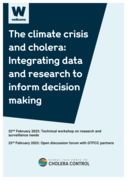
From February 22-23, 2023, the Wellcome Trust and the Global Task Force on Cholera Control (GTFCC) brought together researchers, decision makers, and public health implementers to participate in a virtual workshop focused on cholera and climate. Day 1 involved a technical workshop to identify key re
...
search themes as well as the challenges, gaps, and opportunities in using climate information for cholera decision making. Day 2 was an open forum focused on information-sharing and updates from countries and partners, including a call for stronger research and data on the connection between climate and cholera.
The overarching discussion outlined the complex relationship between climate and cholera. Materials from the event – including a recording of the Day 2 open forum, key findings/messages, and a final event report – can be accessed below
more

The Abuja declaration identifies that the prevention and control of HIV/AIDS, tuberculosis and related infectious diseases must come with additional financial resources. Therefore, African governments agreed on setting the target of allocating at least 15 per cent of each country’s annual budget
...
to the improvement of the health sector. Moreover, the declaration demands donor countries to assist by fulfilling the target of delivering official development assistance (ODA) in the amount of 0.7 per cent of gross national product (GNP).
more
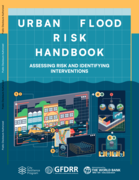
This Urban Flood Risk Handbook: Assessing Risk and Identifying Interventions is a roadmap for conducting an urban flood risk assessment in any city in the world. It includes practical guidance for a flood risk assessment project, covering the key hazard and risk modeling stages as well as the evalua
...
tion of different flood-mitigating infrastructure intervention options and management of the project. The Handbook has been developed based on lessons learned from implementing urban flood risk assessments around the world in a diversity of contexts. It is intended for a wide variety of practitioners: project managers, city officials, and anyone else interested in conducting a strategic study of a city's flood risk and developing potential solutions for it. We expect this Handbook tocontribute to the understanding of urban flood risk, make this specialized knowledge more accessible to a wider public, and support the process of building cities that are not only capable of withstanding floods but also provide safe, inclusive, and sustainable environments for all their residents.
more
Pledges at Global Fund Sixth Replenishment Conference. 9-10 October 2019 | Lyon, France
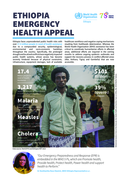
Ethiopia faces unprecedented public health risks with over 17.4 million people in need of health assistance due to a compounded security, epidemiological, environmental and socio-economic hardships throughout the country. Specifically, the prolonged drought and localized conflicts have negatively im
...
pacted public health systems, whose access has become severely hindered because of physical constraints, infrastructure, equipment damages, lack of available healthcare workforce and negative coping mechanisms resulting from livelihoods deterioration. Whereas the World Health Organization (WHO) assistance has been critical to coordinate humanitarian efforts in affected areas, additional efforts are required in the coming months to address ongoing epidemic outbreaks and support the recovery process in conflict-affected areas (Afar, Amhara, Tigray and Gambelia) that are now accessible.
more
Health facilities in the Region of the Americas frequently suffer the effects of health emergencies and disasters, which jeopardize their ability to provide services to the population. The STAR-H methodology helps staff responsible for health emergency and disaster risk management to identify and as
...
sess risks as part of strategic planning to improve facility preparedness. It is intended to help them develop, with a multi-hazard approach, a response framework with operating procedures to deal with hazards of any type, scale, or frequency; determine roles and responsibilities; facilitate the effective use of resources; undertake strategic planning exercises, and improve the preparedness of facilities to effectively respond to and recover from impacts. This methodology is designed for use in health facilities of any size and capacity, and makes it possible to generate historical reports and national or subnational risk profiles. This information can be used to develop an effective health emergency and disaster risk management program.
more
“All sectors of humanitarian response are critical to providing an adequate and holistic response for children who have survived different types of violence, exploitation, abuse and neglect. Following the immediate humanitarian response, all humanitarian sectors have an important contribution to m
...
ake to the effective rehabilitation and reintegration of child survivors. ‘Mainstreaming’ child protection, or ensuring that child protection considerations inform all aspects of humanitarian action, helps to maximize the child protection impacts of the work that all humanitarians do. ”
How to Use This briefing paper: This briefing paper is a quick reference for Plan International Child Protection in Emergencies (CPiE) staff on how to engage with other sectors operating in the emergency to ensure that child protection principles and considerations inform all aspects of humanitarian programming in other sectors. While there is child protection mainstreaming guidance for how to work with specific sectors (e.g. WASH, nutrition, distribution) this “All Sectors” briefing note can give CPiE staff the big picture of shared child protection mainstreaming messages that should be conveyed to all sectors. This briefing is aligned with the Minimum Standards for Child Protection in Humanitarian Action and the Sphere Standards, as well as Plan International staff feedback on what actions are the most vital for child protection mainstreaming in other sectors.
more

Reproductive health needs are particularly acute in countries affected by armed conflict. Reliable information
on aid investment for reproductive health in these countries is essential for improving the efficiency and effectiveness of
aid. The purpose of this study was to analyse official developm
...
ent assistance (ODA) for reproductive health activities in
conflict-affected countries from 2003 to 2006.
Methods and Findings: The Creditor Reporting Syst
more

World Humanitarian Data and Trends presents global- and country-level data-and-trend analysis about humanitarian
crises and assistance. Its purpose is to consolidate this information and present it in an accessible way, providing policymakers, researchers and humanitarian practitioners with an evid
...
ence base to support humanitarian policy decisions and provide context for operational decisions.
more

Pregnancy and childbirth during adolescence profoundly affects the lives of millions of girls worldwide, and is a leading cause of maternal mortality and morbidity, and infant and child mortality. Every year, an estimated 21 million girls aged 15–19 years old in low- and middle-income countries be
...
come pregnant, and approximately 12 million give birth.
For many adolescent girls, the ability to control their sexual lives remains limited. Long-standing gender inequalities and discrimination, marginalization, harmful social and gender norms, and denial of rights, compounded by poverty and violence, render them vulnerable to early pregnancy, HIV and other health threats. Lack of age-appropriate sexual and reproductive health and rights (SRHR) information and services create additional barriers to care and support; as a result, adolescent girls who become pregnant are much more likely to go on to have rapid repeated births.
more
Disease epidemiology has a deeper relationship with the dynamic nature of culture. Health behaviors in general are largely shaped by the cultural norms and customs in a society. A mere identification of a behavior could be only a layer on the outer sphere of a particular disease epidemiology and the
...
interventional efforts to counteract such behaviors through for example public health measures could be futile and volatile, unless the deeper cultural factors are addressed.
more

Comprehensive Primary Health Care has an important role in the primary and secondary prevention of several disease conditions, including non-communicable diseases which today contribute to over 60% of the mortality in India. The provision of Comprehensive primary health care reduces morbidity, disab
...
ility and mortality at much lower costs and significantly reduces the need for secondary and tertiary care. Estimates suggest that almost 52% of all conditions can be managed at the
primary care level.
In order to ensure comprehensive primary health care, close to where people live, Sub- Centres should be strengthened as Health and Wellness Centres (H&WC), staffed by appropriately trained primary health care team. The Medical officer of the Primary Health Centre would oversee the functioning of the SC/HWC that falls in that area.
Services include those that (i) can be delivered at the level of the household and outreach sites in the community by suitably trained frontline workers, (ii) those that are delivered by a team headed by a mid-level health provider, at the level of the Sub-Centre/Health and Wellness Centre and (iii) the referral support and continuity of care within the district health system in rural and urban areas. The package of services is in Box. States would need to either phase in these services or add on additional services based on state specific and local context.
more
Air pollution is one of the leading causes of health complications and mortality worldwide, especially affecting lower-income groups, who tend to be more exposed and vulnerable. This study documents the relationship between ambient air pollution exposure and poverty in 211 countries and territories.
...
Using the World Health Organization’s (WHO) 2021 revised fine particulate matter (PM2.5) thresholds, we show that globally, 7.3 billion people are directly exposed to unsafe average annual PM2.5 concentrations, 80 percent of whom live in low- and middle-income countries. Moreover, 716 million of the world’s lowest income people (living on less than $1.90 per day) live in areas with unsafe levels of air pollution, especially in Sub-Saharan Africa. Air pollution levels are particularly high in lower-middle-income countries, where economies tend to rely more heavily on polluting industries and technologies. These findings are based on high-resolution air pollution and population maps with global coverage, as well as subnational poverty estimates based on harmonized household surveys.
more

This review examines high-quality research evidence that synthesises the efects of extreme heat on human health in tropical
Africa. Web of Science (WoS) was used to identify research articles on the efects extreme heat, humidity, Wet-bulb Globe
Temperature (WBGT), apparent temperature, wind, Heat
...
Index, Humidex, Universal Thermal Climate Index (UTCI), heatwave, high temperature and hot climate on human health, human comfort, heat stress, heat rashes, and heat-related morbidity
and mortality
more
All India Disaster Mitigation Institute (AIDMI) has been a signatory to the Climate and Environment Charter since 2021 and has worked extensively in advancing the commitments to the Charter through its programs and operations, as well as an advocacy partner within India and regionally.
Malawi is a small and beautiful country in south-central Africa. It is divided into three administrative regions: south, central and north. The regions are further subdivided into 28 districts. The Southern Region is the most densely populated, while the Northern Region is the least populated.
Climate change is one of the biggest crises of our time. Climate threats range from higher temperatures, heavy rainfalls and floods, erratic precipitation, droughts, desertification, and land degradation. This has negative implications on the quality and quantity of natural resources, such as land a
...
nd water, agricultural productivity, rural livelihood options, food prices, and nutrition security, particularly when there is a lack of adaptation capacities and preparedness measures (Pacillo, 2024). Farmers are at the forefront of the climate crisis where their livelihoods are being jeopardized, and they are faced with many challenges to secure water, energy, and agriculture inputs, and maintain agriculture productivity. This heightens the risk of competition over natural resources and aggravates grievances and structural inequalities related to land rights and ownership as well as land access, management, and governance. In Africa, land-related issues are among the triggers of many violent disputes (Medina et al, 2024). For instance, communal violence in Nigeria and Sudan is tied to competition over scarce fertile land and poor resource governance (Bruce and Bourdeaux, 2013).
more

The guide aims to provide health and DRM practitioners, planners and policymakers across sectors with targeted information to help them strengthen national health systems and integrate the risks of disease outbreaks in national DRR strategies
The following are some of the principles and approache
...
s that have been based on lessons learned to date and may be considered to ensure effective all-hazards health EDRM, including prevention and preparedness for disease outbreaks, are addressed as part of the multihazard, multisectoral approach to developing or updating DRR strategies
more
BMC Infectious Diseases volume 23, Article number: 342 (2023).
Tuberculosis (TB) is among the leading causes of death globally. The disease has a huge burden in Namibia, with a case notification rate of at least 442 per 100,000. To date, Namibia is among the countries with the highest global TB bur
...
den, despite all efforts to reduce it. This study aimed to determine the factors associated with the unsuccessful treatment outcomes of the Directly Observed Therapy Short course (DOTS) programme in the Kunene and Oshana regions.
more
Long-term polio vaccine security – the timely, sustained, and uninterrupted supply of suitable types of affordable, quality-assured polio vaccines – is essential in the global effort to achieve and maintain a polio free world. However, fragmented approaches and short-term planning pose considera
...
ble challenges to securing long-term polio vaccine security.
This framework is designed to enhance the efforts of existing structures and workstreams within the Global Polio Eradication Initiative (GPEI) and other stakeholders by improving communication and coordination on vaccine security. Ensuring vaccine security is crucial for maintaining a timely, sustained, and uninterrupted supply of affordable, quality-assured polio vaccines in the global fight to achieve and sustain a polio-free world. However, challenges such as fragmented approaches, short-term planning, a dynamic policy environment, and a diverse product pipeline present significant risks to long-term vaccine security. This framework emphasizes the need for alignment and coordination across key polio operational domains, including Poliovirus Containment, Research and Development, and Vaccine Manufacturing and Supply. It also underscores the critical role of normative frameworks and policies in shaping long-term vaccine strategies that guide these operational areas. Additionally, it highlights the importance of cross-cutting elements such as financing and access to resources, along with the integration of communication, coordination, and advocacy efforts, as essential enablers for achieving vaccine security. To secure long-term vaccine supply, it is imperative to enhance alignment and strengthen coordinated efforts across workstreams and with stakeholders, including vaccine manufacturers.
Recognizing that vaccine security is an ongoing endeavor, requiring continuous monitoring and adaptation, this framework will undergo regular updates and revisions. Initially, the management of the framework will be carried out by the GPEI Vaccine Supply Group (VSG).
more
