
Filter
2393
Text search:
handling
Featured
290
647
Language
2310
53
46
28
23
21
11
9
4
4
4
3
3
2
2
2
2
2
2
2
1
1
1
1
1
1
1
1
1
1
1
1
1
1
1
1
1
1
1
1
1
1
1
1
1
1
Document type
1193
480
251
217
86
76
53
12
11
5
4
3
1
Countries
172
88
81
78
74
70
56
55
55
38
36
35
35
33
33
29
28
28
27
24
22
21
19
18
17
17
16
14
13
13
12
12
12
12
11
10
9
9
8
8
8
7
7
7
6
6
6
5
5
5
5
5
4
4
4
4
4
4
4
3
3
3
3
3
3
3
3
3
3
2
2
2
2
2
2
2
2
2
2
2
2
2
1
1
1
1
1
1
1
1
1
1
1
1
1
1
1
1
1
1
1
1
1
1
1
Authors & Publishers
339
132
68
63
54
46
41
34
23
19
18
18
17
16
15
14
13
12
12
12
11
11
11
10
10
10
9
9
9
9
9
9
9
9
9
8
8
8
7
7
7
7
7
7
7
7
6
6
6
6
6
6
6
6
6
6
6
6
5
5
5
5
5
5
5
5
5
5
5
5
5
5
5
5
5
5
5
4
4
4
4
4
4
4
4
4
4
4
4
4
4
4
4
4
4
4
4
4
4
4
4
4
4
3
3
3
3
3
3
3
3
3
3
3
3
3
3
3
3
3
3
3
3
3
3
3
3
3
3
3
3
3
3
3
3
3
3
3
3
3
3
3
3
3
3
3
3
3
3
3
3
3
3
3
3
3
3
3
3
3
3
3
3
3
3
3
2
2
2
2
2
2
2
2
2
2
2
2
2
2
2
2
2
2
2
2
2
2
2
2
2
2
2
2
2
2
2
2
2
2
2
2
2
2
2
2
2
2
2
2
2
2
2
2
2
2
2
2
2
2
2
2
2
2
2
2
2
2
2
2
2
2
2
2
2
2
2
2
2
2
2
2
2
2
2
2
2
2
2
2
2
2
2
2
2
2
2
2
2
2
2
2
2
2
2
2
2
2
2
2
2
2
2
2
2
2
2
2
2
2
2
2
2
2
2
2
2
2
2
2
2
2
2
2
2
2
2
2
2
2
2
2
2
2
2
2
2
2
2
2
2
2
2
2
2
2
2
2
2
2
2
2
2
2
2
2
2
2
2
2
2
2
2
2
2
2
1
1
1
1
1
1
1
1
1
1
1
1
1
1
1
1
1
1
1
1
1
1
1
1
1
1
1
1
1
1
1
1
1
1
1
1
1
1
1
1
1
1
1
1
1
1
1
1
1
1
1
1
1
1
1
1
1
1
1
1
1
1
1
1
1
1
1
1
1
1
1
1
1
1
1
1
1
1
1
1
1
1
1
1
1
1
1
1
1
1
1
1
1
1
1
1
1
1
1
1
1
1
1
1
1
1
1
1
1
1
1
1
1
1
1
1
1
1
1
1
1
1
1
1
1
1
1
1
1
1
1
1
1
1
1
1
1
1
1
1
1
1
1
1
1
1
1
1
1
1
1
1
1
1
1
1
1
1
1
1
1
1
1
1
1
1
1
1
1
1
1
1
1
1
1
1
1
1
1
1
1
1
1
1
1
1
1
1
1
1
1
1
1
1
1
1
1
1
1
1
1
1
1
1
1
1
1
1
1
1
1
1
1
1
1
1
1
1
1
1
1
1
1
1
1
1
1
1
1
1
1
1
1
1
1
1
1
1
1
1
1
1
1
1
1
1
1
1
1
1
1
1
1
1
1
1
1
1
1
1
1
1
1
1
1
1
1
1
1
1
1
1
1
1
1
1
1
1
1
1
1
1
1
1
1
1
1
1
1
1
1
1
1
1
1
1
1
1
1
1
1
1
1
1
1
1
1
1
1
1
1
1
1
1
1
1
1
1
1
1
1
1
1
1
1
1
1
1
1
1
1
1
1
1
1
1
1
1
1
1
1
1
1
1
1
1
1
1
1
1
1
1
1
1
1
1
1
1
1
1
1
1
1
1
1
1
1
1
1
1
1
1
1
1
1
1
1
1
1
1
1
1
1
1
1
1
1
1
1
1
1
1
1
1
1
1
1
1
1
1
1
1
1
1
1
1
1
1
1
1
1
1
1
1
1
1
1
1
1
1
1
1
1
1
1
1
1
1
1
1
1
1
1
1
1
1
1
1
1
1
1
1
1
1
1
1
1
1
1
1
1
1
1
1
1
1
1
1
1
1
1
1
1
1
1
1
1
1
1
1
1
1
1
1
1
1
1
1
1
1
1
1
1
1
1
1
1
1
1
1
1
1
1
1
1
1
1
1
1
1
1
1
1
1
1
1
1
1
1
1
1
1
1
1
1
1
1
1
1
1
1
1
1
1
1
1
1
1
1
1
1
1
1
1
1
1
1
1
1
1
1
1
1
1
1
1
1
1
1
1
1
1
1
1
1
1
1
1
1
1
1
1
1
1
1
1
1
1
1
1
1
1
1
1
1
1
1
1
1
1
1
1
1
1
1
1
1
1
1
1
1
1
1
1
1
1
1
1
1
1
1
1
1
1
1
1
1
1
1
1
1
1
1
1
1
1
1
1
1
1
1
1
1
1
1
1
1
1
1
1
1
1
1
1
1
1
1
1
1
1
1
1
1
1
1
1
1
1
1
1
1
1
1
1
1
1
1
1
1
1
1
1
1
1
1
1
1
1
1
1
1
1
1
1
1
1
1
1
1
1
1
1
1
1
1
1
1
1
1
1
1
1
1
1
1
1
1
1
1
1
1
1
1
1
1
1
1
1
1
1
1
1
1
1
1
1
1
1
1
1
1
1
1
1
1
1
1
1
1
1
1
1
1
1
1
1
1
1
1
1
1
1
1
1
1
1
1
1
1
1
1
1
1
1
1
1
1
1
1
1
1
1
1
1
1
1
1
1
1
1
1
1
1
1
1
1
1
1
1
1
1
1
1
1
1
1
1
1
1
1
1
1
1
1
1
1
1
1
1
1
1
1
1
1
1
1
1
1
1
1
1
1
1
1
1
1
1
1
1
1
1
1
1
1
1
1
1
1
1
1
1
1
1
1
1
1
1
1
1
1
1
1
1
1
1
1
1
1
1
1
1
1
1
1
1
1
1
1
1
1
1
1
1
1
1
1
1
1
1
1
1
1
1
1
1
1
1
1
1
1
1
1
1
1
1
1
1
1
1
1
1
1
1
1
1
1
1
1
1
1
1
1
1
1
1
1
1
1
1
1
1
1
1
1
1
1
1
1
1
1
1
1
1
1
1
1
1
1
1
1
1
1
1
1
1
1
1
1
1
1
1
1
1
1
1
1
1
1
1
1
1
1
1
1
1
1
1
1
1
1
1
1
1
1
1
1
1
1
1
1
1
1
1
1
1
1
1
1
1
1
1
1
1
1
1
1
1
1
1
1
1
1
1
1
1
1
1
1
1
1
1
1
1
1
1
1
1
1
1
1
1
1
1
1
1
1
1
1
1
1
1
1
1
1
1
1
1
1
1
1
1
1
1
1
1
1
1
1
1
1
1
1
1
1
1
1
1
1
1
1
1
1
1
1
1
1
1
1
1
1
1
1
1
1
1
1
1
1
1
1
1
1
1
1
1
1
1
1
1
1
1
1
1
1
1
1
1
1
1
1
1
1
1
1
1
1
1
1
1
1
1
1
1
1
1
1
1
1
1
1
1
1
1
1
1
1
1
1
1
1
1
1
1
1
1
1
1
1
1
1
1
1
1
1
1
1
1
1
1
1
1
1
1
1
1
1
1
1
1
1
1
1
1
1
1
1
1
1
1
1
1
1
1
1
1
1
1
1
1
1
1
1
1
1
1
1
1
1
1
1
1
1
1
1
1
1
1
1
1
1
1
1
1
1
1
1
1
1
1
1
1
1
1
1
1
1
1
1
1
1
1
1
1
1
1
1
1
1
1
1
1
1
1
1
1
1
1
1
1
1
1
1
1
1
1
1
1
1
1
1
1
1
1
1
1
1
1
1
1
1
1
1
1
1
1
1
1
1
1
1
1
1
1
1
1
1
1
1
1
1
1
1
1
1
1
1
1
1
1
1
1
1
1
1
1
1
1
1
1
1
1
1
1
1
1
1
1
1
1
1
1
1
1
1
1
1
1
1
1
1
1
1
1
1
1
1
1
1
1
1
1
1
1
1
1
1
1
1
1
1
1
1
1
1
1
1
1
1
1
1
1
1
1
1
1
1
1
1
1
1
1
1
1
1
1
1
1
1
1
1
1
1
1
1
1
1
1
1
1
1
1
1
1
1
1
1
1
1
1
1
1
1
1
1
1
1
1
1
1
1
1
1
1
1
1
1
1
1
1
1
1
1
1
1
1
1
1
1
1
1
1
1
1
1
1
1
1
1
1
1
1
1
1
1
1
1
1
1
1
1
1
1
1
1
1
1
1
1
1
1
1
1
1
1
1
1
1
1
1
1
1
1
1
1
1
1
Publication Years
713
1347
312
19
2
Category
914
262
164
120
108
82
74
2
Toolboxes
272
193
91
87
85
76
74
73
72
66
65
58
58
52
46
43
38
36
26
26
23
21
13
5
4
2
The objective of this Security Guideline for People with Albinism is to provide concrete and specific advice to people with albinism as well as those working with them, to remain safe within the context of where they live. It also provides easy to implement steps in
...
handling an incident and swiftly mobilize useful resources to try and return a victim back to safety.
more
The case is intended to be used as the basis for group work and class discussion rather than to illustrate either effective or ineffective handling of a Medical Peace Work situation. This is one of seven Medical Peace Work courses.

Laboratory biosafety guidance related to coronavirus disease (COVID-19): Interim guidance, 28 January 2021
recommended
The latest update (28 January 2021) includes the following addition and revision:
biosafety aspects for working with antigen-detecting rapid diagnostic test;
handling new variants of SARS-CoV-2 in the laboratory;
updated assay decon
...
tamination before disposal;
personal protective equipment (PPE) for specimen collection;
addressing chemical hazards and their safe disposal; and
the fourth edition of the WHO Laboratory Biosafety Manual (LBM4) is now available and the terminology in this guidance was aligned with the LBM4.
more
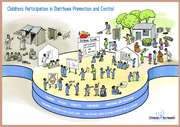
The document provides educational messages and practical guidance to prevent and manage diarrhoea, particularly in children. It emphasizes hygiene practices like proper handwashing, using latrines, and safe food handling. It also highlights the impo
...
rtance of breastfeeding, balanced nutrition, immunization, and the use of Oral Rehydration Solutions (ORS) and zinc for treating dehydration caused by diarrhoea. Developed alongside Save the Children programs in the Democratic Republic of the Congo, the material integrates health education into schools and communities, encouraging children to act as agents of change in promoting hygiene and health practices.
more
The latest update (28 January 2021) includes the following addition and revision:
biosafety aspects for working with antigen-detecting rapid diagnostic test;
handling new variants of SARS-CoV-2 in the laboratory;
updated assay decon
...
tamination before disposal;
personal protective equipment (PPE) for specimen collection;
addressing chemical hazards and their safe disposal; and
the fourth edition of the WHO Laboratory Biosafety Manual (LBM4) is now available and the terminology in this guidance was aligned with the LBM4.
more
The latest update (28 January 2021) includes the following addition and revision:
biosafety aspects for working with antigen-detecting rapid diagnostic test;
handling new variants of SARS-CoV-2 in the laboratory;
updated assay decon
...
tamination before disposal;
personal protective equipment (PPE) for specimen collection;
addressing chemical hazards and their safe disposal; and
the fourth edition of the WHO Laboratory Biosafety Manual (LBM4) is now available and the terminology in this guidance was aligned with the LBM4.
more
This document shall serve as the most comprehensive set of guidelines on the safe management of waste generated from heath care activities in the country. It incorporates the requirements of all Philippine laws and regulations governing HCWM and is designed for the use of individuals, public and pri
...
vate establishments, and other entities involved in segregation, collection, handling, storage, treatment,and disposal of waste generated from heath care activities.
more
Emergency medical teams (EMTs) play an important role in strengthening health service networks in terms of their strategies and tactics for planning mass vaccination programs, especially in remote or under-resourced areas or those overwhelmed by COVID-19. EMTs experience deploying in remote areas an
...
d handling operational challenges to ensure their response even under the most austere conditions will be of great support in facing the technical and logistical challenges to timely and equitable access to vaccines at the local level.
more
Healthcare waste management in the context of Ebola Virus Disease (EVD) presentation is part of the EVD IPC training material to HC IIs and pharmacies. All waste in holding areas should be considered infectious. Staff should always wear appropriate personal protective equipment (PPE) when
...
handling and treating hazardous waste.
more
Laboratory biosafety manual
recommended
4th edition
The WHO Laboratory Biosafety Manual (LBM) has been in broad use at all levels of clinical and public health laboratories, and other biomedical sectors globally, serving as a de facto global standard that presents best practices and sets trends in biosafety.
LBM encouraged countries t
...
o accept and implement basic concepts in biological safety and to develop national codes of practice for the safe handling of biological agents in laboratories within their geographical borders.
This fourth edition of the manual builds on the risk assessment framework introduced in the third edition. A thorough, evidence-based and transparent assessment of the risks allows safety measures to be balanced with the actual risk of working with biological agents on a case-by-case basis.
This novel evidence- and risk-based approach will allow optimised resource use and sustainable laboratory biosafety and biosecurity policies and practices that are relevant to their individual circumstances and priorities, enabling equitable access to clinical and public health laboratory tests and biomedical research opportunities without compromising safety.
more
Use of Convalescent Whole Blood or Plasma Collected from Patients Recovered from Ebola Virus Disease for Transfusion, as an Empirical Treatment during Outbreaks
World Health Organization
(2014)
This interim guidance to national health authorities and blood transfusion services outlines the steps required to collect convalescent whole blood (CWB) or plasma (CP) from Ebola virus disease (EVD) recovered patients for transfusion to patients with early EVD, as an empirical treatment modality.
...
Document contents:
Guidance on donor selection, screening, donation and handling of blood and plasma units;
guidance on transfusion of convalescent whole blood or plasma;
other considerations.
more
The document outlines comprehensive guidelines for managing cholera outbreaks in South Africa, focusing on prevention, diagnosis, treatment, and public health measures. It emphasizes the importance of rehydration therapy, sanitation, clean water access, and community involvement to control the sprea
...
d of the disease. It also provides protocols for handling outbreaks, including case identification, laboratory confirmation, and multi-sectoral coordination to reduce morbidity and mortality rates.
more

The National Guidelines for HIV-1 Viral Load Laboratory Testing support plans to scale up viral load (VL) testing to reach the 90-90-90 targets in India. This phased scale-up includes the setup of 70 additional VL testing laboratories nationally. These guidelines include laboratory design considerat
...
ions, a summary of VL technologies, and specimen collection and handling as well as transportation and storage guidance. Quality control and quality assurance requirements are described as well as laboratory safety issues. The guidelines also describe the VL laboratory network to be developed with supply chain management issues and commodities described. Annexes include laboratory registers and reporting forms.
more
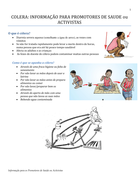
The PDF "COLERA: Informação para Promotores de Saúde" provides essential guidance for health promoters and activists on cholera. It explains that cholera is characterized by severe watery diarrhea, often resembling rice water, and sometimes vomiting. If not treated promptly, it can lead to death
...
within hours. The disease affects both adults and children and spreads through contaminated feces, poor hygiene, and unsafe water or food. To prevent cholera, the document emphasizes the importance of drinking treated or safe water, cooking food thoroughly and keeping it covered, washing hands with soap or ash after using the latrine and before handling food, and using proper latrines or sanitary facilities. It also highlights the role of vaccination, recommending the oral cholera vaccine "Shanchol," which requires two doses 2–3 weeks apart. The vaccine is suitable for individuals over one year old, including pregnant women, and has minimal side effects such as mild abdominal pain or diarrhea. This resource aims to empower health promoters with practical knowledge to prevent and manage cholera outbreaks effectively.
more

This document has been developed as a guide to allinstitutions producing health care waste in planning and implementation of interventions that will reduce mismanagement of hazardous waste in Zambia.The National Health-Care Waste Management Plan for 2015 to 2019 provides an overv
...
iew of the situation analysis, the proposed activities and the health care facility waste generating processes in Zambia and presents options for minimizing health-care waste generation through source reduction. The hazardous wastes generated by health care facilities are a challenge in Zambia as handling, storage, transportation and final disposal leaves much to be desired.
more

The Cholera Q&A Fact Sheet provides essential information about cholera, including its causes, symptoms, treatment, and prevention. Cholera is an acute diarrheal disease caused by Vibrio cholerae, which spreads through contaminated water and food. It leads to rapid dehydration and can be fatal if un
...
treated. Symptoms range from mild diarrhea to severe dehydration, shock, and death.
Treatment primarily involves Oral Rehydration Therapy (ORT) to replace lost fluids, and in severe cases, intravenous fluids. Antibiotics are generally not recommended for mass treatment. Prevention focuses on safe drinking water, sanitation, hand hygiene, and proper food handling.
The document also discusses cholera vaccination, with three WHO-approved oral vaccines available. However, vaccines should be used alongside other control measures. The Global Task Force on Cholera Control (GTFCC) aims to eliminate cholera transmission in 20 countries by 2030 through improved sanitation, vaccination, and rapid outbreak response.
more
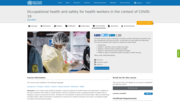
Health workers participating in pandemic response are exposed to many different occupational risks to health and safety. These include: COVID-19 infection, illness, and transmission to others; fatigue from working longer hours and heavy workload, insufficient sleep or rest, dehydration, and inadequa
...
te nutrition; musculoskeletal injury from handling of patients and heavy objects, prolonged work while using personal protective equipment which can cause heat stress, skin and mucosal damage; workplace violence and stigma, and a variety of mental health problems, emotional distress and occupational burn-out.
All health workers require knowledge and skills to protect themselves and others from the occupational risks they encounter, so that they can work safely and effectively. This course consists of five sections in response to these needs: Module 1: Infectious risks to health and safety
Module 2: Physical risks to health and safety
Module 3: Psychosocial risks to health and safety
Module 4: Basic occupational health and safety in health services.
This course is also available in the following languages: македонски - Português_ Spanish
more
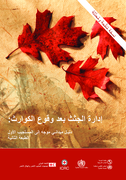
Management of Dead Bodies After Disasters: A Field Manual For First Responders. (Arabic Version)
recommended
Second edition. This revised edition incorporates experience gained in recent catastrophes, such as the 2013 Typhoon Haiyan in the Philippines, the 2014/15 Ebola epidemic in West Africa and the 2015 earthquake in Nepal. It also contains a number of annexes, which cover such topics as
...
handling the bodies of people who died from an infectious disease, burial planning and using DNA analysis in mass fatality events
more
Health Care Facilities (HCFs) are primarily responsible for management of the healthcare waste generated within the facilities, including activities undertaken by them in the community. The health care facilities, while generating the waste are responsible for segregation, collection, in-house trans
...
portation, pre-treatment of waste and storage of waste, before such waste is collected by Common Bio-medical Waste Treatment Facility(CBWTF) Operator. Thus, for proper management of the waste in the healthcare facilities the technical requirements of waste handling are needed to be understood and practiced by each category of the staff in accordance with the BMWM.
more

Despite its rich culture, great economic potential, high level of education and last but not least its sheer size – it is the largest state whose borders lie entirely within Europe and is 1.7 times the size of the Federal Republic of Germany – Ukraine seems far away in perception and awareness.
...
Publications on recent dramatic events, such as the Ukraine conflict or the Crimea crisis, have done little to change this. In fact, the armed conflict in the eastern Ukrainian oblasts of Donetsk and Luhansk, which has been ongoing since February 2014, is still a burdening feature of many political and economic difficulties destabilizing the country. News coverage of health issues in Ukraine has recently been dominated by highly critical reports on the handling of the Covid 19 pandemic. This pandemic exacerbated existing weaknesses in the Ukrainian health care system, but at least it did not create any new ones.
more
