
Filter
1886
Text search:
Personal
Protective
Equipment
Featured
321
405
Language
Document type
766
480
260
136
86
49
41
35
14
9
3
3
2
1
Countries
115
102
90
71
68
50
46
45
44
37
36
34
32
30
28
28
28
27
25
21
21
19
19
18
18
17
17
16
16
16
15
14
14
14
13
13
13
11
11
11
10
10
9
9
9
9
9
9
8
8
7
7
7
6
6
6
5
5
5
5
5
4
4
4
4
4
4
4
4
3
3
3
3
2
2
2
2
2
2
2
2
2
2
2
2
1
1
1
1
1
1
1
1
1
1
1
1
1
1
1
1
1
1
1
1
1
1
1
1
1
1
1
1
1
1
1
Authors & Publishers
Publication Years
Category
648
160
124
89
48
36
35
Toolboxes
542
299
70
69
65
57
52
46
46
35
34
32
30
29
28
26
25
22
17
14
12
12
8
8
1
1
1
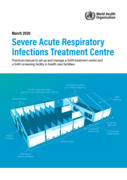
Severe acute respiratory infections treatment centre: practical manual to set up and manage a SARI treatment centre and a SARI screening facility in health care facilities
During theC OVID-19 crisis, the hospital observed a reduction of about 50% in inpatient visits for palliative care. Some patients postponed appointments given the risk of potential infection. Instead of in-person visits, weekly phone calls and remote follow-up were given priority.Palliative care is
...
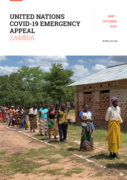
The Government of Republic of Zambia reported the first confirmed cases of COVID-19 on 18th March 2020. As of April 27th, 2020, there were 89 confirmed cases, three deaths and 42 recoveries. Confirmed cases are located in three provinces: Lusaka (83 cases), Copperbelt province (5 cases) and Central
...

It is targeted towards humanitarian settings and aims to complement other guidance on the management of the dead with a stronger focus on the practical realities faced when dealing with the dead in humanitarian settings. The guidance offers practical recommendations for the management of the bodies
...
Africa CDC will coordinate efforts to scale-up contact tracing by more than one million contact tracers.
It is therefore critical that these contact tracers are adequately trained and equipped to avoid being infected.
This document simplifies the WHO guidance on severe acute respiratory infection (SARI) treatment centres and is meant to be accessible to healthcare workers, policymakers and others who want
a quick overview of the key requirements for a COVID-19 isolation centre either within an existing facility
...
2020 was a year like no other. Amidst on-going humanitarian crises, largely fuelled by conflict and violence but also driven by the effects of climate change – such as the largest locust infestation in a generation – the world had to contend with a global pandemic. In less than one year (March-D
...

The International Organization for Migration (IOM) and partners from 27 humanitarian and development organisations and governments are appealing for USD 84 million to provide life-saving assistance to hundreds of thousands of African migrants and host community members affected by COVID-19 in the Ho
...
Six months in, the indirect impacts of COVID-19 take a toll on health, social and economic outcomes.
With about 24 million of Yemen’s 30 million people in need of some form of assistance, the United Nations calls Yemen the world’s worst humanitarian crisis. Cholera and other disease outbreaks are common, malnutrition is widespread, water is scarce, and the healthcare system is crumbling, with o
...
COVID-19 pandemic has taken the entire world by surprise, creating the greatest global catastrophe since WWII, impacting all spheres of our societies, including health, economy, social protection, as well as security, and human rights. The virus affects people and communities indiscriminately in all
...

This document, endorsed by the WHO Strategic Advisory Group of Experts on Immunization, provides guiding principles to support countries in their decision-making regarding provision or resumption of immunization services during severe disruptive events such as COVID-19, natural disasters or humanita
...
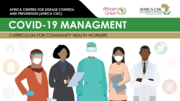
According to the World Health Organization (WHO), sub-Saharan Africa has only 3% of the world’s health workers to cater for 11% of the world population, bearing over 25% of the global disease burden (WHO, 2014). With a steady increase in reported cases on the African Continent, the current COVID-1
...
In an effort to limit transmission and achieve pandemic control on the continent, Africa CDC is proposing the following measures to be taken by all Member States:
Remain vigilant
Countries should adapt or adopt best practices, strategies, guidelines and recommendations proposed by the Africa CDC
...

MMWR Morb Mortal Wkly Rep. ePub: 4 December 2020. DOI: http://dx.doi.org/10.15585/mmwr.mm6949e2

More than 8 million children have access to distance learning thanks to partnerships with 322 radio stations and 23 TV channels
1.2 million community masks distributed
25 million people reached with key messages on how to prevent COVID-19 through mass media channels (300 radio stations and
...
