Filter
603
Text search:
Biomedical
Research
Institute
Featured
61
134
Language
Document type
306
132
80
39
26
8
6
3
2
Countries
38
32
29
22
19
15
15
14
14
13
13
13
11
10
9
9
7
7
6
6
6
5
5
5
4
4
4
3
3
3
3
3
3
3
3
3
2
2
2
2
2
1
1
1
1
1
1
1
1
1
1
1
1
1
1
1
1
1
1
1
1
1
1
1
1
1
1
1
1
1
1
1
1
Authors & Publishers
Publication Years
Category
223
61
40
23
15
12
3
Toolboxes
54
50
35
32
32
27
18
18
16
16
15
14
13
13
10
8
8
6
5
5
4
2
2
1

Building on the 2021 Interim guidance, this second version and update, incorporates the lessons and feedback from the hepatitis pilots that successfully demonstrated the feasibility of measuring hepatitis B and C impact targets to demonstrate elimination, whilst highlighting challenges caused by hig
...

Diabetes mellitus is one of the most common noncommunicable diseases worldwide. In the Eastern Mediterranean Region there has been a rapid increase in the incidence of diabetes mellitus and it is now the fourth leading cause of death. The increasing prevalence of diabetes mellitus, the emergence of
...

The document, "Sustainable Management of Radiotherapy Facilities and Equipment," by WHO and IAEA, provides guidelines for managing radiotherapy equipment and facilities to ensure effective and safe cancer treatment. It covers essential aspects like preventive and corrective maintenance, funding, inf
...

To identify and to assess factors enhancing or hindering the delivery of breast and cervical cancer screening services in Malawi with regard to accessibility, uptake, acceptability and effectiveness.
Systematic review of published scientific evidence. A search of six bibliographic databases and gre
...

The social protection landscape for people affected by TB in the WHO South-East Asia Region
The Councils share a common mandate of ensuring persons practising health related professions in Namibia are suitably qualified. Registration with the Councils is, thus, a pre-requisite for professional practice – and it is also a legal requirement too update personal details of all registered hea
...

The South African WHO Country Cooperation Strategy (CCS) 2023–2027 focuses on four key strategic priorities based on the country’s health needs and disease epidemiology, while also considering the need for building resilient health systems for UHC and health security in the post pandemic period.
...

Report of a virtual meeting 21–23 June 2022

This tool enables a rapid, systematic review of pharmacy curricula at the national or institutional level to evaluate their robustness in delivering the expected content and competencies. It can also assist institutions in designing strategies to strengthen AMR curricular content, and to facilitate
...
Автоматизированная технология амплификации нуклеиновых кислот в режиме реального времени для быстрого и одновременного выявления туберкулеза и устойчивости к р
...
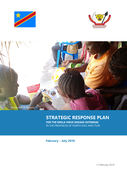
Since the beginning of December a significant increase in the incidence of new cases has been observed particularly along the corridor towards the large urban center of Butembo (health zones of Butembo and Katwa) and beyond in the zone of Kayna health center located about 150 km from Goma. In additi
...
Whole-genome sequencing (WGS) provides a vast amount of information and the highest possible resolution for pathogen subtyping. The application of WGS for global surveillance can provide information on the early emergence and spread of AMR and further inform timely policy development on AMR control.
...
Successful detonation of an improvised nuclear device (IND) would be a catastrophic event, causing an unprecedented number of injuries and lives lost, as well as economic, political, and social disruption. However, an effective medical response and an infrastructure prepared to protect itself from f
...

Snakebite envenoming affects millions of people worldwide annually and is a significant source of mortality. Preventing and treating the problem is complex and requires collaboration among the fields of public health, medicine, ecology, and laboratory science. After being removed from the category A
...
Policy statement.

The Ministry of Health has developed the first version of the Service Standards and Service Delivery Standards for the health sector in Uganda. The main objective is to provide a common understanding of what is expected by the public, service users and service providers in ensuring provision of cons
...

WHO operational handbook on tuberculosis Module 5: Management of tuberculosis in children and adolescents
recommended
The practical guidance in the operational handbook aims to inform the development or revision of national policies and related implementation guidance on the management of TB in children and adolescents under programmatic circumstances and at different levels of the health system. The operational ha
...