
Filter
813
Text search:
European
Respiratory
Society
Featured
94
132
Language
Document type
285
229
174
59
30
15
9
9
1
1
1
Countries
71
58
25
22
16
15
14
14
14
12
12
11
11
11
10
8
8
7
7
7
6
6
6
6
5
5
5
5
5
5
4
4
4
4
4
3
3
3
3
3
3
2
2
2
2
2
2
2
2
2
2
2
2
2
2
1
1
1
1
1
1
1
1
1
1
1
1
1
1
1
1
1
1
1
1
1
1
1
1
1
1
1
1
1
1
1
1
Authors & Publishers
Publication Years
Category
220
85
79
41
27
6
6
Toolboxes
140
95
69
59
56
43
32
31
24
22
19
18
13
12
10
9
8
8
5
4
3
3
2
1
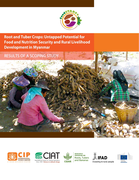
This scoping study done in Myanmar offers the chance for FoodSTART+ to explore prospects for future partnerships in another important country of the region. The study was done from October 2016 to February 2017 and included visits to selected major potato and cassava production areas to meet with re
...
Policy Guidance Brief 2
• The potential health risks from climate change include: increase of waterborne and vector-borne diseases, heat-related illnesses, injuries and deaths, food insecurity and increased malnutrition. The poor, women, children and the elderly, as well as communities living ...
• The potential health risks from climate change include: increase of waterborne and vector-borne diseases, heat-related illnesses, injuries and deaths, food insecurity and increased malnutrition. The poor, women, children and the elderly, as well as communities living ...
International Journal of Drug Policy 24 (2013) e91-98

It provides insight into WHO’s work that aims to improve the health of the people of the United Republic of Tanzania in collaboration with key stakeholders.
These guidelines have been developed specifically to address ethical issues of conducting research in children.
The global burden of disease due to mental disorders continues to rise, especially in low- and middle-income countries (LMIC). In addition to causing a large proportion of morbidity, mental disorders – especially severe mental disorders (SMD) – are linked with poorer health outcomes and increase
...
Progress towards targets of the Global action plan on dementia
Addressing comorbidity between mental disorders and major noncommunicable diseases (Russian Version)

Alcohol misuses
Substance use disorders
Chapter G.1

This report presents the most current data on four specific forms of violence – violent discipline and exposure to domestic abuse during early childhood; violence at school; violent deaths among adolescents; and sexual violence in childhood and adolescence. The statistics reveal that children expe
...

Cerebrum. 2016 Jul-Aug; 2016: cer-10-16.
Published online 2016 Jul 1.
Dialogues Clin Neurosci. 2017 Jun; 19(2): 93–107.
The present booklet is about gender-responsive substance abuse treatment services for women. It is part of the United Nations Office on Drugs and Crime (UNODC) project to develop tools to support the development and improvement of substance abuse treatment services, based on evidence from the litera
...

The purpose of this manual is to provide a resource for training to increase understanding of Health in All Policies (HiAP) by health and other professionals. It is anticipated that the material in this manual will form the basis of two- or three-day workshops, which will:
• Bu
...

The WHO Toolkit for the care and support of people affected by complications associated with Zika virus has been developed to serve as a model guide, with the goal of enhancing country preparedness for Zika virus outbreaks. The toolkit is intended to provide a systems approach involving public heal
...
This ten year global plan for measles and rubella outlines the strategy that needs to be fully implemented to achieve the measles and rubella goals endorsed by the World Health Assembly. The plan sets out the: vision, goals and targets for the 2011-2020 period, recommended strategies, guiding princi
...

This report considers how to integrate health into urban planning, investments, and policy decisions, so as to support the implementation and achievement of the goals and objectives of the New Urban Agenda.
