
Filter
56
Text search:
congenital
cataract
Featured
8
23
Language
Document type
43
5
3
3
1
1
Countries
8
4
3
3
3
2
2
2
1
1
1
1
1
1
1
1
1
1
1
Authors & Publishers
Publication Years
Category
33
8
5
2
1
Toolboxes
15
5
1
1
1
1

Report on Main Findings
The review encompasses three complementary components: 1) a review of published literature 2000-2015 on NCDs and their risk factors; 2) qualitative interviews with key actors engaged in NCD research in Myanmar; and 3) additional reviews of Myanmar ethical committee inqui ...
The review encompasses three complementary components: 1) a review of published literature 2000-2015 on NCDs and their risk factors; 2) qualitative interviews with key actors engaged in NCD research in Myanmar; and 3) additional reviews of Myanmar ethical committee inqui ...

Neurological, Psychiatric, and Developmental Disorders: Meeting the Challenge in the Developing World
Institute of Medicine (US) Committee on Nervous System Disorders in Developing Countries.
Washington (DC): National Academies Press (US); 2001.
This first edition of our national neonatal care clinical guidelines is an initiative that aims to ensure that all the neonates in the Kingdom of Eswatini are offered standard, best quality of care and the best possible start in life. The guidelines have been formulated from various global sources a
...

Glaucoma, a disease that gradually affects the optic nerve, is the second leading cause of vision loss globally, and it continues to pose a challenge to the eye health professionals.

Countries, partners, and donors are committed to the global elimination of blinding trachoma by 2020.
Achieving this public health milestone requires more than funding; it requires health personnel with the
right mix of skills, and well supported and managed health systems. Mass drug administratio
...
Glaucoma is a leading cause of irreversible blindness globally. In Malawi, glaucoma accounts for 15.8% of the blindness among people aged 50 years and above. Blindness from glaucoma is preventable with early detection and timely treatment. However, glaucoma management remains a challenge to eye care
...

Diabetes is a major public health problem. The rising incidence of Diabetes Type 2 is related to the effects of urbanization and unhealthy lifestyles. Research studies show that healthy eating and regular physical activity can prevent or delay the onset of Diabetes Type 2, even in high-risk individu
...
Rashtriya Bal Swasthya Karykram (RBSK). Operational Guidelines
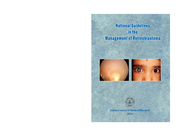
These Guidelines are intended to provide knowledge to the treating ophthalmologists, pediatricians, ocular oncologists, pediatric oncologists, and general physicians to arrive at an early diagnosis of retinoblastoma in the settings of district hospital, in private clinics and hospitals. The guidelin
...

The WHO Vision and eye screening implementation handbook (VESIH) offers a step-by-step guidance for conducting vision and eye screenings in community and primary care settings. The evidence-based interventions are drawn from the WHO Package of eye care interventions and developed with a focus on del
...
Available in: English, French, Chinese, Spanish, Russian, Arabic, Thai, Korean, Tajik, Vietnamese, Uzbek
http://www.who.int/disabilities/cbr/guidelines/en/

Disability Inclusive Development Toolkit
recommended
This toolkit is designed as a resource for CBM that can be used in a variety of ways: to support staff induction, team meetings, refresher days and training workshops. It can also be used as a tool for personal reflection and self-study. Tips for those intending to use it as a training resource are
...

Interim Guidance.
A number of medical problems have been reported in survivors, including mental health issues. Ebola virus may persist in some body fluids, including semen. Ebola survivors need comprehensive support for the medical and psychosocial challenges they face and also to minimize the ...
A number of medical problems have been reported in survivors, including mental health issues. Ebola virus may persist in some body fluids, including semen. Ebola survivors need comprehensive support for the medical and psychosocial challenges they face and also to minimize the ...

Guidebook on ICD10
recommended
3rd edition
