
Filter
2317
Text search:
Rapid
Gender
Analysis
Featured
217
697
Language
2263
51
36
33
30
16
13
8
4
4
4
3
2
2
2
2
1
1
1
1
1
1
1
1
1
1
1
Document type
1185
478
278
158
131
31
24
24
2
1
1
1
1
Countries
141
73
69
68
58
57
55
54
51
46
43
40
39
37
36
35
34
32
32
32
32
31
28
25
19
18
17
16
16
15
15
14
14
14
14
13
13
13
12
11
11
9
9
8
8
8
8
7
7
7
6
6
6
6
6
6
5
5
5
5
4
3
3
3
3
3
3
3
3
3
3
2
2
2
2
2
2
2
2
2
2
2
2
2
2
1
1
1
1
1
1
1
1
1
1
1
1
1
1
1
1
1
1
1
1
1
1
1
1
1
Authors & Publishers
299
66
61
61
53
46
44
32
26
20
19
17
17
15
15
14
14
13
13
12
12
11
11
11
11
10
10
10
10
10
10
9
9
9
9
8
8
8
8
8
8
7
7
7
7
7
6
6
6
6
5
5
5
5
5
5
5
5
5
5
5
5
5
5
5
5
5
5
4
4
4
4
4
4
4
4
4
4
4
4
4
4
4
4
4
4
4
4
4
4
4
4
4
4
3
3
3
3
3
3
3
3
3
3
3
3
3
3
3
3
3
3
3
3
3
3
3
3
3
3
3
3
3
3
3
3
3
3
3
3
3
3
3
3
3
3
3
3
3
3
3
3
3
3
3
3
3
3
3
3
3
2
2
2
2
2
2
2
2
2
2
2
2
2
2
2
2
2
2
2
2
2
2
2
2
2
2
2
2
2
2
2
2
2
2
2
2
2
2
2
2
2
2
2
2
2
2
2
2
2
2
2
2
2
2
2
2
2
2
2
2
2
2
2
2
2
2
2
2
2
2
2
2
2
2
2
2
2
2
2
2
2
2
2
2
2
2
2
2
2
2
2
2
2
2
2
2
2
2
2
2
2
2
2
2
2
2
2
2
2
2
2
2
2
2
2
2
2
2
2
2
2
2
2
2
2
2
2
2
2
2
2
2
2
2
2
2
2
2
2
2
2
2
2
2
2
2
2
2
2
2
2
1
1
1
1
1
1
1
1
1
1
1
1
1
1
1
1
1
1
1
1
1
1
1
1
1
1
1
1
1
1
1
1
1
1
1
1
1
1
1
1
1
1
1
1
1
1
1
1
1
1
1
1
1
1
1
1
1
1
1
1
1
1
1
1
1
1
1
1
1
1
1
1
1
1
1
1
1
1
1
1
1
1
1
1
1
1
1
1
1
1
1
1
1
1
1
1
1
1
1
1
1
1
1
1
1
1
1
1
1
1
1
1
1
1
1
1
1
1
1
1
1
1
1
1
1
1
1
1
1
1
1
1
1
1
1
1
1
1
1
1
1
1
1
1
1
1
1
1
1
1
1
1
1
1
1
1
1
1
1
1
1
1
1
1
1
1
1
1
1
1
1
1
1
1
1
1
1
1
1
1
1
1
1
1
1
1
1
1
1
1
1
1
1
1
1
1
1
1
1
1
1
1
1
1
1
1
1
1
1
1
1
1
1
1
1
1
1
1
1
1
1
1
1
1
1
1
1
1
1
1
1
1
1
1
1
1
1
1
1
1
1
1
1
1
1
1
1
1
1
1
1
1
1
1
1
1
1
1
1
1
1
1
1
1
1
1
1
1
1
1
1
1
1
1
1
1
1
1
1
1
1
1
1
1
1
1
1
1
1
1
1
1
1
1
1
1
1
1
1
1
1
1
1
1
1
1
1
1
1
1
1
1
1
1
1
1
1
1
1
1
1
1
1
1
1
1
1
1
1
1
1
1
1
1
1
1
1
1
1
1
1
1
1
1
1
1
1
1
1
1
1
1
1
1
1
1
1
1
1
1
1
1
1
1
1
1
1
1
1
1
1
1
1
1
1
1
1
1
1
1
1
1
1
1
1
1
1
1
1
1
1
1
1
1
1
1
1
1
1
1
1
1
1
1
1
1
1
1
1
1
1
1
1
1
1
1
1
1
1
1
1
1
1
1
1
1
1
1
1
1
1
1
1
1
1
1
1
1
1
1
1
1
1
1
1
1
1
1
1
1
1
1
1
1
1
1
1
1
1
1
1
1
1
1
1
1
1
1
1
1
1
1
1
1
1
1
1
1
1
1
1
1
1
1
1
1
1
1
1
1
1
1
1
1
1
1
1
1
1
1
1
1
1
1
1
1
1
1
1
1
1
1
1
1
1
1
1
1
1
1
1
1
1
1
1
1
1
1
1
1
1
1
1
1
1
1
1
1
1
1
1
1
1
1
1
1
1
1
1
1
1
1
1
1
1
1
1
1
1
1
1
1
1
1
1
1
1
1
1
1
1
1
1
1
1
1
1
1
1
1
1
1
1
1
1
1
1
1
1
1
1
1
1
1
1
1
1
1
1
1
1
1
1
1
1
1
1
1
1
1
1
1
1
1
1
1
1
1
1
1
1
1
1
1
1
1
1
1
1
1
1
1
1
1
1
1
1
1
1
1
1
1
1
1
1
1
1
1
1
1
1
1
1
1
1
1
1
1
1
1
1
1
1
1
1
1
1
1
1
1
1
1
1
1
1
1
1
1
1
1
1
1
1
1
1
1
1
1
1
1
1
1
1
1
1
1
1
1
1
1
1
1
1
1
1
1
1
1
1
1
1
1
1
1
1
1
1
1
1
1
1
1
1
1
1
1
1
1
1
1
1
1
1
1
1
1
1
1
1
1
1
1
1
1
1
1
1
1
1
1
1
1
1
1
1
1
1
1
1
1
1
1
1
1
1
1
1
1
1
1
1
1
1
1
1
1
1
1
1
1
1
1
1
1
1
1
1
1
1
1
1
1
1
1
1
1
1
1
1
1
1
1
1
1
1
1
1
1
1
1
1
1
1
1
1
1
1
1
1
1
1
1
1
1
1
1
1
1
1
1
1
1
1
1
1
1
1
1
1
1
1
1
1
1
1
1
1
1
1
1
1
1
1
1
1
1
1
1
1
1
1
1
1
1
1
1
1
1
1
1
1
1
1
1
1
1
1
1
1
1
1
1
1
1
1
1
1
1
1
1
1
1
1
1
1
1
1
1
1
1
1
1
1
1
1
1
1
1
1
1
1
1
1
1
1
1
1
1
1
1
1
1
1
1
1
1
1
1
1
1
1
1
1
1
1
1
1
1
1
1
1
1
1
1
1
1
1
1
1
1
1
1
1
1
1
1
1
1
1
1
1
1
1
1
1
1
1
1
1
1
1
1
1
1
1
1
1
1
1
1
1
1
1
1
1
1
1
1
1
1
1
1
1
1
1
1
1
1
1
1
1
1
1
1
1
1
1
1
1
1
1
1
1
1
1
1
1
1
1
1
1
1
1
1
1
1
1
1
1
1
1
1
1
1
1
1
1
1
1
1
1
1
1
1
1
1
1
1
1
1
1
1
1
1
1
1
1
1
1
1
1
1
1
1
1
1
1
1
1
1
1
1
1
1
1
1
1
1
1
1
1
1
1
1
1
1
1
1
1
1
1
1
1
1
1
1
1
1
1
1
1
1
1
1
1
1
1
1
1
1
1
1
1
1
1
1
1
1
1
1
1
1
1
1
1
1
1
1
1
1
1
1
1
1
1
1
1
1
1
1
1
1
1
1
1
1
1
1
1
1
1
1
1
1
1
1
1
1
1
1
1
1
1
1
1
1
1
1
1
1
1
1
1
1
1
1
1
1
1
1
1
1
1
1
1
1
1
1
1
1
1
1
1
1
1
1
1
1
1
1
1
1
1
1
1
1
1
1
1
1
1
1
1
1
1
1
1
1
1
1
1
1
1
1
1
1
1
1
1
1
1
1
1
1
1
1
1
1
1
1
1
1
1
1
1
1
1
1
1
1
1
1
1
1
1
1
1
1
1
1
1
1
1
1
1
1
1
1
1
1
1
1
1
1
1
1
1
1
1
1
1
1
1
1
1
1
1
1
1
1
1
1
1
1
1
1
1
1
1
1
1
1
1
1
1
1
1
1
1
1
1
1
1
1
1
1
1
1
1
1
1
1
1
1
1
1
1
1
1
1
1
1
1
1
1
1
1
1
1
1
1
1
1
1
1
1
1
1
1
1
1
1
1
1
1
1
1
1
1
1
1
1
1
1
1
1
1
1
1
1
1
1
1
1
1
1
1
1
1
1
1
1
1
1
1
1
1
1
1
1
1
1
1
1
1
1
1
1
1
1
1
1
1
1
1
1
1
1
1
1
1
1
1
1
1
1
1
1
1
1
1
1
1
1
1
1
1
1
1
1
1
1
1
1
1
1
1
1
1
1
1
1
1
1
1
1
1
1
1
1
1
1
1
1
1
1
1
1
1
1
1
1
1
1
1
1
1
1
1
1
1
1
1
1
1
1
1
1
1
1
1
1
1
1
1
1
1
1
1
1
1
1
1
1
1
1
1
1
1
1
1
1
1
1
1
1
1
1
1
1
1
1
1
1
1
1
1
1
1
1
1
1
1
1
1
1
1
1
1
1
1
1
1
1
1
1
1
1
1
1
1
1
1
1
1
1
1
1
1
1
1
1
1
1
1
1
1
1
1
1
1
1
1
1
1
1
1
1
1
1
1
1
1
1
1
1
1
1
1
1
1
Publication Years
839
1323
149
6
Category
954
247
116
115
114
31
4
Toolboxes
233
139
116
111
103
84
73
70
60
55
54
52
49
39
38
34
32
32
27
12
12
12
10
5
5
4
2
The publication aims to establish the rationale for inclusion and provides technical advice and tools for putting theory into practice. It is intended to be used as a reference during organizational and program/project development with a focus on gender
...
responsiveness and disability inclusion as well as a tool to support good practice in implementation.
This first part guides the reader through the process of assessing whether or not the organization is ready to change towards becoming a more inclusive organization. The second part introduces the ACAP framework, which sets up a way of approaching inclusion via focus on the areas: Access, Communication, Attitude and Participation. It then demonstrates how the framework can be applied to projects and programmes. The third part provides guidelines for the people who will guide organizations through the process of change towards becoming inclusive of persons from marginalized groups. more
This first part guides the reader through the process of assessing whether or not the organization is ready to change towards becoming a more inclusive organization. The second part introduces the ACAP framework, which sets up a way of approaching inclusion via focus on the areas: Access, Communication, Attitude and Participation. It then demonstrates how the framework can be applied to projects and programmes. The third part provides guidelines for the people who will guide organizations through the process of change towards becoming inclusive of persons from marginalized groups. more

Progress report and road map. Countries included in this report: Algeria, Afghanistan, Bahrain, Djibouti, Egypt, the Islamic Republic of Iran, Iraq, Jordan, Kuwait, Lebanon, Libya, Morocco, Oman, Pakistan, Qatar, State of Palestine, Saudi Arabia, Somalia, Sudan, the Syrian Arab Republic, Tunisia, Un
...
ited Arab Emirates, Yemen.
To support countries in the region to achieve triple elimination goals, this report collects and assesses national policies and key indicators on EMTCT efforts against WHO criteria for validation of the EMTCT of HIV, syphilis and HBV. Based on analysis and consultations with national policymakers, the report provides a Road Map for countries at different stages of readiness to follow towards triple elimination goals.
more
Prevention and Control of Cholera Uganda
recommended
Operational Guidelines for the national and district health workers & planners.
These new approaches include use of selective chemotherapy, Rapid Diagnostic Tests (RDTs), Zinc for treatment of cholera in children and complementary use of OCV
n 2015, Member States of the United Nations adopted the 2030 Agenda for Sustainable Development and its accompanying Sustainable Development Goals (SDGs), with the third goal of the agenda focusing on health – good health and well-being. This has the attainment of universal health coverage (UHC) a
...
s its umbrella target. Since then, the WHO Regional Office for Africa has been supporting countries plan, and monitor progress towards this goal. This report represents an analysis of the evidence so far countries are making towards this goal, and includes the effect COVID-19 has had on its attainment so far. It also makes recommendations on how countries can prioritize their health actions post COVID-19, in a manner that allows acceleration of progress towards UHC.
more
Medical Peace Work Textbook, 2nd edition, Course 3: War, weapons and conflict strategies
Salvage J, Rowson M, Melf K, Wilmen A
(2012)
C1
This course describes the health effects of war, weapons and strategies of violent conflict. Beginning with weapons of mass destruction it then moves on to other weapons and strategies of war such as the use of landmines and mass rape. The course concludes with a number of lessons which give an hist
...
orical and practical analysis of the response of health professional groups to war and militarisation.
more

2018 monitoring report: current status and strategic priorities
The report sets out the status of women’s, children’s and adolescents’ health, and on health systems and social and environmental determinants. Regional dashboards on 16 key indicators highlight where progress is being made o ... r lagging. There is progress overall, but not at the level required to achieve the 2030 goals. There are some areas where progress has stalled or is reversing, namely neonatal mortality, gender inequalities and health in humanitarian settings. more
The report sets out the status of women’s, children’s and adolescents’ health, and on health systems and social and environmental determinants. Regional dashboards on 16 key indicators highlight where progress is being made o ... r lagging. There is progress overall, but not at the level required to achieve the 2030 goals. There are some areas where progress has stalled or is reversing, namely neonatal mortality, gender inequalities and health in humanitarian settings. more

In 2014, GHS/NACP, with support from UNICEF and other partners, conducted a situation analysis on paediatric HIV care and treatment in Ghana. The purpose of this analysis was to identify the gaps wi
...
thin the current delivery of paediatric HIV care and support system and develop a road map for effective implementation of Early Infant Diagnosis (EID) and to increase paediatric antiretroviral therapy (ART) coverage. The analysis identified gaps such as lack of task shifting on ART services, low paediatric ART coverage, and poor linkage of ART, EID, and PMTCT services with other RCH - immunization and nutrition services.
In view of the findings of the analysis, it was recommended that an Acceleration Plan for Paediatric HIV Services be developed to address the barriers and bottlenecks identified during the assessment. At the current pace of paediatric HIV Services, it can be extrapolated that paediatric ART coverage will increase from 26% to only about 40% by 2020; Ghana will, therefore, fall short of the global target of 90-90-90 (UNAIDS concept). more
In view of the findings of the analysis, it was recommended that an Acceleration Plan for Paediatric HIV Services be developed to address the barriers and bottlenecks identified during the assessment. At the current pace of paediatric HIV Services, it can be extrapolated that paediatric ART coverage will increase from 26% to only about 40% by 2020; Ghana will, therefore, fall short of the global target of 90-90-90 (UNAIDS concept). more
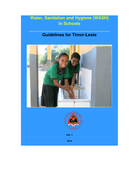
The development of water, sanitation and hygiene (WASH) in schools guidelines for TimorLeste is a landmark moment in our quest to make every school child-friendly – a place where every child can learn, play and grow with pride and dignity. The overarching goal is to improve health, boost education
...
achievement and promote gender equity in our schools.
The guidelines set clear levels of acceptable standards for water supply, provision of sanitation facilities and hygiene promotion in schools and provide a common framework and policy direction for all sub-sector actors. Therefore, all implementing agencies, managers, planners, architects, water and sanitation technicians, teaching staff, school directors, school boards, district WASH committees, local authorities and other relevant bodies should consult these guidelines, when making implementation plans. more
The guidelines set clear levels of acceptable standards for water supply, provision of sanitation facilities and hygiene promotion in schools and provide a common framework and policy direction for all sub-sector actors. Therefore, all implementing agencies, managers, planners, architects, water and sanitation technicians, teaching staff, school directors, school boards, district WASH committees, local authorities and other relevant bodies should consult these guidelines, when making implementation plans. more
EVALUATION REPORT | This evaluation is the first comprehensive global exercise to examine UNICEF’s programme response in protecting children in emergencies. Its purpose is to strengthen child protection programming by assessing performance in recent years and to draw lessons and recommendations th
...
at will influence ongoing and future programmes. It is expected that the findings of the evaluation will inform the roll-out of the Strategic Plan 2014-2017. The evaluation design includes country case studies analysing outcomes for children against the medium term strategic plan (MTSP, 2006-2013), the CCCs and selected evaluation questions. Twelve countries provided data for the analysis, four as case studies with country visits and standalone reports (Colombia, Democratic Republic of the Congo [DRC], Pakistan and South Sudan) and a further eight countries as desk studies (Afghanistan, Haiti, Myanmar, Philippines, Somalia, Sri Lanka, State of Palestine and Sudan). Four of the countries (Haiti, Myanmar, Pakistan and the Philippines) are disaster-affected and sudden-onset contexts while the remainder are primarily contexts of protracted conflict that include sudden-onset upsurges in violence.
more
In recent years Terre des Hommes Netherlands observed the steady rise of a new form of child sexual exploitation. One that is enabled and fuelled by rapid technological advances, increasing global connectivity, persisting poverty rates, and growing
...
disparity in the global distribution of resources. Terre des Hommes Netherlands received alarming signals from collaborating project partners from the Philippines that new commercial child exploitation trades are evolving and spreading parallel to rising global Internet access rates and developments in communications technology.
Webcam child sex tourism is evidently growing, closely related to child prostitution, child trafficking and child abuse. What is not clear however, are the psychological and social consequences of this new phenomenon. To date, no research has been done on the psychosocial consequences of webcam sex for children. The aim of this research is therefore to gain more knowledge on the psychosocial consequences of webcam child sex tourism for children and to give insight into the antecedent factors that play a role.
more

This casebook collects 64 case studies, each of which raises an important and difficult ethical issue connected with planning, reviewing, or conducting health-related research. The book’s purpose is to contribute to thoughtful analysis of these is
...
sues by researchers and members of research ethics committees (RECs, known in some places as ethical review committees or institutional review boards), particularly those involved with studies that are conducted or sponsored internationally.
more
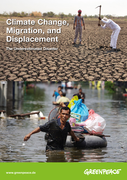
What at first glance appears to be simple causality – climate change leading to more and more migration – has triggered intense academic debate over the past ten years because the circumstances are complex. There is need for a thorough analysis
...
in the ground between denying the problem and asserting immediate causality. In international relations, migration induced by climate change and environmental degradation is increasingly recognized as a problem, whether in the framework of international climate policy, international migration policy, development cooperation, or international crisis management. But considering the dimension of these major challenges, only small steps have been taken so far. The scope of the problem continues to be underestimated. Climate change is jeopardizing the livelihoods of more and more people. It is a risk multiplier. Although understanding of the connection between climate change and migration has increased, many questions have yet to be answered. We need more knowledge to better support the people affected.
more

Thirty years ago, the United Nations General Assembly adopted the Convention on the Rights of the Child at a moment of rapid global change marked by the end of apartheid, the fall of the Berlin Wall and the birth of the World Wide Web. These develop
...
ments and more brought momentous and lasting evolution, as well as a sense of renewal and hope for future generations. In a reflection of that hopeful spirit, the Convention has since become the most widely ratified human rights treaty in history.
more

How should humanitarian organisations prepare and respond to COVID-19 in humanitarian settings in low- and middle-income countries?
This Rapid Learning Review outlines 14 actions, insights and ideas for humanitarian actors to consider in their CO
...
VID-19 responses. It summarises and synthesises the best available knowledge and guidance for developing a health response to COVID-19 in low- and middle-income settings as at April 2020
The paper, supported by the UN Under-Secretary-General for Humanitarian Affairs and Emergency Relief Coordinator Mark Lowcock, will be updated throughout 2020 to reflect emerging knowledge and evidence on the most effective approaches to respond to the COVID-19 Pandemic.
more
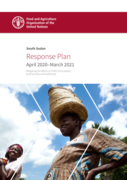
Previous crises, such as the Ebola virus disease (EVD) in West Africa in 2014, indicate the direct impact movement restrictions and disease containment efforts have on food availability, access, utilization and violence – particularly gender-based
...
violence (GBV). The importance of maintaining and upscaling food security interventions for the most vulnerable populations, alongside the health sector’s efforts to avert disease spread, is therefore undeniable. The COVID-19 outbreak in South Sudan threatens to paralyze an already fragile food system and negatively impact more than 6.5 million people in South Sudan who remain vulnerable. At the same time, the core national capacities for prevention, preparedness and response for public health events is limited, and the healthcare system has been weakened by years of conflict, poor governance and low investments.
more
Namibia is no exception to the growingglobal concern on the increasing burden of NCDs. Namibia is an upper middle income country with fast economic growth since independence in 1990. The country is bearing the double burden of communicable and noncommunicable diseases and
...
rapid urbanization. There is also high income inequality among the population.
more

The COVID-19 pandemic has exacerbated and added yet another layer of vulnerability to an already dire web of vulnerabilities of girls in the African continent, which constitute about 49% of the total child population. Critically, gender equality and
...
girls’ multidimensional vulnerability have been accentuated to an unprecedented level. The pandemic has triggered major concerns about the potential reversal of the strides achieved over the years towards gender equality and human development in Africa.
more

Measuring progress towards universal health coverage.
This sixth edition of Health at a Glance Asia/Pacific presents a set of key indicators of health status, the determinants of health, health care resources and utilisation, health care expenditure and financing and quality of care across 27 Asia-
...
Pacific countries and territories. It also provides a series of dashboards to compare performance across countries and territories, and a thematic analysis on the impact of the COVID-19 outbreak on Asia/Pacific health systems.
more
WHO Living guideline: Drugs to prevent COVID-19
recommended
Interim guidance 2 march 2021
Current use of drugs to prevent COVID-19 is variable, reflecting large-scale uncertainty. Numerous randomized trials of many different drugs are underway to inform practice. This first version of the Drugs to prevent COVID-19: A WHO living guideline contains new inform
...
ation and a recommendation on hydroxychloroquine. It follows the publication of six trials synthesized in a living network meta-analysis (NMA).
more
This study aimed to analyze the geographical distribution of coronavirus disease 2019 (COVID-19) and to identify high-risk areas in space and time for the occurrence of cases and deaths in the indigenous population of Brazil. This is an ecological study carried out between 24 March and 26 October 20
...
20 whose units of analysis were the Special Indigenous Sanitary Districts. The Getis-Ord General G and Getis-Ord Gi* techniques were used to verify the spatial association of the phenomena and a retrospective space–time scan was performed. There were 32 041 confirmed cases of COVID-19 and 471 deaths. The non-randomness of cases (z score = 5.40; P < 0.001) and deaths (z score = 3.83; P < 0.001) were confirmed. Hotspots were identified for cases and deaths in the north and midwest regions of Brazil. Sixteen high-risk space–time clusters were identified for the occurrence of cases with a higher RR = 21.23 (P < 0.001) and four risk clusters for deaths with a higher RR = 80.33 (P < 0.001). These clusters were identified from 22 May and were active until 10 October 2020. The results indicate critical areas in the indigenous territories of Brazil and contribute to better directing the actions of control of COVID-19 in this population.
more
