
Filter
251
Text search:
GIZ
Featured
18
75
Language
Document type
126
52
30
18
10
4
4
4
2
1
Countries
16
12
11
11
9
8
7
7
7
6
5
5
5
5
4
4
4
4
4
4
4
4
4
4
3
3
3
3
3
3
3
3
2
2
2
2
2
2
2
2
2
2
2
1
1
1
1
1
1
1
1
1
1
1
1
1
1
1
1
1
1
1
1
Authors & Publishers
Publication Years
Category
130
20
12
9
4
3
1
1
Toolboxes
28
22
18
9
7
6
6
6
5
5
5
5
4
4
2
2
2
2
1
1
1


The Quality Criteria for Health National Adaptation Plans (HNAPs) presents examples of good practice in HNAP development to assist countries in developing a comprehensive, feasible and implementable plan. The criteria are also intended to guide countries in setting the foundation for a long-term ite
...

Résumé des résultats de l’Etude
(1) Situation du secteur de la santé en Guinée
(2) Politiques et plans de santé en Guinée
(3) Formation de personnels de santé
(4) Infrastructures et équipements sanitaires
(5) Aide des partenaires au développement
(6) Problèmes pour le renfor
...

The discourse on climate change and migration has shifted from labelling migration merely as a consequence of climate impacts, to describing it as a form of human adaptation. This article explores the adaptation framing of the climate change and migration nexus and highlights its shortcomings and ad
...
BMZ Papier 1
Gesundheit ist nicht nur Voraussetzung für ein selbstbestimmtes Leben, sondern auch essenziell für die gesellschaftliche und nachhaltige wirtschaftliche Entwicklung in unseren Partnerländern. Die gegenwärtige COVID-19 Pandemie zeigt, welche Gefahren von Infektionskrankheiten ausge
...
Primary health care offers a cost–effective route to achieving universal health coverage (UHC). However, primary health-care systems are weak in many low- and middle-income countries and often fail to provide comprehensive, people-centred, integrated care. We analysed the primar
...

The National Guideline for Neonatal Care and Establishment of Neonatal Care Unit aims to provide health workers with all basics and necessary knowledge and skills to provide appropriate care at the most vulnerable period in a newborn’s life. This guideline will be available to all health facilitie
...
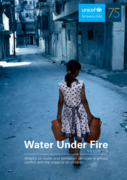
In many conflicts around the world, more children die from diseases linked to unsafe water than from direct violence. UNICEF is releasing Water Under Fire volume 3, a report that highlights the issues children face in accessing water in times of war. The report demonstrates the humanitarian impact o
...

The coronavirus disease 2019 (COVID-19) pandemic has created a global and gendered crisis that is compounding existing inequalities and disproportionately affecting girls and women. Emerging evidence from the COVID-19 crisis in 2020 shows school closures, disruptions in essential services and rising
...
The coronavirus disease 2019 (COVID-19) pandemic has created a global and gendered crisis that is compounding existing inequalities and disproportionately affecting girls and women. Emerging evidence from the COVID-19 crisis in 2020 shows school closures, disruptions in essential services and rising
...

This report sets out the compelling case for repurposing harmful agricultural producer support to reverse this situation, by optimizing the use of scarce public resources, strengthening economic recovery from the COVID-19 pandemic, and ultimately driving a food systems transformation that can suppor
...
English Analysis on World about Agriculture, Climate Change and Environment and more; published on 29 Sep 2021 by FAO and NEPAD

Training Modules for climate change and Health - WHO

The Kenyan Health Sector has been playing a critical role in
providing health care services in response to the population
needs in line with the Kenya Health Policy, 2014-2030’s goal
of attaining the highest possible health standards in a manner
responsive to the population needs.
A summary of what we know
Known avoidable environmental risks to health cause at least 12.6 million deaths every year, and account for about one quarter of the global burden of disease (2016 data) (1). Air pollution alone causes about 7 million
deaths a year, placing it among the top global risks to health (2). Global envir
...

Energy use in the home is a vital and ubiquitous feature of human society. Energy
is used for a wide variety of purposes, including cooking, space heating, light-
ing, small-scale income generation, various household tasks, and entertainment.
Discussions about climate change often focus on the future, but millions of children are experiencing its devastating impacts now. The scale of the crisis is huge, and growing fast. It is children that will bear the brunt of climate change, yet its impact on them is understudied, their voices are no
...
