
Filter
159
Text search:
Wheelchair
service
personnel
Featured
19
31
Language
Document type
131
10
10
5
2
1
Countries
9
9
4
4
3
3
3
2
2
2
2
2
2
1
1
1
1
1
1
1
1
1
1
1
1
1
1
Authors & Publishers
Publication Years
Category
46
15
9
4
3
3
Toolboxes
98
5
5
4
3
3
2
2
2
2
2
1
1
1
1
1
The purpose of the Participant’s Workbook is to develop the skills and knowledge of personnel involved in wheelchair service delivery. The Partic
...
The main purpose of the training package is to develop the minimum skills and knowledge required by personnel involved in wheelchair service delive
...
Wheelchair Service Training Package - Basic level | The main purpose of the training package is to develop the minimum skills and knowledge required by pe
...
Following the release of the Wheelchair Service Training Package – Basic level (WSTP-B), WHO in partnership with United States Agency for International Development (USAID) has developed the
...
Wheelchair Service Training Package - Basic level | The main purpose of the training package is to develop the minimum skills and knowledge required by pe
...
Wheelchair Service Training Package - Basic level | The main purpose of the training package is to develop the minimum skills and knowledge required by pe
...
The main purpose of the training package is to develop the minimum skills and knowledge required by personnel involved in wheelchair service delive
...
The main purpose of the training package is to develop the minimum skills and knowledge required by personnel involved in wheelchair service delive
...
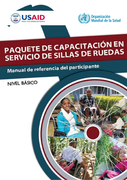
The main purpose of the training package is to develop the minimum skills and knowledge required by personnel involved in wheelchair service delive
...

WSTP-I is the second part of the WHO wheelchair service training package series and focusses more on addressing the needs of people who have severe difficulties in walking and moving around and als
...

Following the release of the Wheelchair Service Training Package – Basic level (WSTP-B), WHO in partnership with United States Agency for International Development (USAID) has developed the
...
WHO published and launched the third part of the Wheelchair Service Training Package (WSTP) series consisting of two sub-packages: the Wheelchair
...
WHO published and launched the third part of the Wheelchair Service Training Package (WSTP) series consisting of two sub-packages: the Wheelchair
...
WHO published and launched the third part of the Wheelchair Service Training Package (WSTP) series consisting of two sub-packages: the Wheelchair
...
Intermediate Level | Also available in French, Romanian and Chinese (http://www.who.int/disabilities/technology/wheelchairpackage/wstpintermediate/en/)

A Report of A survey study conducted to determine the demand, availability, quality of production, usage, and affordability of wheelchairs in Uganda.
Accessed Febr. 12,2015

Updated to Reflect the 2009 Medical Eligibility Criteria of the World Health Organization

The Integrated Management of Adolescent/Adult Illness (IMAI) approach
