
Filter
68
Text search:
Malaria
Atlas
Project
MAP
Featured
8
18
Language
Document type
35
14
6
6
3
3
1
Countries / Regions
7
5
4
4
3
3
3
3
3
3
3
3
3
3
2
2
2
2
2
2
2
2
1
1
1
1
1
1
1
1
1
1
1
1
1
1
1
1
1
1
1
1
Authors & Publishers
Publication Years
Category
31
7
4
2
1
1
Toolboxes
8
7
7
4
3
2
2
1
1
1
1
1
The Malaria Atlas Project (MAP) is a global research initiative that provides high-resolution, e
...
This paper is the first quantitative analysis of how the impact of extreme weather events, such as floods and cyclones, affects the malaria burden on the continent, as well as the implications of long-onset climate change. This research involved dev
...
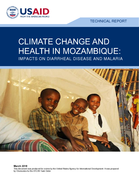
This report outlines the results of a scientific study of the impacts of weather, climate variability, and climate change on health in Mozambique, with a focus on diarrheal disease and malaria.

DHS Analytical Studies No. 39

The Atlas of health and climate is a product of this unique collaboration between the meteorological and public health communities. It provides sound scientific information on the connections between weather and climate and major health challenges.
...

The Ghana National Malaria Strategic Plan 2021–2025 aims to reduce malaria mortality by 90% and malaria cases by 50% (using 2019 as baseline) and
...
Barriers to the prompt and effective diagnosis and treatment of malaria exist at both the community and health facility level. Household surveys measure malaria case management at the population lev
...

The report examines financing in the battle against malaria, focusing on the role of foreign aid. It analyzes whether or not a disease such as malaria can be controlled or eliminated in Africa witho
...

World malaria report 2024
recommended
New data from the WHO reveal that an estimated 2.2 billion cases of malaria and 12.7 million deaths have been averted since 2000, but the disease remains a serious global health threat, particularly in the WHO African Region. According to WHO’s la
...

World malaria report 2025
recommended
Addressing the threat of antimalarial drug resistance. This year’s report spotlights the growing threat of antimalarial drug resistance. Partial resistance to artemisinin derivatives – the backbone of malaria treatments after failures of chloroq
...
The road map sets global targets and milestones to prevent, control, eliminate or eradicate 20 diseases and disease groups as well as cross-cutting targets aligned with the Sustainable Development Goals. Three foundational pillars will support globa
...

The National Strategic Plan for Malaria Elimination 2021–2025 outlines Bangladesh’s roadmap to achieve zero indigenous malaria cases by 2030, with an interim goal to reduce transmission to near-
...
Nigeria reported its first case of COVID-19 at the end of February 2020 and subsequently experienced
four waves, with peaks in June 2020 and January, August and December 2021. The COVID-19 pandemic
severely impacted the economy of Nigeria and caused disruption of health services nationwide. During
...

I examine the effectiveness of donors in targeting the highest burden of malaria in the Democratic Republic of Congo when health information structure is fragmented. I exploit local variations in the burden of
...

This toolkit for integrated vector management (IVM) is designed to help national and regional programme managers coordinate across sectors to design and run large IVM programmes.
The toolkit provides the technical detail required to plan, implement, monitor and evaluate an IVM approach. IVM can ...
The toolkit provides the technical detail required to plan, implement, monitor and evaluate an IVM approach. IVM can ...
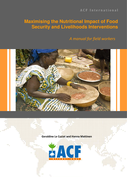
This manual aims to provide practical guidance to field workers in order to maximise the nutritional impact of food security & livelihoods (FSL) interventions. This requires the systematic use of a ‘nutrition lens’ at each step of the project cy
...
