
Filter
482
Featured
84
79
Language
Document type
146
99
53
53
35
29
21
13
10
9
7
3
2
1
Countries
19
12
9
9
8
8
8
8
7
6
6
6
6
5
5
5
4
4
3
3
3
3
3
3
3
3
2
2
2
2
2
2
2
2
2
2
2
2
2
1
1
1
1
1
1
1
1
1
1
1
1
1
1
1
1
1
1
1
1
1
1
1
Authors & Publishers
Publication Years
Toolboxes
86
73
42
42
31
31
29
24
22
17
5
3
3
3
2
1
1

This report presents the performance results of 21 household water treatment (HWT) products evaluated in Rounds III and IV of the WHO International Scheme to Evaluate Household Water Treatment Technologies (the Scheme). Released alongside a consolidated overview of findings from Rounds I–II, it re
...
List of available resources and courses

On Global Handwashing Day, WHO and UNICEF have released the first-ever global Guidelines on Hand Hygiene in Community Settings to support governments and practitioners in promoting effective hand hygiene outside health care – across households, public spaces and institutions. Framing hand hygiene
...
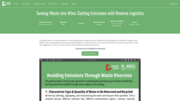
This guide outlines a practical approach to estimating greenhouse gas emissions avoided by diverting waste from landfills through reverse logistics and reuse/recycling. It provides step-by-step guidance, emission factors, and a scenario tailored to humanitarian operations, along with suggestions on
...
Resource Website
Infection prevention and control Online Course
recommended
Infection Prevention and Control (IPC) is a major challenge for health care systems around the world. There is an important opportunity to reduce avoidable morbidity and mortality through improvements to IPC.
The IPC channel hosts general materials designed for all health workers, as well as more
...

Health care-associated infections (HAIs) affect patients and health systems every day, causing immense suffering, driving higher health-care costs and hampering efforts to achieve high-quality care for all. HAIs are often difficult to treat, are the major driver of antimicrobial resistance (AMR) and
...

Through technical consultations with countries and partners, WHO has led the development of Preparedness and Resilience for Emerging Threats Module 1: Planning for respiratory pathogen pandemics. Version 1.0. The Module, currently available as an advanced draft, builds on previous pandemic lessons a
...
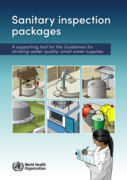
A sanitary inspection is a simple, on-site evaluation (traditionally using a checklist) to help identify and support the management of priority risk factors that may lead to contamination of a drinking-water supply. Sanitary inspections are a well-established and widely-applied practice. They can su
...

Small drinking-water supplies commonly experience operational, managerial, technical and resourcing challenges that impact their ability to deliver safe and reliable services. The needs and opportunities associated with these supplies therefore warrant explicit consideration in policies and regulati
...
The Guidelines for drinking-water quality: small water supplies have been developed to address the needs and opportunities associated with small supplies to facilitate progressive improvement towards safe and sustainable drinking-water services for all. These Guidelines are based on the principal re
...
Ces Directives sur la qualité de l’eau de boisson : petits approvisionnements en eau ont été élaborées pour aborder les besoins et les possibilités associés aux petits approvisionnements afin de favoriser l’amélioration progressive vers des services d’alimentation en eau de boisson sû
...
Las Guías para la calidad del agua de consumo humano: pequeños sistemas de abastecimiento de agua se han elaborado para tratar las necesidades y oportunidades asociadas a los pequeños sistemas de abastecimiento, con el fin de facilitar la mejora progresiva hacia unos servicios seguros y sostenibl
...
Настоящее «Руководство по обеспечению качества питьевой воды: маломасштабные системы водоснабжения» было разработано для удовлетворения потребностей и использÐ
...
وقد وُضعت هذه الإرشادات المعنونة "إرشادات بشأن مياه الشرب: إمدادات المياه الصغيرة" لتناول الاحتياجات والفرص المرتبطة
بإمدادات المياه الصغيرة وتيسير التحسين التد
...
The situation in the Gaza Strip is dire, with syndromic surveillance revealing high rates of infectious diseases. The risk of further spread may be exacerbated by several factors, including overcrowding, inadequate water and sanitation, disruption of routine healthcare services, and a dysfunctional
...
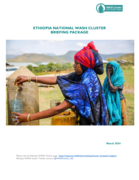
The document is part of the briefing package for Ethiopia's Water, Sanitation, and Hygiene (WASH) Cluster, which consists of resources that provide greater clarity and guidance to the cluster partners and other humanitarian actors.
The document is divided into four sections. Each section represen
...

Around the world, more than 2 billion people lack access to safely managed water, sanitation and hygiene services, with conflicts and climate change exacerbating the issue.
Unsafe and insufficient WASH facilities, especially in rural and remote areas, can lead to increased health complications fo
...

Mpox continues to affect people around the world. A new framework released today by WHO will guide health authorities, communities and other stakeholders in preventing and controlling mpox outbreaks, eliminating human-to-human transmission of the disease, and reducing spillover of the virus from ani
...
