
Filter
24
Text search:
molluscicides
Featured
3
4
Language
Document type
9
7
6
1
1
Countries
2
2
1
1
1
Authors & Publishers
Publication Years
Category
5
5
5
1
Toolboxes
15
2
1
Recent systematic reviews and meta-analysis of the impact of chemical-based mollusciciding (King et al., 2015, Sokolow et al., 2016) have concluded that regular mollusciciding is likely to contribute significantly towards elimination of schistosomiasis in high-risk areas. The WHO roadmap’s new foc
...
This document provides up-to-date guidance on laboratory studies as well as smallscale (semi-field) and large-scale field trials to assess the efficacy and determine field application rates of new molluscicide products for control of schistosomiasis.


Phytochem Rev (2023) 22:1691–1806
Plants have a lot of potential and will continue to contribute feasible, effective medicines and/or pesticides; more research is warranted to fully explore their future applications
For the control of vectors and pests of public health importance. Sixth edition
PLoS Negl Trop Dis 10(7): e0004794. doi:10.1371/journal.pntd.0004794

Schistosomiasis is a parasitic disease caused by infection with
Schistosoma trematodes. The disease affects poor rural communities
but has spread to urban areas and to tourists visiting endemic areas
Issue Brief NTDs Part 3 : Schistosomiasis
recommended
In this subsequent part of the issue brief on the NTD Toolbox you will learn about general strategies, roadmaps, key treatment guidelines, reports, and training material on Schistosomiasis

Lancet Infectious Diseases Volume 22, Issue 11e327-e335.
In February, 2022, WHO published new guidelines with six recommendations to update the global public health strategy against schistosomiasis, including expansion of preventive chemotherapy eligibility from the predominant group of school-age
...
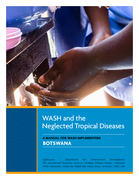
A MANUAL FOR WASH IMPLEMENTERS, BOTSWANA
Sightsavers | Department for International Development | The International Trachoma Initiative | Children Without Worms | WaterAid | WASH Advocates | Center for Global Safe Water, Emory University | CARE USA

The Global vector control response 2017–2030 (GVCR) provides a new strategy to strengthen vector control worldwide through increased capacity, improved surveillance, better coordination and integrated action across sectors and diseases.
In May 2017, the World Health Assembly adopted resolutio ...
In May 2017, the World Health Assembly adopted resolutio ...

This manual is intended to enable WASH practitioners
who work in Mozambique to contribute to the
reduction of WASH-preventable NTDs.

It provides insight into WHO’s work that aims to improve the health of the people of the United Republic of Tanzania in collaboration with key stakeholders.

The objective of this manual is to guide managers of schistosomiasis and soil-transmitted helminthiases control programmes towards the elimination of these diseases as public health problems informed by evidence generated through monitoring and evaluation of these programmes. The manual complements
...

En 2015, 5,9 millions d'enfants de moins de cinq ans sont décédés (1). Les principales causes de mortalité infantile dans le monde sont la pneumonie, la prématurité, les complications durant l'accouchement, la septicémie néonatale, les anomalies congénitales, la diarrhée, les tra
...

Schistosomiasis is widely recognized as a disease that is socially determined. An understanding of the social and behavioural factors linked to disease transmission and control should play a vital role in designing policies and strategies for schistosomiasis prevention and control. To this must be a
...

Schistosomiasis is a public health problem in tropical and subtropical regions of Africa, Asia, the Caribbean and South America. It is one of the neglected tropical diseases (NTDs) - a group of diseases and conditions that affect particularly low-income populations, worldwide.
Last year, WHO laun
...

Schistosomiasis is widely recognized as a disease that is socially determined. An
understanding of the social and behavioural factors linked to disease transmission and
control should play a vital role in designing policies and strategies for schistosomiasis
prevention and control. To this must b
...

La schistosomiase humaine est une maladie parasitaire chronique et aigüe causée par une infection par des douves du sang (vers trématodes) du genre Schistosoma. Cette maladie est un problème de santé publique dans les zones tropicales et
subtropicales d’Afrique, d’Asie, des Caraïbes et dâ
...
