
Filter
553
Text search:
indoor
air
Featured
58
136
Language
Document type
220
140
98
35
23
16
9
6
3
1
1
1
Countries
59
30
19
14
11
10
10
9
9
8
8
8
7
7
7
6
6
6
6
6
5
5
5
5
4
4
4
4
3
3
3
3
3
3
3
2
2
2
2
1
1
1
1
1
1
1
1
1
1
1
1
1
1
1
1
1
1
1
1
1
1
1
1
1
1
1
1
1
1
1
1
Authors & Publishers
Publication Years
Category
205
88
24
22
19
4
Toolboxes
81
73
65
30
27
22
16
14
9
8
6
6
6
5
5
4
4
4
4
4
3
2
1
1

This guideline covers indoor air quality in residential buildings. It aims to raise awareness of the importance of good air quality in people's hom
...
Indoor air pollution is one of the world's largest environmental problems – particularly for the poorest in the world, who often do not have access to clean fuels for cooking.The Global Burden of
...

Indoor air pollution is caused by burning solid fuel sources – such as firewood, crop waste, and dung – for cooking and heating.
Burning such fuels, particularly in poor households, results i
...

Energy use in the home is a vital and ubiquitous feature of human society. Energy
is used for a wide variety of purposes, including cooking, space heating, light-
ing, small-scale income generation, various household tasks, and entertainment.
The Our World in Data webpage on air pollution provides an extensive overview of the global impact of air pollution on health and the environment. It presents data on sources of pollution, such as i
...

Accessed on 06.03.2022
Air pollution is contamination of the indoor or outdoor environment by any chemical, physical or biological agent that modifies the natural characteristics of the atmospher
...

1 March 2021 This roadmap aims to define the key questions users should consider to assess indoor ventilation and the major steps needed to reach recommended ventilation levels or simply improve indoor
...

The WHO fact sheet on household air pollution highlights that around 2.1 billion people rely on solid fuels like wood and coal for cooking, using open fires or inefficient stoves. This leads to severe indo
...

The WHO fact sheet on household air pollution highlights that around 2.1 billion people rely on solid fuels like wood and coal for cooking, using open fires or inefficient stoves. This leads to severe indo
...
The WHO fact sheet on household air pollution highlights that around 2.1 billion people rely on solid fuels like wood and coal for cooking, using open fires or inefficient stoves. This leads to severe indo
...

The combined effects from ambient (outdoor) air pollution and indoor (household, in particular) air pollution cause approximately 7 million prematu
...

The WHO fact sheet on household air pollution highlights that around 2.1 billion people rely on solid fuels like wood and coal for cooking, using open fires or inefficient stoves. This leads to severe indo
...

This guideline covers diagnosing, monitoring and managing asthma in adults, young people and children. It aims to improve the accuracy of diagnosis, help people to control their asthma and reduce the risk of asthma attacks. It does not cover managing severe asthma or acute asthma attacks. It emphasi
...

Chronic respiratory diseases, such as asthma and
chronic obstructive pulmonary disease, kill more than
four million people every year and affect hundreds
of millions more. These diseases erode the health
and well-being of the patients and have a negative
impact on families and societies. Women
...

Chronic respiratory diseases, such as asthma and
chronic obstructive pulmonary disease, kill more than
four million people every year and affect hundreds
of millions more. These diseases erode the health
and well-being of the patients and have a negative
impact on families and societies. Women
...

Our aim is to review current asthma epidemiology, achievements from the last 10 years, and persistent challenges of asthma man- agement and control in low-middle income countries (LMICs). Despite global efforts, asthma continues to be an important public health problem worldwide, particularly in poo
...

Non-Communicable Diseases (NCDs) have emerged as conditions of great public health concern in Kenya accounting for 39% of deaths annually. The Ministry of Health through the Department of Non-Communicable Diseases has adopted the vision of achieving a nation free from preventable burden of NCDs. Fur
...
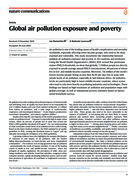
Air pollution is one of the leading causes of health complications and mortality worldwide, especially affecting lower-income groups, who tend to be more exposed and vulnerable. This study documents the relationship between ambient
...

The first update of the ECDC ventilation guidance document contains:
key new findings that emphasise four bundles of NPIs to reduce the risk of SARS-CoV-2 transmission in closed spaces;
updated references on the evidence of transmission in closed spaces;
recommendations based on the n
...
This policy brief explores the impact of air pollution on health and address the air quality issue in the response to noncommunicable diseases (NCDs). It also provides key actions that policy makers
...
