
Filter
475
Text search:
ecology
Featured
37
90
Language
Document type
179
141
57
46
22
12
12
3
1
1
1
Countries
38
12
11
10
8
8
7
6
5
5
5
5
5
4
4
4
3
3
3
2
2
2
2
2
2
2
2
2
1
1
1
1
1
1
1
1
1
1
1
1
1
1
1
1
1
1
1
1
1
1
1
1
1
1
1
1
1
1
1
1
1
1
1
1
1
1
1
1
Authors & Publishers
Publication Years
Category
82
41
28
16
5
5
2
Toolboxes
137
68
35
29
22
20
17
15
14
11
11
10
7
7
6
5
5
4
3
3
3
2
1
1
There is no question that over the last thirty years environmentaldegradation and the ecological crisis have become in our day and age apredominant sign of the times. In response to this worrisome develop-ment official documents of the Roman Catholic Church, at various lev-els, have sought to addres
...


In the light of growing environmental concerns we are witnessing an integration of ecology into the fabric of Catholic social thought. Catholic social teaching (CST) has traditionally focused on economic and social development, encompassing issues r
...
These Massive Open Online Courses (MOOCs) explore the ecological dimensions of the world’s religions. Developed over the course of several years, they draw on a rich variety of lectures, videos, readings, and interviews with scholars, religious leaders, and environmental practitioners from around
...
PLOS Neglected Tropical Diseases. Open Access. Please download the pdf-file from the website!
Sustainability Science (2019) 14:1343–1354

Buruli ulcer (BU), a neglected tropical disease (NTD), is an infection of the skin and subcutaneous tissue caused by Mycobacterium ulcerans. The disease has been documented in many South American, Asian, and Western Pacific countries and is widespread throughout much of Africa, especially in West
...
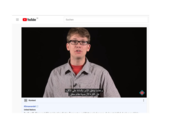
Hank introduces us to biogeochemical cycles by describing his two favorites: carbon and water. The hydrologic cycle describes how water moves on, above, and below the surface of the Earth, driven by energy supplied by the sun and wind. The carbon cycle does the same... for carbon!
Like Crash Co
...

Catholic social teaching, integral ecology and sustainable development

Human use of land has been transforming Earth's ecology for millennia. From hunting and foraging to burning the land to farming to industrial agriculture, increasingly intensive human use of land has reshaped global patterns of biodiversity, ecosyst
...
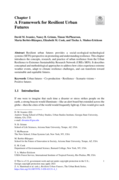
Open access book describing tools for engaging communities in resilience strategies
Based on practical experience from participatory positive futures visioning in nine Latin American and US cities
For students and professionals of different sectors including sustainability, engineering,
...

Advances have been made through expanded interventions delivered through five public health approaches: innovative and intensified disease management; preventive chemotherapy; vector ecology and management; veterinary public health services; and the
...

Snakebite envenoming affects millions of people worldwide annually and is a significant source of mortality. Preventing and treating the problem is complex and requires collaboration among the fields of public health, medicine, ecology, and laborato
...

Antibiotics are among the most frequently prescribed classes of drugs and it is estimated that approximately 50% of antibiotic use, in both the outpatient and inpatient settings, is inappropriate. At the same time, in contrast to any other class of drugs, every antibiotic use has a potential public
...
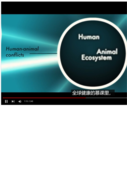
Over the next 8 weeks, you will explore and learn about some of the major and current Global Health Challenges at the Human-Animal-Ecosystem Interface: zoonotic emerging infections (e.g. Ebola, Nipah, MERS, Avian Influenza), antimicrobial resistance, neglected tropical diseases (e.g. rabies, leishma
...
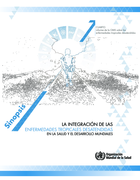
Integrating neglected tropical diseases into global health and development: fourth WHO report on neglected tropical diseases evaluates the changing global public health landscape; assesses progress towards the 2020 targets; and considers the possible core elements of a strategic vision to integratin
...
Climate change, increasing population densities, and intensified globalisation in trade, travel and migration are among the most important factors shaping the 21st century. Each impacts upon population health and the risk of infectious disease, particularly those originating at the human-animal-envi
...

This document provides the specifications for major pesticide application equipment used for control of vectors of diseases. The specification guidelines contained herein are intended to assist national authorities and other public health users in selecting equipment of assured quality for applicati
...
Phil. Trans. R. Soc. B (2010) 365, 2959–2971; doi:10.1098/rstb.2010.0143.
Agricultural ecosystems provide humans with food, forage, bioenergy and pharmaceuticals and are essential to human wellbeing. These systems rely on ecosystem services provided by natural ecosystems, including pollination, b
...
English Analysis on World about Climate Change and Environment, Food and Nutrition and more; published on 07 Oct 2021 by IEP
