
Filter
2425
Text search:
World
Health
Organization
and
UN
partners
Featured
218
756
Language
2353
74
50
36
31
16
13
5
3
3
2
2
2
2
2
2
1
1
1
1
1
1
1
1
1
1
1
1
1
1
1
1
1
1
1
1
1
1
1
1
1
Document type
1308
455
231
177
149
33
30
25
6
4
2
2
Countries
140
82
76
67
60
59
58
55
52
51
47
40
39
38
35
35
35
33
31
25
24
24
23
23
22
22
22
21
21
21
18
18
18
17
15
14
14
14
12
12
12
12
12
11
11
11
11
11
10
9
9
9
8
8
7
7
7
6
6
5
5
5
5
5
4
4
4
4
4
4
4
3
3
3
3
3
3
3
3
3
3
2
2
2
2
2
2
2
2
2
2
2
2
2
2
2
1
1
1
1
1
1
1
1
1
1
1
1
1
1
1
1
1
1
1
1
1
1
1
1
1
1
1
1
Authors & Publishers
330
103
81
71
70
57
53
43
29
23
17
17
17
16
16
15
15
15
14
14
13
13
12
12
12
12
11
11
10
10
10
10
9
9
9
9
9
8
8
7
7
7
7
7
6
6
6
6
6
6
6
6
6
6
6
6
6
6
6
6
5
5
5
5
5
5
5
5
5
5
5
5
5
5
5
5
5
4
4
4
4
4
4
4
4
4
4
4
4
4
4
4
4
4
4
4
4
4
4
4
4
4
4
3
3
3
3
3
3
3
3
3
3
3
3
3
3
3
3
3
3
3
3
3
3
3
3
3
3
3
3
3
3
3
3
3
3
3
3
3
3
3
3
3
3
3
3
3
3
3
3
3
3
3
3
2
2
2
2
2
2
2
2
2
2
2
2
2
2
2
2
2
2
2
2
2
2
2
2
2
2
2
2
2
2
2
2
2
2
2
2
2
2
2
2
2
2
2
2
2
2
2
2
2
2
2
2
2
2
2
2
2
2
2
2
2
2
2
2
2
2
2
2
2
2
2
2
2
2
2
2
2
2
2
2
2
2
2
2
2
2
2
2
2
2
2
2
2
2
2
2
2
2
2
2
2
2
2
2
2
2
2
2
2
2
2
2
2
2
2
2
2
2
2
2
2
2
2
2
2
2
2
2
2
2
2
2
2
2
2
2
2
2
2
2
2
2
2
2
2
2
2
2
1
1
1
1
1
1
1
1
1
1
1
1
1
1
1
1
1
1
1
1
1
1
1
1
1
1
1
1
1
1
1
1
1
1
1
1
1
1
1
1
1
1
1
1
1
1
1
1
1
1
1
1
1
1
1
1
1
1
1
1
1
1
1
1
1
1
1
1
1
1
1
1
1
1
1
1
1
1
1
1
1
1
1
1
1
1
1
1
1
1
1
1
1
1
1
1
1
1
1
1
1
1
1
1
1
1
1
1
1
1
1
1
1
1
1
1
1
1
1
1
1
1
1
1
1
1
1
1
1
1
1
1
1
1
1
1
1
1
1
1
1
1
1
1
1
1
1
1
1
1
1
1
1
1
1
1
1
1
1
1
1
1
1
1
1
1
1
1
1
1
1
1
1
1
1
1
1
1
1
1
1
1
1
1
1
1
1
1
1
1
1
1
1
1
1
1
1
1
1
1
1
1
1
1
1
1
1
1
1
1
1
1
1
1
1
1
1
1
1
1
1
1
1
1
1
1
1
1
1
1
1
1
1
1
1
1
1
1
1
1
1
1
1
1
1
1
1
1
1
1
1
1
1
1
1
1
1
1
1
1
1
1
1
1
1
1
1
1
1
1
1
1
1
1
1
1
1
1
1
1
1
1
1
1
1
1
1
1
1
1
1
1
1
1
1
1
1
1
1
1
1
1
1
1
1
1
1
1
1
1
1
1
1
1
1
1
1
1
1
1
1
1
1
1
1
1
1
1
1
1
1
1
1
1
1
1
1
1
1
1
1
1
1
1
1
1
1
1
1
1
1
1
1
1
1
1
1
1
1
1
1
1
1
1
1
1
1
1
1
1
1
1
1
1
1
1
1
1
1
1
1
1
1
1
1
1
1
1
1
1
1
1
1
1
1
1
1
1
1
1
1
1
1
1
1
1
1
1
1
1
1
1
1
1
1
1
1
1
1
1
1
1
1
1
1
1
1
1
1
1
1
1
1
1
1
1
1
1
1
1
1
1
1
1
1
1
1
1
1
1
1
1
1
1
1
1
1
1
1
1
1
1
1
1
1
1
1
1
1
1
1
1
1
1
1
1
1
1
1
1
1
1
1
1
1
1
1
1
1
1
1
1
1
1
1
1
1
1
1
1
1
1
1
1
1
1
1
1
1
1
1
1
1
1
1
1
1
1
1
1
1
1
1
1
1
1
1
1
1
1
1
1
1
1
1
1
1
1
1
1
1
1
1
1
1
1
1
1
1
1
1
1
1
1
1
1
1
1
1
1
1
1
1
1
1
1
1
1
1
1
1
1
1
1
1
1
1
1
1
1
1
1
1
1
1
1
1
1
1
1
1
1
1
1
1
1
1
1
1
1
1
1
1
1
1
1
1
1
1
1
1
1
1
1
1
1
1
1
1
1
1
1
1
1
1
1
1
1
1
1
1
1
1
1
1
1
1
1
1
1
1
1
1
1
1
1
1
1
1
1
1
1
1
1
1
1
1
1
1
1
1
1
1
1
1
1
1
1
1
1
1
1
1
1
1
1
1
1
1
1
1
1
1
1
1
1
1
1
1
1
1
1
1
1
1
1
1
1
1
1
1
1
1
1
1
1
1
1
1
1
1
1
1
1
1
1
1
1
1
1
1
1
1
1
1
1
1
1
1
1
1
1
1
1
1
1
1
1
1
1
1
1
1
1
1
1
1
1
1
1
1
1
1
1
1
1
1
1
1
1
1
1
1
1
1
1
1
1
1
1
1
1
1
1
1
1
1
1
1
1
1
1
1
1
1
1
1
1
1
1
1
1
1
1
1
1
1
1
1
1
1
1
1
1
1
1
1
1
1
1
1
1
1
1
1
1
1
1
1
1
1
1
1
1
1
1
1
1
1
1
1
1
1
1
1
1
1
1
1
1
1
1
1
1
1
1
1
1
1
1
1
1
1
1
1
1
1
1
1
1
1
1
1
1
1
1
1
1
1
1
1
1
1
1
1
1
1
1
1
1
1
1
1
1
1
1
1
1
1
1
1
1
1
1
1
1
1
1
1
1
1
1
1
1
1
1
1
1
1
1
1
1
1
1
1
1
1
1
1
1
1
1
1
1
1
1
1
1
1
1
1
1
1
1
1
1
1
1
1
1
1
1
1
1
1
1
1
1
1
1
1
1
1
1
1
1
1
1
1
1
1
1
1
1
1
1
1
1
1
1
1
1
1
1
1
1
1
1
1
1
1
1
1
1
1
1
1
1
1
1
1
1
1
1
1
1
1
1
1
1
1
1
1
1
1
1
1
1
1
1
1
1
1
1
1
1
1
1
1
1
1
1
1
1
1
1
1
1
1
1
1
1
1
1
1
1
1
1
1
1
1
1
1
1
1
1
1
1
1
1
1
1
1
1
1
1
1
1
1
1
1
1
1
1
1
1
1
1
1
1
1
1
1
1
1
1
1
1
1
1
1
1
1
1
1
1
1
1
1
1
1
1
1
1
1
1
1
1
1
1
1
1
1
1
1
1
1
1
1
1
1
1
1
1
1
1
1
1
1
1
1
1
1
1
1
1
1
1
1
1
1
1
1
1
1
1
1
1
1
1
1
1
1
1
1
1
1
1
1
1
1
1
1
1
1
1
1
1
1
1
1
1
1
1
1
1
1
1
1
1
1
1
1
1
1
1
1
1
1
1
1
1
1
1
1
1
1
1
1
1
1
1
1
1
1
1
1
1
1
1
1
1
1
1
1
1
1
1
1
1
1
1
1
1
1
1
1
1
1
1
1
1
1
1
1
1
1
1
1
1
1
1
1
1
1
1
1
1
1
1
1
1
1
1
1
1
1
1
1
1
1
1
1
1
1
1
1
1
1
1
1
1
1
1
1
1
1
1
1
1
1
1
1
1
1
1
1
1
1
1
1
1
1
1
1
1
1
1
1
1
1
1
1
1
1
1
1
1
1
1
1
1
1
1
1
1
1
1
1
1
1
1
1
1
1
1
1
1
1
1
1
1
1
1
1
1
1
1
1
1
1
1
1
1
1
1
1
1
1
1
1
1
1
1
1
1
1
1
1
1
1
1
1
1
1
1
1
1
1
1
1
1
1
1
1
1
1
1
1
1
1
1
1
1
1
1
1
1
1
1
1
1
1
1
1
1
1
1
1
1
1
1
1
1
1
1
1
1
1
1
1
1
1
1
1
1
1
1
1
1
1
1
1
1
1
1
1
1
1
1
1
1
1
1
1
1
1
1
1
1
1
1
1
1
1
1
1
1
1
1
1
1
1
1
1
1
1
1
1
1
1
1
1
1
1
1
1
1
1
1
1
1
1
1
1
1
1
1
1
1
1
1
1
1
1
1
1
1
1
1
1
1
1
1
1
1
1
1
1
1
1
1
1
1
1
1
1
1
1
Publication Years
1
778
1508
130
7
1
Category
926
239
156
133
112
28
13
1
Toolboxes
184
148
148
141
112
110
89
80
67
62
59
55
48
46
35
35
28
27
26
21
16
13
12
11
6
2
2

The Early Childhood Development Policy and its Strategic Plan seek to provide a framework to ensure such a holistic and integrated approach to the development of young children. International resear
...
ch has demonstrated the high economic returns on ECD investment and its positive impact on health and education outcomes as well as the overall economic development of a nation. The implementation of the ECD Policy will thus provide Rwanda with the basis for achieving the objectives and goals of the EDPRS and Vision 2020.
more

The Sendai Framework for Disaster Risk Reduction 2015-2030 outlines seven clear targets and four priorities for action to prevent new and reduce existing disaster risks: (i) Understanding disaster r
...
isk; (ii) Strengthening disaster risk governance to manage disaster risk; (iii) Investing in disaster reduction for resilience and; (iv) Enhancing disaster preparedness for effective response, and to "Build Back Better" in recovery, rehabilitation and reconstruction.
It aims to achieve the substantial reduction of disaster risk and losses in lives, livelihoods and health and in the economic, physical, social, cultural and environmental assets of persons, businesses, communities and countries over the next 15 years. more
It aims to achieve the substantial reduction of disaster risk and losses in lives, livelihoods and health and in the economic, physical, social, cultural and environmental assets of persons, businesses, communities and countries over the next 15 years. more
In our fourth year of producing The State of Open Humanitarian Data, we can report the highest levels yet for data availability across priority humanitarian operations. These gains can be attributed to the commitment of organizations to sharing and
...
maintaining their data publicly. There was also strong demand for data about the world's largest humanitarian crises, from the war in Ukraine to drought and food insecurity in the Horn of Africa.
more

In the last five years, i.e. how old turned the Campaign “Indifesa” (Defenceless) in 2016, that was launched by Terre des Hommes in 2012, the world has become smaller. One can actually say that the derangements following the Arab Spring in 2011
...
reshuffled what is stable and what produces instability; between those, who live in a peaceful world, and those, who try to survive in areas affected by violence. All that significantly reduced the distance between those, who live there, along the Mediterranean cost, and those, who live here. Such deep disorder made even more acute, visible and tangible also for the so called developed world all the serious violations of the human rights suffered by little girls and girls: on the one hand the widespread political instability and violence made even more precarious the little girls and young women’s conditions on the Mediterranean southern coast, where they were already fragile; and on the other hand the migration flows further worsened them, matching at the same time the conditions of those young and very young migrants to those of the European girls of the same age.
more

Accessed on 20.10.2020
In its fight against maternal mortality, the government of Burkina Faso is supported
by the donor community which contributes to the health budget and also supports
specifi
...
c projects aimed at improving access to health care. This report acknowledges
the efforts to address maternal mortality undertaken by the government with the help
of the donor community, as well as projects led by international and national NGOs.
more
3 June 2021. After 40 years of AIDS, charting a course to end the pandemic.
The report shows that countries with progressive laws and policies and strong
...
and inclusive health systems have had the best outcomes against HIV. In those countries, people living with and affected by HIV are more likely to have access to effective HIV services, including HIV testing, pre-exposure prophylaxis (medicine to prevent HIV), harm reduction, multimonth supplies of HIV treatment and consistent, quality follow-up and care.
more

Research Paper.
As the fighting in Syria winds down, international humanitarian organisations (IHOs) operating from Damascus are hopeful that the Syrian government’s interference in their work will decrease. However, the government is attempting to formalise its influence over humanitarian operat
...
ions.
Throughout the Syrian conflict, the government has imposed multiple administrative processes on humanitarian organisations to limit their ability to operate independently. This includes restricting the operational environment; undermining organisational independence; imposing local partners; influencing procurement procedures; and preventing direct monitoring and evaluation.
While some level of coordination with the government might be a pragmatic necessity to ensure the safety of operations in regime-controlled areas, this cooperation should not enable the government to use aid for military or political purposes. Consequently, international humanitarian organisations have an ethical dilemma in how they provide aid in these areas without undermining their principles of humanity, independence, impartiality and neutrality.
more

According to the Report, cascading and interlinked crises are putting the 2030 Agenda for Sustainable Development in grave danger, along with humanity’s very own survival. The Report highlights the severity
...
and magnitude of the challenges before us. The confluence of crises, dominated by COVID-19, climate change, and conflicts, are creating spin-off impacts on food and nutrition, health, education, the environment, and peace and security, and affecting all the Sustainable Development Goals (SDGs). The Report details the reversal of years of progress in eradicating poverty and hunger, improving health and education, providing basic services, and much more. It also points out areas that need urgent action in order to rescue the SDGs and deliver meaningful progress for people and the planet by 2030.
more
The power of the Global Drug Policy Index lies in its key objective: to score and
rank how countries are faring in different areas of drug policy as identified in the
UN report ‘What we have lea
...
rned over the last ten years: A summary of knowledge
acquired and produced by the UN system on drug-related matters’,1 and derived
from the landmark UN System Common Position on Drug
more
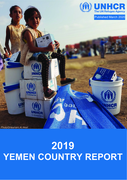
According to the United Nations, Yemen has been the "Worst humanitarian crisis in the world," for the past two years. Despite the Hudaydah Agreement signed in December 2018, the fighting continued in many areas of the country, such as Hajjah in the
...
north, Al Dhale' e in the south and Hudaydah along the west coast. Within a year, another 400,000 Yemenis were forced to flee their homes, eventually adding up to one-eighth of the entire Yemeni population who had become displaced at least once, over the last five years.
In 2019, unprecedented heavy rain and flooding from May onwards caused catastrophic damage to homes and the families’ livelihoods, adding to their misery. Thousands of families who had already lost their home due to the fighting had yet again, their temporary shelters, beddings and essential kitchen supplies, destroyed.
more
Aligned to the Lancet Migration Global Statement to include migrants and refugees incountries’response to COVID-19, this update focuses on Mexico’s challenges and opportunities to build an inclu
...
sive response that is based on a contextualized adaptation of there commendations published by the Lancet Migration. A critical component for this analysis is the recognition of migration as a social determinant of health, which acts as a major risk factor for populations subjected to violence, trauma and forced exile while in the face of a global pandemic.
more

2020 was a year like no other. Amidst on-going humanitarian crises, largely fuelled by conflict and violence but also driven by the effects of climate change – such as the largest locust infestation in a generation – the
...
world had to contend with a global pandemic. In less than one year (March-December 2020), more than 82 million COVID-19 cases and 1.8 million deaths were recorded. In that timeframe, out of the global COVID-19 totals, 30 per cent of COVID-19 cases and 39 per cent deaths were recorded in GHRP countries.
more

A comprehensive briefing by Half of Syria
April 2020
A comprehensive briefing on the critical challenges of the COVID-19 pandemic to Syrians, as reported by Syrian civil society organisations. These challenges have been collated following extensive interviews with the teams of member
...
and partner organisations working in the field in various sectors: health, child care, education, women’s empowerment, media and culture, research, human rights and accountability, relief and social services, and local governance.
This comprehensive briefing also include concrete recommendations formulated by the Syrian civil society.
more
https://doi.org/10.1016/j.vaccine.2019.09.099
The article "Economic burden of cholera in Asia" examines the financial impact of cholera in 14 Asian countries. It analyzes costs related to treatment, out-of-pocket expenses, and lost productivity due
...
to illness and premature deaths. The study estimates that cholera caused approximately $41 million in direct costs and $946 million in lost productivity in 2015. It highlights the significant economic burden on public health systems and households, emphasizing the need for investments in cholera prevention, including improved sanitation, clean water access, and vaccination programs.
more
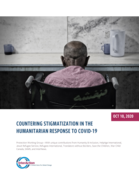
In most contexts, the social stigma surrounding mental health issues exists because of cultural norms and a lack of understanding of mental healthâ
...
€™s complexities and realities, resulting in isolation, increased vulnerability, and lack of support for people with mental health problems.
This stigma has been exacerbated during COVID-19, as more people may need mental health or psycho-social support but cannot access it due to the cessation of in-person services and limited remote care option
more
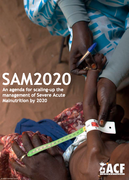
The agenda focuses on six critical changes necessary for more children suffering from SAM to access effective treatment. Building on lessons from the last decade, and the experiences of other successful he
...
alth initiatives, the agenda addresses issues ranging from the creation of a more enabling environment to stronger mechanisms for tracking progress. It provides a diagnosis of the key challenges in each of these areas to-date and the specific solutions needed to turn things around over the next five years. These solutions require a collective effort at global, regional and national levels. The Agenda lays out Action Against Hunger’s commitments and contributions to these joint efforts
more
Evaluation of Community Management of Acute Malnutrition (CMAM)
Sheila Reed, Camille Eric Kouam, Krishna Belbase et al.
United Nations Children’s Fund (UNICEF) Evaluation Office
(2013)
This evaluation is the first systematic effort by UNICEF to generate evidence on how well its global as well as country level Community Management of Acute Malnutrition (CMAM) strategies have worked, including their acceptance and ownership in vario
...
us contexts and appropriateness of investments in capacity development and supply components. Overall, the evaluation recommends that UNICEF continue to promote and support CMAM as a viable approach to preventing and addressing severe acute malnutrition (SAM), with an emphasis on prevention through strengthening community outreach and integrating CMAM into national health systems and with other intervention
more
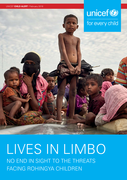
UNICEF Child Alert | February 2018
Back in Myanmar, an estimated half million Rohingya remain largely sealed off in their communities and displacement camps, fearful that the violence and horr ... or that had driven so many of their relatives and neighbours to fl ee would engulf them too. Today, there are an estimated 720,000 Rohingya children in southern Bangladesh and Myanmar’s Rakhine State, in dire need of humanitarian assistance and protection – and looking to the outside world for help. more
Back in Myanmar, an estimated half million Rohingya remain largely sealed off in their communities and displacement camps, fearful that the violence and horr ... or that had driven so many of their relatives and neighbours to fl ee would engulf them too. Today, there are an estimated 720,000 Rohingya children in southern Bangladesh and Myanmar’s Rakhine State, in dire need of humanitarian assistance and protection – and looking to the outside world for help. more
The National Action Plan for Combating Antibiotic-Resistant Bacteria (CARB), 2020-2025, presents
coordinated, strategic actions that the United States Government will take in the next five years to improve the health
...
and wellbeing of all Americans by changing the course of antibiotic resistance.
This Plan is based on the U.S. Government’s 2014 National Strategy for CARB, and builds on the first National Action Plan released in 2015 by expanding evidence-based activities that have already been shown to reduce antibiotic resistance, such as optimizing the use of antibiotics in human and animal health settings.
more

The objectives of this guidance document are to:
1. Strengthen the capacity of country teams to effectively scale up and manage programmes to address severe acute malnutrition
2. Extend the geographic reach of quality treatment for SAM to ... all vulnerable communities in need
3. Maximize access to appropriate and quality treatment for SAM among all eligible children in the community at all times
4. Aid the formulation and implementation of national policies and strategies that support objectives 1 to 3
5. Aid the creation of an enabling environment that supports objectives 1 to 3 through advocacy, documentation of successful practices, support for operational research, mobilization of resources and collaboration with partners more
1. Strengthen the capacity of country teams to effectively scale up and manage programmes to address severe acute malnutrition
2. Extend the geographic reach of quality treatment for SAM to ... all vulnerable communities in need
3. Maximize access to appropriate and quality treatment for SAM among all eligible children in the community at all times
4. Aid the formulation and implementation of national policies and strategies that support objectives 1 to 3
5. Aid the creation of an enabling environment that supports objectives 1 to 3 through advocacy, documentation of successful practices, support for operational research, mobilization of resources and collaboration with partners more
