
Filter
1565
Text search:
Epidemiological
update
Featured
205
360
Language
Document type
615
337
297
109
99
41
35
22
7
1
1
Countries
82
59
48
42
32
29
28
26
25
25
24
23
22
20
19
18
18
16
16
16
15
15
14
14
13
13
12
12
12
12
11
10
10
10
10
10
9
9
8
8
8
8
7
7
7
7
7
6
6
6
6
5
5
5
5
5
5
4
4
4
4
4
4
4
4
3
3
3
3
3
3
3
3
3
3
2
2
2
2
2
2
2
2
2
2
2
1
1
1
1
1
1
1
1
1
1
1
1
1
1
1
1
1
1
1
1
1
1
1
1
1
1
1
Authors & Publishers
Publication Years
Category
506
153
96
73
57
20
20
Toolboxes
258
112
110
68
66
62
61
60
49
48
46
39
36
26
23
20
19
18
16
15
10
9
4
2
2

Public health challenges over the past decade have highlighted the importance of approaching health through a holistic lens of human, animal, and environmental sectors, recognizing the need for a collaborative response against shared threats. Zoonotic diseases, transmitted between humans and animals
...

WHO guideline on balanced national controlled medicines policies to ensure medical access and safety
Access to medicines is essential for attainment of universal health coverage, which is central to achievement of the health-related Sustainable Development Goals. Controlled medicines include those such as opioids, benzodiazepines, barbiturates, amphetamines and others with identified or emergent cl
...

WHO, as the coordinating authority on international health, supports countries in protecting public health through evidence-based policies and actions. Considering the significant health burden and the multiple potential benefits of interventions, the WHO Air Quality, Energy and Health Unit aims to
...

This plan, approved by the Organization’s 62nd Directing Council, was shaped by extensive consultations with countries and stakeholders, and commits to transformative health outcomes over the next six years, tackling noncommunicable diseases (NCDs), mental health, health security, fragmented healt
...

Strengthening global health security to protect the world against future epidemics and pandemics requires well-tested and decentralized capacities for the local detection and rapid containment of outbreaks of infectious disease. For such capacities to translate into effective response actions, ind
...

The document provides a standardized protocol for evaluating the Early Warning Alert and Response Network (EWARN), a surveillance system used during humanitarian emergencies when regular national health surveillance may be disrupted. The purpose of EWARN is to detect outbreaks of communicable diseas
...

In an era of constrained resources and tightening budgets, strategic prioritization in tuberculosis (TB) programming is more critical than ever. Countries must make informed decisions to allocate limited resources effectively - maximizing impact, preventing avoidable deaths, and sustaining progress
...

The findings of the report are both urgent and devastating. At the current rate of progress, by 2040 we would still have 1.9 million new HIV infections and 990,000 AIDS-related deaths in children. But if funding for HIV prevention and treatment continues to fall as current trends suggest, the world
...

ATIC Newsletter, Vol 15, Issue 1,
February 2022.

We can't stop at almost. 2025 Goalkeeper Report
recommended
2025 is the first year of this century where child deaths will increase.
But we can stop this reversal before it becomes a trend, even in a time of tight budgets.
With proven solutions and next-generation innovations that do more with less, we can save millions of children's lives, protect the pro
...

World malaria report 2025
recommended
Addressing the threat of antimalarial drug resistance. This year’s report spotlights the growing threat of antimalarial drug resistance. Partial resistance to artemisinin derivatives – the backbone of malaria treatments after failures of chloroquine and sulfadoxine-pyrimethamine – has now b
...

The window to 2030, the SDG target year, is closing. Without accelerated and sustained progress, hard-won UHC gains risk being lost. Using revised and improved UHC indicators the report presents the latest available UHC data and concludes with a call to shared action.

HIV rapid diagnostic test market landscape
recommended
The analysis includes the three most commonly used HIV rapid diagnostic test
(RDT) categories: HIV-only professional use RDTs, dual HIV/syphilis professional use
RDTs, and HIV self-tests (HIVST).

Background Note: Briefing to the Executive Board, First Regular Session 2025
Archives of Medicine vo.7 no.5:10
Individuals infected with human immunodeficiency virus (HIV) often develop
multiple complications and comorbidities, among them, opportunistic infections.
The highest incidence of opportunistic infections was reported in the group
of patients with CD4 lymphocyte
...

Technical Document

The adopted pillars for the AEVT Plan are a) early testing among children exposed to HIV, syphilis and HBV; b) closing the treatment gap among PBFW and children exposed to HIV, syphilis and HBV; c) prevention of new HIV, syphilis and HBV infections among PBFW; and d) breaking down barriers to access
...
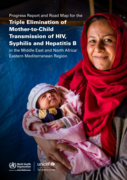
Progress report and road map. Countries included in this report: Algeria, Afghanistan, Bahrain, Djibouti, Egypt, the Islamic Republic of Iran, Iraq, Jordan, Kuwait, Lebanon, Libya, Morocco, Oman, Pakistan, Qatar, State of Palestine, Saudi Arabia, Somalia, Sudan, the Syrian Arab Republic, Tunisia, Un
...

The Global Aids Strategy 2026-2031
recommended
United- Towards Ending AIDS. The Global AIDS Strategy 2026-2031 focuses global efforts for the future of the AIDS response to end AIDS as a public health threat by 2030 and sustain the HIV response after 2030. This is a strategy uniting the world.
The Strategy will shape the June 2026 United Natio
...
