
Filter
1544
Text search:
Annual
Report
WHO
regional
office
Africa
Featured
Recommendations
130
New Publications
443
Language
Document type
No document type
839
Studies & Reports
372
Guidelines
141
Strategic & Response Plan
78
Manuals
68
Fact sheets
15
Training Material
13
Situation Updates
12
Resource Platforms
3
App
1
Infographics
1
Countries / Regions
Global
93
Ethiopia
72
Kenya
64
Uganda
44
Zambia
43
South Africa
41
Sierra Leone
37
Tanzania
36
Africa
36
Ghana
34
Namibia
33
Malawi
32
Liberia
29
Nigeria
27
India
19
Rwanda
19
Nepal
18
Lesotho
18
Asia
17
Syria
16
Western and Central Europe
15
Senegal
13
Ukraine
13
Bangladesh
12
Mozambique
12
East and Southern Africa
12
Latin America and the Carribbean
11
Zimbabwe
10
South Sudan
10
West and Central Africa
10
South–East Asia Region
10
Eswatini/ Swaziland
9
Myanmar / Burma
9
Middle East and North Africa
9
Guinea
8
Burkina Faso
8
Cameroon
8
Cambodia
8
Botswana
8
Congo, Democratic Republic of
7
Central African Republic
7
Somalia
6
Pakistan
6
Yemen
6
Philippines
5
China
5
Madagascar
5
Jordan
4
Afghanistan
4
Lebanon
4
Thailand
4
Sudan
4
Eastern Europe
4
Mali
3
Haiti
3
Sri Lanka
3
Western Pacific Region
3
Laos
3
Iran
3
Mauritius
3
Côte d’Ivoire / Ivory Coast
2
Chad
2
Gambia
2
Indonesia
2
Papua New Guinea
2
Benin
2
Brazil
2
Eastern Europe and Central Asia
2
Venezuela
2
Albania
2
Southern Africa
2
Vietnam
2
Bosnia and Herzegovina
2
Morocco
1
USA
1
Saudi Arabia
1
Niger
1
Togo
1
Iraq
1
Germany
1
Turkey
1
Burundi
1
Colombia
1
Ecuador
1
Greece
1
Angola
1
Mexico
1
Timor Leste/ East Timor
1
Tajikistan
1
Qatar
1
Bulgaria
1
Moldova
1
Kyrgyzstan
1
Kazakhstan
1
Georgia
1
Gabon
1
Turkmenistan
1
Japan
1
Tunisia
1
United Kingdom
1
Portugal
1
Spain
1
Israel
1
Authors & Publishers
Publication Years
Category
Countries
647
Key Resources
101
Clinical Guidelines
79
Public Health
78
Women & Child Health
67
Capacity Building
16
Pharmacy & Technologies
12
Toolboxes
HIV
147
Planetary Health
92
Mental Health
80
TB
66
COVID-19
59
AMR
54
NTDs
54
Disability
52
Global Health Education
45
Health Financing Toolbox
41
Conflict
34
Caregiver
31
Pharmacy
28
Rapid Response
26
2.0 Rapid Response
26
Refugee
25
NCDs
25
Malaria
20
Natural Hazards
17
Ebola & Marburg
15
Cholera
9
Polio
5
Zika
3
South Sudan
1
Typhoon
1
Social Ethics
1

1-13 December 2018 | Geneva, Switzerland UNAIDS Programme Coordinating Board Issue date: 23 November 2018
UNAIDS/PCB (43)/18.32
In the Region of the Americas, the leishmaniases are a group of diseases caused by various species of Leishmania, which cause a set of clinical syndromes in infected humans that can involve the skin, mucosa, and visceral organs. The spectrum of clinical disease is varied and depends on the interacti
...

In this course you will examine the interconnections between poverty, development and violent conflict. This is one of seven Medical Peace Work courses.
Disability Inclusive Development Toolkit
recommended
This toolkit is designed as a resource for CBM that can be used in a variety of ways: to support staff induction, team meetings, refresher days and training workshops. It can also be used as a tool for personal reflection and self-study. Tips for those intending to use it as a training resource are
...


The COVID-19 pandemic’s immediate costs, measured in lives lost and damaged, have been appalling and continue to rise. In addition, its effects on individuals’ livelihoods and economies around the world have been deep and are likely to be long lasting. While saving lives was the near-exclusive f
...
Lessons learnt from the ADCAP programme | This guide shares good practices and challenges that have emerged through the experience of the Age and Disability Capacity Programme (ADCAP) implementing partners, in embedding inclusion of older people and people with disabilities within their humanitaria
...
WBCSD Vision 2050 sets out the goal to achieve the highest attainable standard of health and wellbeing for everyone by 2050, calling for a world in which: people live healthy lives; societies promote and protect health; everyone has access to robust, resilient and sustainable healthcare services; an
...

The Sustainable Development Goals (SDGs) call for major societal transformations that will require significant fiscal outlays as well as private investments. The fiscal outlays cover public investments, the public provision of social services, and social protection for vulnerable populations. The ke
...

Health Bulletin No.3
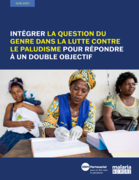
Cette note d'information souligne l'importance d'intégrer une approche sensible au genre dans les efforts de lutte contre le paludisme dans le monde entier. Il montre que la prise en compte des vulnérabilités et des besoins spécifiques à chaque sexe - en particulier ceux des femmes et des enfan
...

The Ministry of Health and Social Services has the mandate to fulfil one of the aspirations in Namibia’s Vision 2030 to “transform Namibia into a healthy and food-secure nation”. Namibia strives to provide quality health and social welfare services efficiently and effectively to the population
...
Tuberculosis (TB)
recommended
MEDBOX Issue Brief no. 19: World TB Day: Invest to end TB. Save Lives
Issue Brief 31: Antimicrobial resistance (AMR) can occur when viruses, bacteria, parasites and fungi change over time. There is no longer a response to medicines, and the infection treatment gets really difficult which increases the risk of a disesase spread, which can lead to severe health problems
...
Issue Brief No. 29:
Planetary Health is an interdisciplinary academic collective of many scientific disciplines. In addition to the fields of
environmental and social sciences, that of human health is one of many.
Because of the many disciplines involved in this topic and the large number of res
...
Issue Brief: Neglected Tropical Diseases Part 2
recommended
In this subsequent part of the issue brief on the NTD Toolbox you will learn about general strategies, roadmaps, key
treatment guidelines, reports, and training material on Dengue & Chikungunya, Human African Trypanosomiasis and
Leprosy.
Climate Change & Heat and Impact on Health
recommended
MEDBOX Issue Brief no.23.
The intent of this Issue Brief is to raise awareness about heat waves as a result of climate change and its impact on
health. More information on the topic of climate change and planetary health you can find in our PLANETARY
HEALTH TOOLBOX www.planetaryhealthbox.org
