
Filter
1878
Text search:
personal
protective
equipment
Featured
321
407
Language
Document type
766
475
259
136
86
48
41
34
14
9
3
3
2
1
Countries
115
102
90
71
68
50
46
45
44
37
34
32
31
30
28
28
27
27
25
21
19
19
19
18
18
17
17
16
16
16
15
14
14
14
13
13
13
11
11
11
10
10
9
9
9
9
9
9
8
8
7
7
7
6
6
6
5
5
5
5
5
4
4
4
4
4
4
4
4
3
3
3
3
2
2
2
2
2
2
2
2
2
2
2
2
1
1
1
1
1
1
1
1
1
1
1
1
1
1
1
1
1
1
1
1
1
1
1
1
1
1
1
1
1
1
1
Authors & Publishers
Publication Years
Category
648
160
124
89
48
36
35
Toolboxes
542
291
70
69
65
57
52
46
46
35
34
32
30
29
28
26
25
22
17
14
12
12
8
8
1
1
1

tep 1 Competencies have been designed to provide staff with the core skills required to care for a critically ill patient safely, whilst under supervision. It is expected that Step 1 competencies will be completed prior to commencing an academic critical care programme.
Steps 2 & 3 Competencies hav
...

Public health emergencies, including pandemics, highlight the need for health systems and services that are prepared, resilient and ready to respond to health security threats. Endorsed by Member States in 2023, the Asia Pacific Health Security Action Framework (APHSAF) is designed to engage m
...

The WHO/UNICEF JMP report, WASH in Health Care Facilities, is the first comprehensive global assessment of water, sanitation and hygiene (WASH) in health care facilities. It also finds that 1 in 5 health care facilities has no sanitation service*, impacting 1.5 billion people. The report further rev
...

Best Practices in health care waste management
recommended
Examples from four Philippine Hospitals
Zimbabwe Cholera Control Guidelines
recommended
3rd edition
Strengthening competency based training of health care providers for Reproductive Maternal Newborn Child & Adolescenct Health (RMNCH + A) services

Joint WHO/ILO guidelines on post-exposure prophylaxis (PEP) to prevent HIV infection.
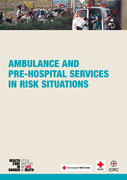
This report sets out ways to make pre-hospital care and ambulance services operating in areas of armed violence safer. Written by the Norwegian Red Cross with support from the ICRC and the Mexican Red Cross, the report summarizes field experience in over 20 countries.
The messages should be used to inform, educate and engage different audience groups depending on their level of risk, vulnerability, presence in contact areas, care of patients with Ebola, or engagement or attendance of burials.

Learning from earthquake relief and recovery operations
Mende Ebola Guidance Package


