Filter
1218
Text search:
advocacy
brief
Featured
105
303
Language
Document type
643
213
140
85
57
40
24
8
5
2
1
Countries
63
40
30
29
28
26
25
25
23
20
20
20
18
18
17
16
16
16
15
14
14
13
13
12
12
12
11
10
9
8
8
8
8
7
7
7
6
6
5
5
5
4
4
4
3
3
3
3
3
3
3
3
2
2
2
2
2
2
2
2
2
2
2
2
2
2
2
2
1
1
1
1
1
1
1
1
1
1
1
1
1
1
1
1
1
1
1
1
1
1
1
Authors & Publishers
Publication Years
Category
371
121
98
92
54
42
3
1
Toolboxes
151
82
80
63
55
48
37
35
33
28
27
24
21
20
19
14
14
13
11
9
6
6
5
5
5
1

The objectives of this guidance document are to:
1. Strengthen the capacity of country teams to effectively scale up and manage programmes to address severe acute malnutrition
2. Extend the geographic reach of quality treatment for SAM to all vulnerable communities in need
3. Maximize ...
1. Strengthen the capacity of country teams to effectively scale up and manage programmes to address severe acute malnutrition
2. Extend the geographic reach of quality treatment for SAM to all vulnerable communities in need
3. Maximize ...
Available in Chinese, English, French, Russian and Spanish; WHO and UNICEF policy brief, 19 April 2021
Persons with disabilities are disproportionately impacted by COVID-19, both directly because of infection, and indirectly because of restrictions
...

There are many calls for improved integration between
primary care and public health, but also sizeable obstacles to achieving
this, such as differences in the ways the two sectors are organised and
financed, as well as differences in education, culture and approach.
This article, based on a new
...
The aim of this paper is to map and critically analyse evidence of good practice in prevention and response to gender-based violence (GBV) in humanitarian contexts which can support humanitarian practitioners and policy makers to improve the quality of GBV programming in the field. The paper is stru
...
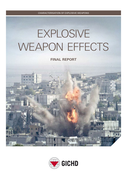
States, the United Nations and civil society organisations continue to raise concerns about the humanitarian impact caused by the use of explosive weapons in populated areas (EWIPA). This issue is currently being examined from political, legal, socio-economic and humanitarian perspectives. The GICHD
...

Our goal at Voices for Georgia’s Children is to help decision-makers craft and implement policies that ensure Georgia’s children grow up to be healthy, educated and productive citizens. To that end, we have developed a comprehensive policy agenda focused on early childhood, child health and disc
...
Infectious diseases like COVID-19 can disrupt the environments in which children grow and develop. Disruptions to families, friendships, daily routines and the wider community can have negative consequences for children’s well-being, development and protection. In addition, measures used to preven
...
The United Nations Network on Migration is committed to supporting all partners in pursuit of the implementation of the Global Compact for Safe, Orderly and Regular Migration, recognizing that this cooperative framework provides an invaluable tool for ensuring inclusive, collective responses to COVI
...
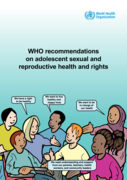
This document provides an overview of sexual and reproductive health and rights issues that may be important for the human rights, health and well-being of adolescents (aged 10–19 years) and the relevant World Health Organization (WHO) guidelines on how to address them in an easilyaccessible, user
...
Available in Russian
A detailed overview is provided of the implementation of alcohol policies described in the 10 action areas of the European Action Plan to Reduce the Harmful Use of Alcohol 2012–2020 (EAPA), including the current status of implementation of the five action areas of the WHO-led
...
In this era, grand challenges lies in biodiversity loss, climate change, and global noncommunicable diseases signify that planet and humanity are in crisis. Scholarly evidence from human and animal kingdom suggest that there is an optimism in planetary health which can provide a unique and novel con
...
This document was prepared by UNICEF Regional Office for West and Central Africa, under the leadership of Christophe Valingot and the review of Joachim Peeters (WASH Specialist) and Arnaud Laillou (Nutrition Specialist), on behalf of the WASH Regional Group and the Nutrition Regional Group.
This
...

Countries are making progress toward the global goal of 95% of people living with HIV knowing their status by 2025. However, considerable gaps remain in achieving these goals globally. Men in high HIV burden settings and men from key populations in all settings are consistently less likely to know t
...

Snakebite envenoming affects millions of people worldwide annually and is a significant source of mortality. Preventing and treating the problem is complex and requires collaboration among the fields of public health, medicine, ecology, and laboratory science. After being removed from the category A
...
As a lower-middle-income country (LMIC), South Africa (SA) bears
the burden of maternal and neonatal mortality similar to other sub-
Saharan African countries. According to the Saving Mothers Report
2017/19, there has been a progressive and sustained reduction
in institutional maternal mortality
...

Alcohol use is deeply embedded in the social landscape of many societies, and some 2300 million people drink alcoholic beverages in most parts of the world. At the same time, more than half of the global population aged 15 years and older reported having abstained from drinking alcohol during the pr
...

Alcohol consumption is deeply embedded in the social landscape of many societies. Several major factors have an impact on levels and patterns of alcohol consumption in populations – such as historical trends in alcohol consumption, the availability of alcohol, culture, economic status and trends i
...

This document was developed by the Ministry of Health in Malawi in collaboration with national and international partners. It introduces a Social and Behaviour Change (SBC) malaria message guide that is aligned with the National Malaria Communication Strategy (NMCS) for the period 2023–2030. The g
...

In 2023, Breakthrough ACTION and Guyana’s Ministry of Health refined the 'Lil Mosquito, Big Problem' malaria campaign using human-centred design. Phase II introduced peer-led videos (Miners' Buzz), community champions, incentives for volunteer testers and a transport network to improve supply deli
...