
Filter
358
Text search:
European
Centre
for
Disease
Prevention
and
control
ECDC
Featured
33
73
Language
Document type
111
83
63
25
23
14
8
8
7
6
4
2
2
1
1
Countries
77
19
16
16
13
10
6
5
5
4
4
4
3
2
2
2
2
2
2
2
1
1
1
1
1
1
1
1
1
1
1
1
1
1
1
1
1
Authors & Publishers
Publication Years
Category
67
22
21
10
5
2
1
Toolboxes
74
54
43
33
33
25
23
20
13
10
9
5
5
4
4
3
3
3
1
1
1

Nosocomial infections and antimicrobial resistance are two special health issues listed in Annex 1 of Commission Decision 2000/96/EC of 22 December 1999 on the communicable diseases to be progressively covered by the Community network under Decision
...
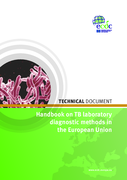
The aim of this handbook is to provide network members and other laboratories involved in the diagnosis of tuberculosis, with an agreed list of key diagnostic methods and their protocols in various
...


This information leaflet is for general informative purposes only. It can be used in its current form or further modified and adapted by responsible authorities in each country as a country-specific
...
Euro Surveillance 2014;19(47):pii=20970, p.31-37

This guidance document is based on research of social media activity related to antibiotic use at EU level, as well as on a survey of the social media activities of EAAD partner organisations, mostly EU umbrella organisations of patients and health
...

This document aims to help EU/EEA public health authorities in the tracing and management of persons, including healthcare workers, who had contact with COVID-19 cases. It outlines the key steps of contact tracing, including contact identification,
...
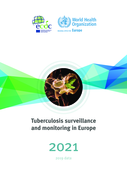
Surveillance Report
Version 1.1. The WHO protocol has been adapted to resource-limited settings and builds on existing methodologies from the European Centre
...

Infection prevention and control measures for Ebola virus
...
A tutorial for trainers in healthcare settings
Version 2: 2 Dec 2014
"The document focuses on an extended set of PPE components, which includes goggles, respirators, gloves,
coveralls and footwea
...

Carbapenems are a major last-line class of antibiotics to treat bacterial infections.The spread of carbapenem-resistant infections is a threat to healthcare andpatient safety in Europe as it seriously curtails the ability to cure infections. The spread of carbapenem-resistant infections is a threat
...

Antibiotic resistance is a natural occurrence caused by mutations in bacteria’s genes. However, inappropriate use of antibiotics accelerates the emergence and spread of antibiotic-resistant bacteria. When exposed to antibiotics, susceptible bacter
...
The ability of bacteria to resist the action of an antibiotic has become a recognised global problem. Antibiotic resistance severely limits the number of antibiotics available for the treatment of diseases.

A patient leaflet for primary care prescribers to hand out to patients: it explains to patients what antibiotic resistance is and why appropriate use of antibiotics is important.
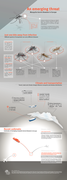
Accessed: 11.03.2019

The toolkit offers advice on how national public health authorities could engage with primary care prescribers so as to promote appropriate and responsible use of antibiotics. The toolkit contains template materials
...
