
Filter
2338
Text search:
humanitarian
policy
Featured
226
629
Language
2224
75
58
47
35
26
14
12
11
5
5
5
4
4
4
4
4
3
3
3
3
3
2
2
2
2
2
2
2
2
2
2
2
2
2
2
2
1
1
1
1
1
1
1
1
1
1
1
1
1
1
1
1
Document type
1103
529
279
167
142
44
30
28
7
3
2
1
1
Countries
173
88
84
59
58
50
47
41
38
37
37
36
31
30
28
28
28
27
26
25
24
24
21
18
16
16
16
15
15
15
14
13
12
12
12
12
12
12
12
11
11
10
9
9
9
8
8
8
8
8
8
8
8
8
8
7
7
7
7
6
6
6
6
6
6
6
5
5
5
4
4
4
3
3
3
3
3
3
3
3
2
2
2
2
2
2
2
2
2
2
2
2
2
2
1
1
1
1
1
1
1
1
1
1
1
1
1
1
1
1
1
1
1
1
1
Authors & Publishers
280
59
57
51
49
47
47
37
33
28
26
23
23
22
17
17
16
15
14
14
12
12
11
11
10
10
10
9
9
9
9
9
9
9
8
8
8
8
8
7
7
7
7
7
7
7
7
6
6
6
6
6
6
6
6
6
6
6
6
6
6
5
5
5
5
5
5
5
5
5
5
5
5
5
5
5
5
5
5
5
4
4
4
4
4
4
4
4
4
4
4
4
4
4
4
4
4
4
4
4
4
4
4
4
4
4
3
3
3
3
3
3
3
3
3
3
3
3
3
3
3
3
3
3
3
3
3
3
3
3
3
3
3
3
3
3
3
3
3
3
3
3
3
3
3
3
3
3
3
3
3
2
2
2
2
2
2
2
2
2
2
2
2
2
2
2
2
2
2
2
2
2
2
2
2
2
2
2
2
2
2
2
2
2
2
2
2
2
2
2
2
2
2
2
2
2
2
2
2
2
2
2
2
2
2
2
2
2
2
2
2
2
2
2
2
2
2
2
2
2
2
2
2
2
2
2
2
2
2
2
2
2
2
2
2
2
2
2
2
2
2
2
2
2
2
2
2
2
2
2
2
2
2
2
2
2
2
2
2
2
2
2
2
2
2
2
2
2
2
2
2
2
2
2
2
2
2
2
2
2
2
2
1
1
1
1
1
1
1
1
1
1
1
1
1
1
1
1
1
1
1
1
1
1
1
1
1
1
1
1
1
1
1
1
1
1
1
1
1
1
1
1
1
1
1
1
1
1
1
1
1
1
1
1
1
1
1
1
1
1
1
1
1
1
1
1
1
1
1
1
1
1
1
1
1
1
1
1
1
1
1
1
1
1
1
1
1
1
1
1
1
1
1
1
1
1
1
1
1
1
1
1
1
1
1
1
1
1
1
1
1
1
1
1
1
1
1
1
1
1
1
1
1
1
1
1
1
1
1
1
1
1
1
1
1
1
1
1
1
1
1
1
1
1
1
1
1
1
1
1
1
1
1
1
1
1
1
1
1
1
1
1
1
1
1
1
1
1
1
1
1
1
1
1
1
1
1
1
1
1
1
1
1
1
1
1
1
1
1
1
1
1
1
1
1
1
1
1
1
1
1
1
1
1
1
1
1
1
1
1
1
1
1
1
1
1
1
1
1
1
1
1
1
1
1
1
1
1
1
1
1
1
1
1
1
1
1
1
1
1
1
1
1
1
1
1
1
1
1
1
1
1
1
1
1
1
1
1
1
1
1
1
1
1
1
1
1
1
1
1
1
1
1
1
1
1
1
1
1
1
1
1
1
1
1
1
1
1
1
1
1
1
1
1
1
1
1
1
1
1
1
1
1
1
1
1
1
1
1
1
1
1
1
1
1
1
1
1
1
1
1
1
1
1
1
1
1
1
1
1
1
1
1
1
1
1
1
1
1
1
1
1
1
1
1
1
1
1
1
1
1
1
1
1
1
1
1
1
1
1
1
1
1
1
1
1
1
1
1
1
1
1
1
1
1
1
1
1
1
1
1
1
1
1
1
1
1
1
1
1
1
1
1
1
1
1
1
1
1
1
1
1
1
1
1
1
1
1
1
1
1
1
1
1
1
1
1
1
1
1
1
1
1
1
1
1
1
1
1
1
1
1
1
1
1
1
1
1
1
1
1
1
1
1
1
1
1
1
1
1
1
1
1
1
1
1
1
1
1
1
1
1
1
1
1
1
1
1
1
1
1
1
1
1
1
1
1
1
1
1
1
1
1
1
1
1
1
1
1
1
1
1
1
1
1
1
1
1
1
1
1
1
1
1
1
1
1
1
1
1
1
1
1
1
1
1
1
1
1
1
1
1
1
1
1
1
1
1
1
1
1
1
1
1
1
1
1
1
1
1
1
1
1
1
1
1
1
1
1
1
1
1
1
1
1
1
1
1
1
1
1
1
1
1
1
1
1
1
1
1
1
1
1
1
1
1
1
1
1
1
1
1
1
1
1
1
1
1
1
1
1
1
1
1
1
1
1
1
1
1
1
1
1
1
1
1
1
1
1
1
1
1
1
1
1
1
1
1
1
1
1
1
1
1
1
1
1
1
1
1
1
1
1
1
1
1
1
1
1
1
1
1
1
1
1
1
1
1
1
1
1
1
1
1
1
1
1
1
1
1
1
1
1
1
1
1
1
1
1
1
1
1
1
1
1
1
1
1
1
1
1
1
1
1
1
1
1
1
1
1
1
1
1
1
1
1
1
1
1
1
1
1
1
1
1
1
1
1
1
1
1
1
1
1
1
1
1
1
1
1
1
1
1
1
1
1
1
1
1
1
1
1
1
1
1
1
1
1
1
1
1
1
1
1
1
1
1
1
1
1
1
1
1
1
1
1
1
1
1
1
1
1
1
1
1
1
1
1
1
1
1
1
1
1
1
1
1
1
1
1
1
1
1
1
1
1
1
1
1
1
1
1
1
1
1
1
1
1
1
1
1
1
1
1
1
1
1
1
1
1
1
1
1
1
1
1
1
1
1
1
1
1
1
1
1
1
1
1
1
1
1
1
1
1
1
1
1
1
1
1
1
1
1
1
1
1
1
1
1
1
1
1
1
1
1
1
1
1
1
1
1
1
1
1
1
1
1
1
1
1
1
1
1
1
1
1
1
1
1
1
1
1
1
1
1
1
1
1
1
1
1
1
1
1
1
1
1
1
1
1
1
1
1
1
1
1
1
1
1
1
1
1
1
1
1
1
1
1
1
1
1
1
1
1
1
1
1
1
1
1
1
1
1
1
1
1
1
1
1
1
1
1
1
1
1
1
1
1
1
1
1
1
1
1
1
1
1
1
1
1
1
1
1
1
1
1
1
1
1
1
1
1
1
1
1
1
1
1
1
1
1
1
1
1
1
1
1
1
1
1
1
1
1
1
1
1
1
1
1
1
1
1
1
1
1
1
1
1
1
1
1
1
1
1
1
1
1
1
1
1
1
1
1
1
1
1
1
1
1
1
1
1
1
1
1
1
1
1
1
1
1
1
1
1
1
1
1
1
1
1
1
1
1
1
1
1
1
1
1
1
1
1
1
1
1
1
1
1
1
1
1
1
1
1
1
1
1
1
1
1
1
1
1
1
1
1
1
1
1
1
1
1
1
1
1
1
1
1
1
1
1
1
1
1
1
1
1
1
1
1
1
1
1
1
1
1
1
1
1
1
1
1
1
1
1
1
1
1
1
1
1
1
1
1
1
1
1
1
1
1
1
1
1
1
1
1
1
1
1
1
1
1
1
1
1
1
1
1
1
1
1
1
1
1
1
1
1
1
1
1
1
1
1
1
1
1
1
1
1
1
1
1
1
1
1
1
1
1
1
1
1
1
1
1
1
1
1
1
1
1
1
1
1
1
1
1
1
1
1
1
1
1
1
1
1
1
1
1
1
1
1
1
1
1
1
1
1
1
1
1
1
1
1
1
1
1
1
1
1
1
1
1
1
1
1
1
1
1
1
1
1
1
1
1
1
1
1
1
1
1
1
1
1
1
1
1
1
1
1
1
1
1
1
1
1
1
1
1
1
1
1
1
1
1
1
1
1
1
1
1
1
1
1
1
1
1
1
1
1
1
1
1
1
1
1
1
1
1
1
1
1
1
1
1
1
1
1
1
1
1
1
1
1
1
1
1
1
1
1
1
1
1
1
1
1
1
1
1
1
1
1
1
1
1
1
1
1
1
1
1
1
1
1
1
1
1
1
1
1
1
1
1
1
1
1
1
1
1
1
1
1
1
1
1
1
1
1
1
1
1
1
1
1
1
1
1
1
1
1
1
1
1
1
1
1
1
1
1
1
1
1
1
1
1
1
1
1
1
1
1
1
1
1
1
1
1
1
1
1
1
1
1
1
1
1
1
1
1
1
1
1
1
1
1
1
1
1
1
1
1
1
1
1
1
1
1
1
1
1
1
1
1
1
1
1
1
1
1
1
1
1
1
1
1
1
1
1
1
1
1
1
1
1
1
1
1
1
1
1
1
1
1
1
1
1
1
1
1
1
1
1
1
1
1
1
1
1
1
1
1
1
1
1
1
1
1
1
1
1
1
1
1
1
1
1
1
1
1
1
1
1
1
1
1
1
1
1
1
1
1
1
1
1
1
1
Publication Years
1
939
1231
158
9
Category
646
384
187
126
91
37
5
2
Toolboxes
298
229
178
147
136
95
87
82
80
64
57
45
37
33
29
24
22
22
15
14
14
10
7
5
4
2
1

UN human rights experts today called on States to protect the rights of migrants and their families, regardless of their migration status, during and after the COVID-19 pandemic.
This is the first version of the INEE technical guideline to support education during the Covid-19 pandemic. It is a living document that will be regularly updated to meet the learning and well-being needs of children, adolescents, youth, teachers, caregivers and other education personnel affected b
...
y Covid-19.
more
Quick Tips on COVID-19 and Migrant, Refugee and Internally Displaced Children (Children on the Move)
This document will be continuously updated. Version as of April 27th, 2020
Migrant and displaced children are at heightened risk to the immediate and secondary impacts of COVID-19. They often live in cramped conditions with limited access to water, sanitation, and hygiene (WASH), may be in immig
...
ration detention or “left behind,” live with disabilities, unaccompanied or separated from their families, and can be hardest to reach with accurate information in a language they understand. Migrant workers and refugees can live in the most disadvantaged urban areas, where access to essential services is already limited. Refugee and migrant children may also be prevented from accessing essential services due to legal, documentation, linguistic or safety barriers. Further, the misinformation on the spread of COVID-19 exacerbates the xenophobia and discrimination that migrant and displaced children and their families already face.
more

The United Nations Network on Migration is committed to supporting all partners in pursuit of the implementation of the Global Compact for Safe, Orderly and Regular Migration, recognizing that this cooperative framework provides an invaluable tool for ensuring inclusive, collective responses to COVI
...
D-19 and its impact.
To that end, this briefing is part of a series by the Network looking at different aspects of the COVID-19 pandemic and how they relate to migrants and their communities. The document provides practical guidance to States and other stakeholders for an improved common understanding of safe and inclusive access to services for migrants. The brief makes the case for enhanced access to services for migrants in the context of COVID-19 preparedness, prevention, and response – and beyond.
more

The outbreak of COVID-19 comes with unpredictable primary and secondary impacts on vulnerable and food-insecure populations across the world. Mortality and morbidity appear to be most acute for elderly people, and those with underlying health conditions. At the same time, the widely anti
...
cipated economic downturn could have a more devastating effect on the world’s poor than the virus itself
more
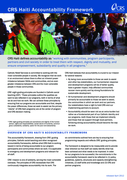
CRS Haiti defines accountability as “working with communities, program participants,
partners and civil society in order to treat them with respect, dignity and mutuality, and
ensure empowerment, subsidiarity and quality in all programs.”
Global procurement for COVID-19 vaccines

Community-Based Management of Acute Malnutrition (CMAM) is a decentralised community-based approach to treating acute malnutrition. Treatment is matched to the nutritional and clinical needs of the child, with the majority children receiving treatment at home using ready-to-use foods. In-patient car
...
e is provided only for complicated cases of acute malnutrition. CMAM consists of four components: (1) stabilisation care for acute malnutrition with complications, (2) out-patient therapeutic care for severe acute malnutrition without complications, (3) supplementary feeding for moderate acute malnutrition and (4) community mobilisation.
more
The COVID-19 pandemic is a multiplier of vulnerability, compounding threats to food insecurity, while exposing weaknesses in food and health systems. It is severely undermining the capacity of communities to cope in times of crisis and has become a stress test for political and economic stability.
he statistics in this report are from the Emergency Events Database (EM-DAT) maintained by the Centre for Research on the Epidemiology of Disasters (CRED) which records disasters which have killed ten or more people; affected 100 or more people; resulted in a declared state of emergency; or a call f
...
or international assistance.
In the period 2000 to 2019, there were 7,348 major recorded disaster events claiming 1.23 million lives, affecting 4.2 billion people (many on more than one occasion) resulting in approximately US$2.97 trillion in global economic losses.
This is a sharp increase over the previous twenty years. Between 1980 and 1999, 4,212 disasters were linked to natural hazards worldwide claiming approximately 1.19 million lives and affecting 3.25 billion people resulting in approximately US$1.63 trillion in economic losses.
Much of the difference is explained by a rise in climate-related disasters including extreme weather events: from 3,656 climate-related events (1980-1999) to 6,681 climate-related disasters in the period 2000-2019.
more
“They Treated Us in Monstrous Ways”.
Since the Syrian conflict began in March 2011, men and boys and transgender women have been subjected to rape and other forms of sexual violence by the Syrian government and non-state armed groups, including the extremist armed group Islamic State (also kno
...
wn as ISIS). Heterosexual men and boys are vulnerable to sexual violence in Syria, but men who are gay or bisexual—or perceived to be—and transgender women are particularly at risk.
more


Accessed on 20.10.2020
In its fight against maternal mortality, the government of Burkina Faso is supported
by the donor community which contributes to the health budget and also supports
specific projects aimed at improving access to health care. This report acknowledges
the efforts to address
...
maternal mortality undertaken by the government with the help
of the donor community, as well as projects led by international and national NGOs.
more

Updated version – September 2020
The COVID-19 pandemic is affecting everyone. Globally, millions of people have been infected with the virus, while hundreds of thousands have lost their lives. In Moldova, the pandemic is placing an ever-increasing pressure on the health care and social protectio
...
n systems, causing major disruptions to economic processes and limitations to social life, deepening inequalities and proving how vulnerable we are.
more
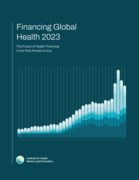
Financing Global Health 2023: The Future of Health Financing in the Post-Pandemic Era
Apeagyei A.E., Dieleman J.L., Leach-Kemon K., et al.
Institute for Health Metrics and Evaluation (IHME)
(2024)
CC
IHME’s Financing Global Health report provides an overview of health spending around the world, with a special focus on investments in health in low- and middle-income countries. The report examines how this funding for health is changing each year and forecasts how it may change in the future. Fi
...
nancing Global Health examines where money for health originates and what health issues it funds.
This year, Financing Global Health 2023 looks at how interest payments on loans that many countries took out during the COVID-19 pandemic to keep their economies afloat and their people protected are now straining health budgets. It also details how development partners’ investments in health in low- and middle-income countries – development assistance for health – have changed since reaching historic levels during the COVID-19 pandemic, dropping by $19.4 billion between 2021 and 2023, from $84.0 billion to $64.6 billion.
more

Concentrations of the major greenhouse gases, CO2 , CH4 , and N2 O, continued to increase despite the temporary reduction in emissions in 2020 related to measures taken in response to COVID-19.
2020 was one of the three warmest years on record. The past six years, including 2020, have been the si
...
x warmest years on record. Temperatures reached 38.0 °C at Verkhoyansk, Russian Federation on 20 June, the highest recorded temperature anywhere north of the Arctic Circle.
The trend in sea-level rise is accelerating. In addition, ocean heat storage and acidification are increasing, diminishing the ocean’s capacity to moderate climate change.
more
The WHO SAGE values framework for the allocation and prioritization of COVID-19 vaccination is intended to offer guidance on the prioritization of groups for vaccination when vaccine supply is limited. It provides a values foundation for the objectives of COVID-19 vaccination programmes and links t
...
hose to target groups for vaccination. This information is valuable to countries and globally while specific policies will be developed once vaccines become available.
This document it available in Arabic, Chinese English, French, Portuguese and Russian
more
