
Filter
2517
Text search:
World
Health
Organization
WHO
-
Regional
Office
Africa
Featured
298
629
Language
2402
84
56
40
37
37
15
3
3
2
2
2
2
2
2
1
1
1
1
1
1
1
1
1
1
1
1
1
1
Document type
1145
533
377
177
135
57
46
29
7
4
2
2
1
1
Countries
144
87
81
76
73
72
61
47
46
44
43
40
37
34
33
33
32
31
29
29
27
26
24
23
22
22
18
16
15
15
14
14
13
13
12
12
12
11
11
9
9
9
9
9
8
8
8
8
8
7
7
7
7
7
6
6
6
6
6
5
5
5
5
5
4
4
4
4
4
3
3
3
3
3
2
2
2
2
2
2
2
2
2
2
1
1
1
1
1
1
1
1
1
1
1
1
1
1
1
1
1
1
1
1
1
1
1
1
1
1
1
1
1
1
1
Authors & Publishers
572
141
101
84
64
47
44
43
42
36
32
29
27
18
17
15
14
13
12
11
11
11
10
10
10
10
9
9
8
8
8
8
8
8
8
8
8
8
7
7
7
7
7
6
6
6
6
6
6
6
6
6
6
5
5
5
5
5
5
5
5
5
5
4
4
4
4
4
4
4
4
4
4
4
4
4
4
4
4
4
4
4
4
4
4
4
4
4
3
3
3
3
3
3
3
3
3
3
3
3
3
3
3
3
3
3
3
3
3
3
3
3
3
3
3
3
3
3
3
3
3
3
3
3
3
3
3
3
3
3
3
3
3
3
3
3
3
3
3
3
3
3
3
3
3
2
2
2
2
2
2
2
2
2
2
2
2
2
2
2
2
2
2
2
2
2
2
2
2
2
2
2
2
2
2
2
2
2
2
2
2
2
2
2
2
2
2
2
2
2
2
2
2
2
2
2
2
2
2
2
2
2
2
2
2
2
2
2
2
2
2
2
2
2
2
2
2
2
2
2
2
2
2
2
2
2
2
2
2
2
2
2
2
2
2
2
2
2
2
2
2
2
2
2
2
2
2
2
2
2
2
2
2
2
2
2
2
2
2
2
2
2
2
2
1
1
1
1
1
1
1
1
1
1
1
1
1
1
1
1
1
1
1
1
1
1
1
1
1
1
1
1
1
1
1
1
1
1
1
1
1
1
1
1
1
1
1
1
1
1
1
1
1
1
1
1
1
1
1
1
1
1
1
1
1
1
1
1
1
1
1
1
1
1
1
1
1
1
1
1
1
1
1
1
1
1
1
1
1
1
1
1
1
1
1
1
1
1
1
1
1
1
1
1
1
1
1
1
1
1
1
1
1
1
1
1
1
1
1
1
1
1
1
1
1
1
1
1
1
1
1
1
1
1
1
1
1
1
1
1
1
1
1
1
1
1
1
1
1
1
1
1
1
1
1
1
1
1
1
1
1
1
1
1
1
1
1
1
1
1
1
1
1
1
1
1
1
1
1
1
1
1
1
1
1
1
1
1
1
1
1
1
1
1
1
1
1
1
1
1
1
1
1
1
1
1
1
1
1
1
1
1
1
1
1
1
1
1
1
1
1
1
1
1
1
1
1
1
1
1
1
1
1
1
1
1
1
1
1
1
1
1
1
1
1
1
1
1
1
1
1
1
1
1
1
1
1
1
1
1
1
1
1
1
1
1
1
1
1
1
1
1
1
1
1
1
1
1
1
1
1
1
1
1
1
1
1
1
1
1
1
1
1
1
1
1
1
1
1
1
1
1
1
1
1
1
1
1
1
1
1
1
1
1
1
1
1
1
1
1
1
1
1
1
1
1
1
1
1
1
1
1
1
1
1
1
1
1
1
1
1
1
1
1
1
1
1
1
1
1
1
1
1
1
1
1
1
1
1
1
1
1
1
1
1
1
1
1
1
1
1
1
1
1
1
1
1
1
1
1
1
1
1
1
1
1
1
1
1
1
1
1
1
1
1
1
1
1
1
1
1
1
1
1
1
1
1
1
1
1
1
1
1
1
1
1
1
1
1
1
1
1
1
1
1
1
1
1
1
1
1
1
1
1
1
1
1
1
1
1
1
1
1
1
1
1
1
1
1
1
1
1
1
1
1
1
1
1
1
1
1
1
1
1
1
1
1
1
1
1
1
1
1
1
1
1
1
1
1
1
1
1
1
1
1
1
1
1
1
1
1
1
1
1
1
1
1
1
1
1
1
1
1
1
1
1
1
1
1
1
1
1
1
1
1
1
1
1
1
1
1
1
1
1
1
1
1
1
1
1
1
1
1
1
1
1
1
1
1
1
1
1
1
1
1
1
1
1
1
1
1
1
1
1
1
1
1
1
1
1
1
1
1
1
1
1
1
1
1
1
1
1
1
1
1
1
1
1
1
1
1
1
1
1
1
1
1
1
1
1
1
1
1
1
1
1
1
1
1
1
1
1
1
1
1
1
1
1
1
1
1
1
1
1
1
1
1
1
1
1
1
1
1
1
1
1
1
1
1
1
1
1
1
1
1
1
1
1
1
1
1
1
1
1
1
1
1
1
1
1
1
1
1
1
1
1
1
1
1
1
1
1
1
1
1
1
1
1
1
1
1
1
1
1
1
1
1
1
1
1
1
1
1
1
1
1
1
1
1
1
1
1
1
1
1
1
1
1
1
1
1
1
1
1
1
1
1
1
1
1
1
1
1
1
1
1
1
1
1
1
1
1
1
1
1
1
1
1
1
1
1
1
1
1
1
1
1
1
1
1
1
1
1
1
1
1
1
1
1
1
1
1
1
1
1
1
1
1
1
1
1
1
1
1
1
1
1
1
1
1
1
1
1
1
1
1
1
1
1
1
1
1
1
1
1
1
1
1
1
1
1
1
1
1
1
1
1
1
1
1
1
1
1
1
1
1
1
1
1
1
1
1
1
1
1
1
1
1
1
1
1
1
1
1
1
1
1
1
1
1
1
1
1
1
1
1
1
1
1
1
1
1
1
1
1
1
1
1
1
1
1
1
1
1
1
1
1
1
1
1
1
1
1
1
1
1
1
1
1
1
1
1
1
1
1
1
1
1
1
1
1
1
1
1
1
1
1
1
1
1
1
1
1
1
1
1
1
1
1
1
1
1
1
1
1
1
1
1
1
1
1
1
1
1
1
1
1
1
1
1
1
1
1
1
1
1
1
1
1
1
1
1
1
1
1
1
1
1
1
1
1
1
1
1
1
1
1
1
1
1
1
1
1
1
1
1
1
1
1
1
1
1
1
1
1
1
1
1
1
1
1
1
1
1
1
1
1
1
1
1
1
1
1
1
1
1
1
1
1
1
1
1
1
1
1
1
1
1
1
1
1
1
1
1
1
1
1
1
1
1
1
1
1
1
1
1
1
1
1
1
1
1
1
1
1
1
1
1
1
1
1
1
1
1
1
1
1
1
1
1
1
1
1
1
1
1
1
1
1
1
1
1
1
1
1
1
1
1
1
1
1
1
1
1
1
1
1
1
1
1
1
1
1
1
1
1
1
1
1
1
1
1
1
1
1
1
1
1
1
1
1
1
1
1
1
1
1
1
1
1
1
1
1
1
1
1
1
1
1
1
1
1
1
1
1
1
1
1
1
1
1
1
1
1
1
1
1
1
1
1
1
1
1
1
1
1
1
1
1
1
1
1
1
1
1
1
1
1
1
1
1
1
1
1
1
1
1
1
1
1
1
1
1
1
1
1
1
1
1
1
1
1
1
1
1
1
1
1
1
1
1
1
1
1
1
1
1
1
1
1
1
1
1
1
1
1
1
1
1
1
1
1
1
1
1
1
1
1
1
1
1
1
1
1
1
1
1
1
1
1
1
1
1
1
1
1
1
1
1
1
1
1
1
1
1
1
1
1
1
1
1
1
1
1
1
1
1
1
1
1
1
1
1
1
1
1
1
1
1
1
1
1
1
1
1
1
1
1
1
1
1
1
1
1
1
1
1
1
1
1
1
1
1
1
1
1
1
1
1
1
1
1
1
1
1
1
1
1
1
1
1
1
1
1
1
1
1
1
1
1
1
1
1
1
1
1
1
1
1
1
1
1
1
1
1
1
1
1
1
1
1
1
1
1
1
1
1
1
1
1
1
1
1
1
1
1
1
1
1
1
1
1
1
1
1
1
1
1
1
1
1
1
1
1
1
1
1
1
1
1
1
1
1
1
1
1
1
1
1
1
1
1
1
1
1
1
1
1
1
1
1
1
1
1
1
1
1
1
1
1
1
1
1
1
1
1
1
1
1
1
1
1
1
1
1
1
1
1
1
1
1
1
1
1
1
1
1
1
1
1
1
1
1
1
1
1
1
1
1
1
1
1
1
1
1
1
1
1
1
1
1
1
1
1
1
1
1
1
1
1
1
1
1
1
1
1
1
1
1
1
1
1
1
1
1
1
1
1
1
1
1
1
1
1
1
1
1
1
1
1
1
1
1
1
1
1
1
1
1
1
1
Publication Years
922
1397
187
10
1
Category
817
199
188
166
154
55
32
Toolboxes
207
174
128
125
118
104
102
87
86
81
70
69
63
62
55
52
45
42
42
21
20
15
14
7
6
3
1
The use of the World Health Organization Health System Performance Assessment Framework

Updated to Reflect the 2009 Medical Eligibility Criteria of the World Health Organization

The COVID-19 pandemic has put significant pressure on health systems all around the world. The drastic measures established to contain its spread are creating serious impediments to economic activit
...
y (including agrifood systems) and, consequently, to livelihoods and food security and nutrition.
more
Recommendations to develop guidelines on community-based rehabilitation (CBR) were made during the International Consultation to Review Community-based Rehabilitation which was held in Helsinki, Finland in 2003. WHO; the International Labour
...
Organization; the United Nations Educational, Scientific and Cultural Organization; and the International Disability and Development Consortium – notably CBM, Handicap International, the Italian Association Amici di Raoul Follereau, Light for the World, the Norwegian Association of Disabled and Sightsavers – have worked closely together to develop the Community-based rehabilitation guidelines. More than 180 individuals and representatives of nearly 300 organizations, mostly from low-income and middle-income countries around the world, have been involved in their development.
more
Caregivers provide invaluable service and support to patients in health facilities. In many health systems, caregivers (often members of the patient’s family or friends) are responsible for provid
...
ing basic care for a patient, including providing food and drinks, cleaning clothes and bed linen, as well as supporting basic activities for daily living, such as washing or using the toilet. Small children and infants who are dependent on caregivers for performing essential daily activities require similar assistance while being treated in a health care facility. Such care is also a priority for people approaching the end of life, as patients and relatives increasingly spend time together at this critical stage.
more

A year ago, the second Special Session of the World Health Assembly (WHASS) unanimously agreed to start a diplomatic process for a new binding instrument aimed at ensuring the international communit
...
y is better prepared for the next health emergencies. The establishment of an Intergovernmental Negotiating Body (INB) at the WHO paved the terrain for a proper negotiation, which has started to unfold. The INB will be releasing the “conceptual zero draft” of the treaty text in early December 2022.
more
The Sierra Leone National Infection Prevention and Control Guidelines were jointly developed and updated by the Ministry of Health and Sanitation in collaboration with the World
...
Health Organization and the US Centers for Disease Control and Prevention.
more
Crisis Emergency Risk Communication. Manual
recommended
The CERC manual provides an evidence-based framework and recommended practices for anyone who communicates on behalf of an organization responding to major emergencies such as natural disasters.

Climate change presents the single biggest threat to human development, and its widespread impacts disproportionately burden the poorest and most vulnerable households in fragile and rural developing contexts – particularly women and children.
According to the Intergovernmental Panel on Climate C
...
hange’s (IPCC) latest report, ‘between 2010 and 2020, droughts, floods and storms killed 15 times as many people in highly vulnerable countries, particularly in Africa — which is responsible for less than 3 percent of global emissions – than in the wealthiest countries’.
Recognising environmental degradation and climate change are key accelerators of extreme child vulnerability, World Vision (WV) approved the Environmental Stewardship Management Policy (‘the Policy’) and Guidelines (‘the Guidelines’) in 2021.
To support the implementation of the Policy and Guidelines, WV has developed this Environmental Stewardship and Climate Action Handbook (‘the Handbook’) to help offices across the WV Partnership implement best practice environmental management strategies both in the field and in our operations and facilities.
Integrating environmental stewardship and climate action into all our work – whether that be in our Area Programmes, grant projects, responses to disasters or advocacy – is critical to achieving WV’s strategy.
As a Christian organisation we are compelled to follow the ways of Jesus Christ, calling us to care for the ‘least of these’ (Matthew 25:40) – the vulnerable children who are disproportionately impacted by climate change. Our response to the degradation of the environment is not motivated by political expediency or funding – but because we are called to steward God’s creation (Genesis 1:28).
more
This is a report from a National, representative household survey carried out in Botswana in 2012 – 2014. The study was carried out on behalf of the Norwegian Federation of Organisations of Disabled Persons (FFO), Southern Africa Federation of the
...
Disabled (SASFOD) and Botswana Federation of Disabled People (BOFOD). The study was led by Professor Tlamelo Mmatli of the University of Botswana, in collaboration with SINTEF Technology and Society. The study would not have been possible without a strong commitment from the Office of the President of Botswana and support from the Central Statistical Office. The study presents a broad picture of the situation among individuals with disability and households with disabled members in Botswana. It offers comparison with individuals without disability and households without disabled members, between provinces and between genders and locations (urban/rural). The study reveals that households with disabled members and individuals with disability score lower on a range on indicators on level of living.
more
Senegal has adopted the World Health Organization–Joint United Nations Programme on HIV/AIDS recommended 90-90-90 targets.5 The adoption of this
...
strategy means that the country is expected, by 2020, to have 90% of its population living with HIV diagnosed, 90% of all those diagnosed receiving sustained HIV treatment, and 90% of those receiving antiretroviral therapy having suppressed viral load measures.5 To achieve these outcomes, having good clinical laboratory services for diagnosis and follow-up will be critical.6 More specifically, investments will be needed to improve laboratory infrastructure, and to facilitate the access and availability of routine viral load and early infant diagnosis (EID) measures through the implementation of point-of-care (POC) diagnostic platforms along with an efficient and sustainable quality assurance programme.
more

This comprehensive reference document is intended for those responsible for training in SMC (Seasonal Malaria Chemoprevention). It assumes that SMC will be implemented using the Community Health Worker strategy.
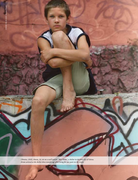
The full range and scale of all forms of violence against children are only now becoming visible, as is the evidence of the harm it does. This book documents the outcomes and recommendations of the process of the United Nations Secretary-General’s Study on Violence against Children. ‘The Studyâ€
...
™ is the first comprehensive, global study on all forms of violence against children.
It builds on the model of the study on the impact of armed conflict on children, prepared by Graça Machel and presented to the General Assembly in 1996, and follows the World Health Organization’s 2002 World Report on Violence and Health.1
more

Has the world worked together to tackle the coronavirus? July 2021. This research paper assesses how the global community has responded to calls for greater solidarity in tackling the COVID-19 pandemic, and presents the insights of key stakeholders
...
and experts in global health governance, health security, and pandemic preparedness and response. The authors examine the state of solidarity at global, regional and national levels, and present case studies on COVAX and on the EU’s turbulent journey through solidarity.
more

The United Nations Children's Fund (UNICEF), the International Organization for Migration (IOM), Georgetown University, and the United Nations University have today launched new guidelines to provide the first-ever global policy framework that will
...
help protect, include, and empower children on the move in the context of climate change.
The Guiding Principles for Children on the Move in the Context of Climate Change provides a set of 9 principles that address the unique and layered vulnerabilities of children on the move both internally and across borders as a result of the adverse impacts of climate change. Currently, most child-related migration policies do not consider climate and environmental factors, while most climate change policies overlook the unique needs of children.
The guidelines note that climate change is intersecting with existing environmental, social, political, economic, and demographic conditions contributing to people’s decisions to move. In 2020 alone, nearly 10 million children were displaced in the aftermath of weather-related shocks. With around one billion children – nearly half of the world’s 2.2 billion children – living in 33 countries at high risk of the impacts of climate change, millions more children could be on the move in the coming years.
Developed in collaboration with young climate and migration activists, academics, experts, policymakers, practitioners, and UN agencies, the guiding principles are based on the globally ratified Convention on the Rights of the Child and are further informed by existing operational guidelines and frameworks.
Recommendations for safeguarding the rights and well-being of children regardless of their location or migration status.
The guiding principles provide national and local governments, international organizations and civil society groups with a foundation to build policies that protect children’s rights. The organizations and institutions are calling on governments, local and regional actors, international organizations, and civil society groups to embrace the guiding principles to help protect, include, and empower children on the move in the context of climate change.
more

Countries, partners, and donors are committed to the global elimination of blinding trachoma by 2020.
Achieving this public health milestone requires more than funding; it requires health personnel
...
with the
right mix of skills, and well supported and managed health systems. Mass drug administration (MDA)
with Zithromax®, the Pfizer, Inc. donated antibiotic, is a key component of the SAFE strategy, endorsed
by the World Health Organization. There is growing
recognition that improving all aspects of MDA, from
planning to training, recording to reporting, and
receipt of drug to distribution (the supply chain), will
be necessary if MDA programmes are going to reduce
the community burden of Chlamydia trachomatis, and
eliminate trachoma as a cause of blindness by 2020.
more

he refugee flow to Ethiopia continued during 2018, with 36,1351 persons seeking safety and protection within the country’s borders. At the start of 2019, the nation hosted 905,8312 thousand refugees who were forced to flee their homes as a result
...
of insecurity, political instability, military conscription, conflict, famine and other problems in their countries of origin. Ethiopia is one of the largest refugee asylum countries world-wide, and the second largest in Africa, reflecting the ongoing fragility and conflict in the region. Ethiopia provides protection to refugees from some 26 countries. Among the principal factors leading to this situation are predominantly the conflict in South Sudan, the prevailing political environment in Eritrea, together with conflict and draught in Somalia.
more
Over the past decade, countries in the African region experienced slow progress in mobilizing resources for health while facing continued challenges. In their revised estimates published in 2017, Stenberg et al., developed two costs scenarios, terme
...
d progress and ambitious, aimed at strengthening comprehensive health service delivery to achieve SDG 3 and universal health coverage in low-income and middle-income countries (Stenberg et al., 2017). Out of the 47 countries in the WHO African region only eight, on average, met the recommended threshold of spending a minimum of US$ 249 per capita on health during the period from 2012 to 2020. In 2020, this achievement was observed in only five countries while the remaining countries spent less than US$ 249 per capita, with health expenditures ranging from US$ 16.4 to US$ 236.6, highlighting significant disparities across the region.
more

In Sierra Leone, Health care delivery is organized around a three-tier system i) primary level constituting peripheral health units (community health
...
centers, community health posts, and maternal and child health posts secondary level constituting district hospitals tertiary level comprising regional and national referral hospitals [Figure 3].
more
