Filter
996
Text search:
necesidades
Featured
75
175
Language
Document type
428
226
122
84
68
23
20
10
8
2
2
1
1
Countries
119
85
73
53
51
36
31
28
25
22
22
13
9
8
8
7
6
5
3
3
2
2
2
2
1
1
1
1
1
1
1
1
1
1
1
1
1
1
1
1
1
Authors & Publishers
Publication Years
Category
400
140
66
59
29
10
5
Toolboxes
185
114
85
42
34
27
25
25
18
16
14
13
12
12
10
9
8
8
7
6
6
4
4
2
1
1
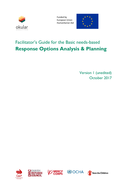
The Facilitator’s Guide for the basic-needs based Response Options Analysis and Planning (ROAP) is a step-by-step guide comprising tools and templates to carry out a multi-sectoral response analysis and planning of response options, in a sudden-onset or chronic crisis.
Being that so, the Guide i
...
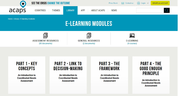
An introduction to Coordinated Needs Assessment in 6 parts:
Part 1: Key concepts
Part 2: Link to Decision-making
Part 3: The Framework
Part 4: The Good Enough Principle
Part 5: The assessment cycle
Part 6: Basic Principles
Much remains unknown about displaced communities in out-of-camp areas as identification constraints hinder knowledge on the overall situation and preeminent needs of an area. When compared to regularly monitored in-camp populations, less is known about the health, sanitation, livelihoods, food secur
...
The compendium compiles practical case studies on the use of Geospatial Artificial Intelligence (GeoAI) to enhance disaster risk reduction and emergency response across diverse geographic and institutional contexts.
The compendium features selected case studies submitted by twenty-seven Regional Su
...
WHO subsequently developed a standardized methodology for risk assessments, based on the Rapid Risk Assessment of Acute Public Health Events manual. To attain the highest possible level of objectivity, accuracy and reproducibility, the standardized RRA approach is applied by those conducting public
...
The Feedback Starter-Kit responds to key questions ( ) and provides the most important tips ( ) for setting up and running a simple feedback mechanism. At the end of this document there is an overview of the templates needed to plan the mechanism and collect, answer, analyse and share community feed
...
Combined questionnaire Core

These pages contain links to critical guidelines, technical documents, tools and resources needed to investigate and respond to outbreaks.

El documento presenta un marco estratégico de la Organización Mundial de la Salud para la gestión de riesgos relacionados con emergencias y desastres en el sector de la salud. Destaca que estos eventos (como epidemias, desastres naturales o conflictos) tienen un impacto significativo en la salud,
...
The Gulf CDC Technical Guide for Rapid Risk Assessments of Acute Public Health Events provides a structured, multi-sectoral approach to evaluate and manage public health threats in Gulf Cooperation Council (GCC) countries. It focuses on rapid, evidence-based assessments (within 2-5 days) to determin
...
Support Collaborative Risk Assessment for health threats

Manual with Scale

The cluster approach is a mechanism that helps to address identified gaps in response and enhance the quality of humanitarian action

Operational Guideline
The Good Enough Guide
recommended
A set of basic guidelines on how to be accountable to local people and measure program impact in emergency situations. The "good enough" approach emphasizes simple and practical solutions and encourages the user to choose tools that are safe, quick, and easy to implement
A Guide for UNICEF Staff

The purpose of this booklet is to assist WHO and other
Public Health workers in the field when an emergency
occurs. The booklet provides technical hints on how to
carry out a rapid health assessment, how to facilitate
coordination, how departments in WHO can assist, etc.
Standard formats for re
...