
Filter
1671
Text search:
hazards
Featured
172
414
Language
Document type
750
315
246
157
92
33
31
21
18
4
2
1
1
Countries
105
78
54
52
36
31
30
25
23
23
21
20
18
17
16
15
15
15
15
15
13
12
11
11
11
11
10
9
9
9
8
8
7
7
6
6
6
6
6
6
5
5
5
4
4
4
4
4
4
3
3
3
3
3
3
3
3
2
2
2
2
2
2
2
2
2
2
2
2
2
2
2
2
2
2
2
2
1
1
1
1
1
1
1
1
1
1
1
1
1
1
1
1
1
1
1
1
1
1
1
1
1
1
1
1
1
Authors & Publishers
Publication Years
Category
549
273
97
69
42
33
25
2
Toolboxes
200
121
110
107
93
63
59
58
55
46
45
44
38
34
31
27
22
14
13
11
9
7
3
2
2
2
2

Joint External Evaluation Open WHO
recommended
A Joint External Evaluation (JEE) is an essential component of the International Health Regulations (IHR) Monitoring and Evaluation Framework (IHR MEF). The process involves a self-assessment by the country, followed by an evaluation conducted by an independent JEE team using a standardized tool. Th
...

This guide defines public spaces for children as those that can be easily and freely accessed and enjoyed by all children, either alone or with friends or family, regardless of gender,
ethnicity, sexuality, nationality, social status or physical ability. Whatever their context, these places are saf
...

This document suggests mechanisms that countries can use to respond to emergencies and disasters taking a whole of society and whole of government approach ensuring multisectoral engagement for health actions. It helps to run a participatory process of developing the national health response operati
...

Int. J. Environ. Res. Public Health 2018, 15(12), 2626; https://doi.org/10.3390/ijerph15122626
Climate change is increasing risks to human health and to the health systems that seek to protect the safety and well-being of populations. Health authorities require information about current associatio
...

The protracted humanitarian situation in northeastern Nigeria, particularly in Borno, Adamawa, and Yobe (BAY) States, remains a concern due to ongoing insecurity, displacement, food insecurity, disease outbreaks, and climate-related shocks. To address these complex challenges, the health sector has
...

The document focuses on integrating epidemic risk into the INFORM Global Risk Index, a tool used to assess and compare crisis and disaster risks across countries. It explains how epidemics can significantly impact vulnerability and hazard exposure, and therefore should be systematically included in
...
Investigating outbreaks caused by non-infectious, toxic agents requires some unique considerations and skills that are different from those used to investigate infectious disease outbreaks. To help public health agencies investigate these outbreaks, CDC’s National Center for Environmental Health (
...
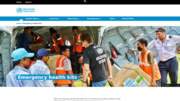
Emergency health kits
recommended
WHO has developed standardized health kits of medicines and medical supplies to meet different health needs in humanitarian emergencies and disasters.
These kits are developed to provide reliable and affordable medicines and supplies quickly to those in need. The kits are used by United Nations age
...
The Early Warnings for All (EW4All) initiative aims to ensure universal protection from hazardous hydrometeorological, climatological and related environmental events through life-saving multi-hazard early warning systems, anticipatory action and resilience efforts by the end of 2027, as called for
...
The webpage presents WeatherNext 2, an advanced AI-based weather forecasting model developed by Google DeepMind. It explains how the system uses machine learning to analyze large amounts of atmospheric data and produce fast and accurate weather predictions. The model is designed to improve forecasti
...

O documento apresenta o quadro da Organização Mundial da Saúde para a gestão de riscos de emergências de saúde e desastres (Health EDRM). Explica que comunidades em todo o mundo enfrentam uma ampla variedade de perigos — como surtos de doenças infecciosas, desastres naturais e conflitos —
...

The document provides practical guidelines for conducting a national disaster risk assessment, developed by the United Nations Office for Disaster Risk Reduction. It emphasizes the importance of understanding disaster risk as a foundation for effective disaster risk management and sustainable develo
...

This Manual is primarily intended for community level volunteers trained in Community Based Disaster Risk Management (CBDRM) and CBDRM Practitioners and Professionals.
The year of publication is not specified in the document.
The year of publication is not specified in the document.

The ERP approach seeks to improve effectiveness by reducing both time and effort, enhancing predictability through establishing predefined roles, responsibilities and coordination mechanisms. The Emergency Response Preparedness Plan (ERPP) has four main components: i) Risk Assessment, ii) Minimum Pr
...
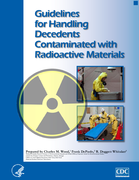
Detonation of a nuclear weapon or activation of a radiological dispersal device could cause radioactively contaminated decedents. These guidelines are designed to address both of these scenarios. They could also be applicable in other instances where decedents’ bodies are contaminated with radioa
...
The Guidance Notes seek to help operationalize, simplify and standardize the collection and reporting of data through the application of common language and methods. They provide information on the key issues to take into account in the collection of health data and the types of data that should be
...
The health impact of radiological and nuclear emergencies can last for decades. Lessons learned from past radiological and nuclear accidents have demonstrated that the mental health and psychosocial consequences can outweigh the direct physical health impacts of radiation exposure. International rad
...

The ANA (American Nurses Association) is a internet platform, where you can find important resources about nursing care, work environment, advocacy, scope of practice and much more. ANA believes that every nurse should be supported to be at their best health, as role models, advocates, and educators
...
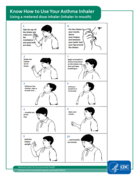
Manual:
Know How to Use Your Asthma Inhaler.
Using a metered dose inhaler (inhaler in mouth).
