
Filter
1537
Text search:
breathing
Featured
240
344
Language
Document type
740
306
156
114
86
58
21
18
14
12
5
5
1
1
Countries
167
63
56
42
35
32
30
29
27
26
25
25
21
21
20
19
18
17
16
15
13
12
11
10
9
9
8
8
6
6
6
6
6
6
6
5
5
5
5
5
4
4
4
4
4
3
3
3
3
3
3
3
3
2
2
2
2
2
2
2
2
2
2
2
2
2
2
2
1
1
1
1
1
1
1
1
1
1
1
1
1
1
1
1
1
1
1
1
1
1
1
1
1
Authors & Publishers
Publication Years
Category
615
202
158
94
61
33
8
Toolboxes
244
142
105
74
52
49
33
31
30
28
26
19
18
18
18
14
13
10
10
9
9
6
6
5
4

The information provided here can be used to understand the current situation, increase attention to preterm births in Rwanda and to inform dialogue and action among stakeholders. Data can be used to identify the most important risk factors to target and gaps in care in order to identify and impleme
...

The information provided here can be used to understand the current situation, increase attention to preterm births in Rwanda and to inform dialogue and action among stakeholders. Data can be used to identify the most important risk factors to target and gaps in care in order to identify and impleme
...

The information provided here can be used to understand the current situation, increase attention to preterm births in Rwanda and to inform dialogue and action among stakeholders. Data can be used to identify the most important risk factors to target and gaps in care in order to identify and impleme
...

The information provided here can be used to understand the current situation, increase attention to preterm births in Rwanda and to inform dialogue and action among stakeholders. Data can be used to identify the most important risk factors to target and gaps in care in order to identify and impleme
...

Anaesthesia Handbook
recommended
The aim of this handbook is to provide guidance for trained anaesthetists working for the ICRC and to offer advice in areas where practice will differ from that in their home country. It is designed to supplement the practical training given in ICRC war-surgery seminars and to support the work of th
...
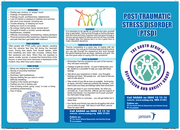
Brochure on PTSD: If you are like many South Africans and have been the victim of violent crime, abuse, accidents, loss, or illness, you may be suffering from a very real illness – Post Traumatic Stress Disorder or PTSD. Many victims of trauma in South Africa don’t get help because they feel emb
...
How to recognise Post-Traumatic Stress Disorder | The nature and cause of Post-Traumatic Stress Disorder | Treatment and referral | Sources of further information | Compiled by the Scientific & Advisory Board Members of the South African Depression & Anxiety Group, and reviewed by the MRC Research U
...


Do you sometimes have sudden attacks of
anxiety and overwhelming fear that last for
several minutes? Maybe your heart pounds,
you sweat, and you feel like you can’t
breathe or think. Do these attacks occur at
unpredictable times with no obvious trigger,
causing you to worry about the possibi
...

This manual is both a guide to treatment and a workbook for persons who suffer from genalized anxiety disorder.

These forms are intended only for clinicians and nurses taking care of patients with Ebola virus disease. They provide standardized information that needs to be collected by the clinicians at admission time, every day and at time of discharge.

SUI supporting material
• Person stories
• Role plays
• Multiple choice questions
• Video link
Activity 2: mhGAP SUI module – assessment and management
Session outline
•Introduction to self-harm/suicide.
•Assessment of self-harm/suicide.
•Management of self-harm/suicide.
•Follow-up.
Essential Newborn Care Guidelines
recommended

WHO and public health authorities around the world are taking action to contain the COVID-19 outbreak. However, long term success cannot be taken for granted. All sections of our society – including businesses and employers – must play a role if we are to stop the spread of this disease.

The guidance provides critical considerations and practical checklists to keep schools safe. It also advises national and local authorities on how to adapt and implement emergency plans for educational facilities.
In the event of school closures, the guidance includes recommendations to mitigate
...
On the 31st December 2019, the World Health Organization (WHO) China country office reported a cluster of pneumonia cases in Wuhan City, Hubei Province of China now known to be caused by a novel virus. Severe acute respiratory syndrome coronavirus 2 (SARS-CoV-2) has been confirmed as the causative v
...
The protection of children and educational facilities is particularly important. Precautions are necessary to prevent the potential spread of COVID-19 in school settings; however, care must also be taken to avoid stigmatizing students and staff who may have been exposed to the virus. It is important
...

Updated 20 March 2020

