
Filter
2974
Text search:
health
equity
Featured
251
766
Language
2836
110
97
62
38
27
26
22
4
4
3
3
2
2
2
2
1
1
1
1
1
1
1
1
1
1
1
1
1
1
1
1
1
1
Document type
1429
663
382
194
174
55
34
18
11
4
4
2
1
1
Countries
214
91
82
76
70
63
62
57
55
51
47
45
45
45
44
44
43
41
41
40
35
30
22
20
20
19
19
19
16
15
15
13
13
13
13
13
12
11
11
11
10
10
10
10
9
9
8
8
8
7
7
7
6
6
6
6
6
6
5
5
5
5
5
5
4
4
4
3
3
3
3
3
3
3
3
3
3
2
2
2
2
2
2
2
2
2
2
2
2
2
1
1
1
1
1
1
1
1
1
1
1
1
1
1
1
1
1
1
1
1
1
1
1
1
1
1
Authors & Publishers
529
131
105
105
80
72
42
34
32
29
23
23
19
16
15
15
15
14
14
14
14
12
12
12
11
11
11
11
10
10
10
10
9
9
9
8
8
8
8
8
7
7
7
7
7
7
6
6
6
6
6
6
6
6
6
6
6
6
5
5
5
5
5
5
5
5
5
5
5
5
5
5
5
5
4
4
4
4
4
4
4
4
4
4
4
4
4
4
4
4
4
4
4
4
4
4
4
4
4
4
4
4
4
4
4
3
3
3
3
3
3
3
3
3
3
3
3
3
3
3
3
3
3
3
3
3
3
3
3
3
3
3
3
3
3
3
3
3
3
3
3
3
3
3
3
3
3
3
3
3
3
3
3
3
3
3
3
3
3
3
3
3
3
3
3
3
3
3
3
3
3
2
2
2
2
2
2
2
2
2
2
2
2
2
2
2
2
2
2
2
2
2
2
2
2
2
2
2
2
2
2
2
2
2
2
2
2
2
2
2
2
2
2
2
2
2
2
2
2
2
2
2
2
2
2
2
2
2
2
2
2
2
2
2
2
2
2
2
2
2
2
2
2
2
2
2
2
2
2
2
2
2
2
2
2
2
2
2
2
2
2
2
2
2
2
2
2
2
2
2
2
2
2
2
2
2
2
2
2
2
2
2
2
2
2
2
2
2
2
2
2
2
2
2
2
2
2
2
2
2
2
2
2
2
2
2
2
2
2
2
2
2
2
2
2
2
2
2
2
2
2
2
2
2
2
2
2
2
2
2
2
2
2
2
2
2
2
2
2
2
2
2
2
2
2
2
2
2
1
1
1
1
1
1
1
1
1
1
1
1
1
1
1
1
1
1
1
1
1
1
1
1
1
1
1
1
1
1
1
1
1
1
1
1
1
1
1
1
1
1
1
1
1
1
1
1
1
1
1
1
1
1
1
1
1
1
1
1
1
1
1
1
1
1
1
1
1
1
1
1
1
1
1
1
1
1
1
1
1
1
1
1
1
1
1
1
1
1
1
1
1
1
1
1
1
1
1
1
1
1
1
1
1
1
1
1
1
1
1
1
1
1
1
1
1
1
1
1
1
1
1
1
1
1
1
1
1
1
1
1
1
1
1
1
1
1
1
1
1
1
1
1
1
1
1
1
1
1
1
1
1
1
1
1
1
1
1
1
1
1
1
1
1
1
1
1
1
1
1
1
1
1
1
1
1
1
1
1
1
1
1
1
1
1
1
1
1
1
1
1
1
1
1
1
1
1
1
1
1
1
1
1
1
1
1
1
1
1
1
1
1
1
1
1
1
1
1
1
1
1
1
1
1
1
1
1
1
1
1
1
1
1
1
1
1
1
1
1
1
1
1
1
1
1
1
1
1
1
1
1
1
1
1
1
1
1
1
1
1
1
1
1
1
1
1
1
1
1
1
1
1
1
1
1
1
1
1
1
1
1
1
1
1
1
1
1
1
1
1
1
1
1
1
1
1
1
1
1
1
1
1
1
1
1
1
1
1
1
1
1
1
1
1
1
1
1
1
1
1
1
1
1
1
1
1
1
1
1
1
1
1
1
1
1
1
1
1
1
1
1
1
1
1
1
1
1
1
1
1
1
1
1
1
1
1
1
1
1
1
1
1
1
1
1
1
1
1
1
1
1
1
1
1
1
1
1
1
1
1
1
1
1
1
1
1
1
1
1
1
1
1
1
1
1
1
1
1
1
1
1
1
1
1
1
1
1
1
1
1
1
1
1
1
1
1
1
1
1
1
1
1
1
1
1
1
1
1
1
1
1
1
1
1
1
1
1
1
1
1
1
1
1
1
1
1
1
1
1
1
1
1
1
1
1
1
1
1
1
1
1
1
1
1
1
1
1
1
1
1
1
1
1
1
1
1
1
1
1
1
1
1
1
1
1
1
1
1
1
1
1
1
1
1
1
1
1
1
1
1
1
1
1
1
1
1
1
1
1
1
1
1
1
1
1
1
1
1
1
1
1
1
1
1
1
1
1
1
1
1
1
1
1
1
1
1
1
1
1
1
1
1
1
1
1
1
1
1
1
1
1
1
1
1
1
1
1
1
1
1
1
1
1
1
1
1
1
1
1
1
1
1
1
1
1
1
1
1
1
1
1
1
1
1
1
1
1
1
1
1
1
1
1
1
1
1
1
1
1
1
1
1
1
1
1
1
1
1
1
1
1
1
1
1
1
1
1
1
1
1
1
1
1
1
1
1
1
1
1
1
1
1
1
1
1
1
1
1
1
1
1
1
1
1
1
1
1
1
1
1
1
1
1
1
1
1
1
1
1
1
1
1
1
1
1
1
1
1
1
1
1
1
1
1
1
1
1
1
1
1
1
1
1
1
1
1
1
1
1
1
1
1
1
1
1
1
1
1
1
1
1
1
1
1
1
1
1
1
1
1
1
1
1
1
1
1
1
1
1
1
1
1
1
1
1
1
1
1
1
1
1
1
1
1
1
1
1
1
1
1
1
1
1
1
1
1
1
1
1
1
1
1
1
1
1
1
1
1
1
1
1
1
1
1
1
1
1
1
1
1
1
1
1
1
1
1
1
1
1
1
1
1
1
1
1
1
1
1
1
1
1
1
1
1
1
1
1
1
1
1
1
1
1
1
1
1
1
1
1
1
1
1
1
1
1
1
1
1
1
1
1
1
1
1
1
1
1
1
1
1
1
1
1
1
1
1
1
1
1
1
1
1
1
1
1
1
1
1
1
1
1
1
1
1
1
1
1
1
1
1
1
1
1
1
1
1
1
1
1
1
1
1
1
1
1
1
1
1
1
1
1
1
1
1
1
1
1
1
1
1
1
1
1
1
1
1
1
1
1
1
1
1
1
1
1
1
1
1
1
1
1
1
1
1
1
1
1
1
1
1
1
1
1
1
1
1
1
1
1
1
1
1
1
1
1
1
1
1
1
1
1
1
1
1
1
1
1
1
1
1
1
1
1
1
1
1
1
1
1
1
1
1
1
1
1
1
1
1
1
1
1
1
1
1
1
1
1
1
1
1
1
1
1
1
1
1
1
1
1
1
1
1
1
1
1
1
1
1
1
1
1
1
1
1
1
1
1
1
1
1
1
1
1
1
1
1
1
1
1
1
1
1
1
1
1
1
1
1
1
1
1
1
1
1
1
1
1
1
1
1
1
1
1
1
1
1
1
1
1
1
1
1
1
1
1
1
1
1
1
1
1
1
1
1
1
1
1
1
1
1
1
1
1
1
1
1
1
1
1
1
1
1
1
1
1
1
1
1
1
1
1
1
1
1
1
1
1
1
1
1
1
1
1
1
1
1
1
1
1
1
1
1
1
1
1
1
1
1
1
1
1
1
1
1
1
1
1
1
1
1
1
1
1
1
1
1
1
1
1
1
1
1
1
1
1
1
1
1
1
1
1
1
1
1
1
1
1
1
1
1
1
1
1
1
1
1
1
1
1
1
1
1
1
1
1
1
1
1
1
1
1
1
1
1
1
1
1
1
1
1
1
1
1
1
1
1
1
1
1
1
1
1
1
1
1
1
1
1
1
1
1
1
1
1
1
1
1
1
1
1
1
1
1
1
1
1
1
1
1
1
1
1
1
1
1
1
1
1
1
1
1
1
1
1
1
1
1
1
1
1
1
1
1
1
1
1
1
1
1
1
1
1
1
1
1
1
1
1
1
1
1
1
1
1
1
1
1
1
1
1
1
1
1
1
1
1
1
1
1
1
1
1
1
1
1
1
1
1
1
1
1
1
1
1
1
1
1
1
1
1
1
1
1
1
1
1
1
1
1
1
1
1
1
1
1
1
1
1
1
1
1
1
1
1
1
1
1
1
1
1
1
1
1
1
1
1
1
1
1
1
1
1
1
1
1
1
1
1
1
1
1
1
1
1
1
1
1
1
1
1
1
1
1
1
1
1
1
1
1
1
1
1
1
1
1
1
1
1
1
1
1
1
1
1
1
1
1
1
1
1
1
1
1
1
1
1
1
1
1
1
1
1
1
1
1
1
1
1
1
1
1
1
1
1
1
1
1
1
1
1
1
1
1
1
1
1
1
1
1
1
1
1
1
1
1
1
1
1
1
1
1
1
1
1
1
1
1
1
1
1
1
1
1
1
1
1
1
1
1
1
1
1
1
1
1
1
1
1
1
1
1
1
1
1
1
1
1
1
1
1
1
1
1
1
1
1
1
1
1
1
1
1
1
1
1
1
1
1
1
1
1
1
1
1
1
1
1
1
1
1
1
1
1
1
1
1
1
1
1
1
1
1
1
1
1
1
1
1
1
1
1
1
1
1
1
1
1
1
1
1
1
1
1
1
1
1
1
1
1
1
1
1
1
1
1
1
1
1
1
1
1
1
1
1
1
1
1
1
1
1
1
1
1
1
1
1
1
1
1
1
1
1
1
1
1
1
1
1
1
1
1
1
1
1
1
1
1
1
1
1
1
1
1
1
1
1
1
1
1
1
1
1
1
1
1
1
1
1
1
1
1
1
1
1
1
1
1
1
1
1
1
1
1
1
1
1
1
1
1
1
1
1
1
1
1
1
1
1
1
1
1
1
1
1
1
1
1
1
1
1
1
1
1
1
1
1
1
1
1
1
1
1
1
1
1
1
1
1
1
1
1
1
1
1
1
1
1
1
1
1
1
1
1
1
1
1
1
1
1
1
1
1
1
1
1
1
1
1
1
1
1
1
1
1
1
1
1
1
1
1
1
1
1
1
1
1
1
1
1
1
1
1
1
1
1
1
1
1
1
1
1
1
1
1
1
1
1
1
1
1
1
1
1
1
1
1
1
1
1
1
1
1
1
1
1
1
1
1
1
1
1
1
1
1
1
1
1
1
1
1
1
1
1
1
1
1
1
1
1
1
1
1
1
1
1
1
1
1
1
1
1
1
1
1
1
1
1
1
1
1
1
1
1
1
1
1
1
1
1
1
1
1
1
1
1
1
1
1
1
1
1
1
1
1
1
1
1
1
1
1
1
1
1
1
1
1
1
1
1
1
1
1
1
1
1
1
1
1
1
1
1
1
1
1
1
1
1
1
1
1
1
1
1
1
1
1
1
1
1
1
1
1
1
1
1
1
1
1
1
1
1
1
1
1
1
1
1
1
1
1
1
1
1
1
1
1
1
1
1
1
1
1
1
1
1
1
1
1
1
1
1
1
1
1
1
1
1
1
1
1
1
1
1
1
1
1
1
1
1
1
1
1
1
1
Publication Years
1151
1612
204
5
1
1
Category
1150
220
216
207
167
48
12
1
Toolboxes
230
199
176
148
139
130
113
105
89
66
59
58
56
43
40
36
33
32
28
26
18
10
10
9
4
2

Background: Healthcare workers’ mental health was affected by SARS-CoV-2 pandemic.
Aim: To evaluate healthcare workers’ mental health and its associated factors during the pandemic in Chile.
...
Material and Methods: An online self-reported questionnaire was designed including the Goldberg Health Questionnaire, the Patient Health
Questionnaire, (PHQ-9), and the Columbia-Suicide Severity Rating Scale among other questions. It was sent to 28,038 healthcare workers.
Results: The questionnaire was answered by 1,934 participants, with a median age of 38 years (74% women). Seventy five percent were professionals, and 48% worked at a hospital. Fifty nine percent of respondents had a risk of having a mental health disorder, and 73% had depressive symptoms. Significant associations were found with sex, workplace, and some of the relevant experiences during the pandemic. Fifty one
percent reported the need for mental health support, and 38% of them received it.
Conclusions: There is a high percentage of health workers with symptoms of psychological distress, depression, and suicidal ideas. The gender approach is essential to understand the important differences found. Many health workers who required mental health care did not seek or received it.
more

Human rights-based approaches to the creation of knowledge involve application of human rights principles to both the content and process of knowledge creation. Human rights-based approaches have special significance for the sexual and reproductive health
...
and rights (SRHR) of all people, in particular for women and girls, people living with disability, lesbian, gay, bisexual, trans, queer or Intersex (LGBTQI) populations, refugees, migrants and other marginalised populations.
more
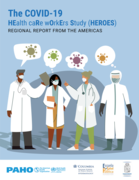
The COVID-19 HEalth caRe wOrkErs Study (HEROES): Regional Report from the Americas is a multicenter prospective cohort study to assess the impact of the COVID-19 pandemic on the mental health of
...
health care workers in 26 countries on four continents and how it is affected by several factors at different interrelated levels: individual, family, occupational, and social. This brief report presents the evidence generated from the baseline survey of 11 participating countries in the Region of the Americas. Using validated scales, the findings show high rates of depressive symptoms, suicidal ideation, and psychological distress in several countries of the Region. The spirit of the project is not only to generate quality scientific evidence on the mental health of health care workers, but also to help develop interventions (both individual and institutional) and policies to address the negative impacts of the COVID-19 pandemic on mental health.
more

Peru − Progress in health and sciences in 200 years of independence
Carrillo-Larco; R.M.; Guzman-Vilca, W. C.; Leon-Velarde, F.; et al.
The Lancet Regional Health - Americas
(2021)
CC
Peru celebrates 200 years of independence in 2021. Over this period of independent life, and despite the turbulent socio-political scenarios, from internal armed conflict to economic crisis to political instability over the last 40 years, Peru has experienced major changes on its epidemiological and
...
population health profile. Major advancements in maternal and child health as well as in communicable diseases have been achieved in recent decades, and today
Peru faces an increasing burden of non-communicable diseases including mental health conditions. In terms of the configuration of the public health system, Peru has also strived to secure country-wide optimal health care, struggling in particular to improve primary health care and intercultural services.
more

This report presents findings from research conducted by Economist Impact to assess the health, demographic, social and economic impacts associated with different scenarios for financing the HIV epidemic across 13 selected countries in Sub-Saharan A
...
frica. The sponsorship of UNAIDS towards this report is gratefully acknowledged. However, the findings and ideas expressed herein represent those of Economist Impact. They do not necessarily reflect the views and opinions of UNAIDS, nor do they engage the responsibility of UNAIDS.
more

The Coronavirus Disease 2019 (COVID-19) has had a continuous and robust impact on world health. The resulting COVID-19 pandemic has had a devastating physical, mental and fiscal impact on the millions of people living with noncommunicable diseases (
...
NCDs), as they have a higher risk of severe illness and death from COVID-19. COVID-19 has been associated with an
excess in all-cause and cardiovascular disease (CVD) mortality beyond that related to the infection itself and its immediate consequences. Studies in the
United Kingdom (UK) and United States of America (USA) have clearly shown increasing deaths from ischemic heart disease, stroke and hypertensive disease due to COVID-19. Overall, the impact has been greater in individuals with lower socioeconomic status, even in high income nations.
more
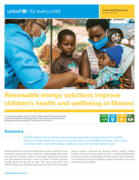
UNICEF Malawi and its partners are prioritizing renewable energy solutions for children and communities across the country to access clean and affordable electricity, with a focus on hard-to-reach, rural communities unable to access the national electricity grid.
Hum Resour Health 20, 37 (2022). https://doi.org/10.1186/s12960-022-00735-y.
For countries to achieve universal health coverage, they need to have well-functioning and resilient
...
health systems. Achieving this requires a sufficient number of qualified health workers and this necessitates the importance of investments in producing and regulating health workers. It is projected that by 2030, Africa would need additional 6.1 million doctors, nurses, and midwives. However, based on the current trajectory, only 3.1 million would be trained and ready for service delivery. To reduce current shortages of the health workforce, Africa needs to educate and train 3.0 million additional health workers by 2030. This study was conducted to describe the distribution and ownership of the health training institutions, production of health workers, and the availability of accreditation mechanisms for training programmes in the WHO African Region.
more

BMC Pregnancy Childbirth 2022 Apr 5;22(1):284. doi: 10.1186/s12884-022-04619-w. Adolescent reproductive health is still a challenge in Low and Middle Income Come Countries (LMICs). However, the reasons for the inability of most pregnant adolescent
...
girls to access and utilize maternal and child health information (MCHI) are not well-documented. This is despite the policy guidelines promoting the provision of this necessary information to pregnant adolescents in order to prepare them for delivery. This provision is one of the strategies envisaged to improve their attendance of ANC visits and their maternal and child health.
more

For many years, Community Health Care Workers (CHWs) in Tanzania and Africa in general have played significant role in community health promotion. Their specific roles have been changing from time t
...
o time. However, their key roles have over time included giving health education and dissemination of health information to communities, invariably moving on to include other services such as offering curative services and conducting community surveys. Deployment of CHWs has mainly been a response to the severe shortage of the human resource for health in most African countries due to brain drain for various reasons that include unattractive terms and conditions of employment. On the other hand the human resources for health (HRH) is a result of positive growing demand for health services, a situation confronted by inadequate supply of trained health personnel from training institutions to meet the demand.
more

The humanitarian crisis in Northeast Nigeria, driven by conflict, climate-related shocks, and food insecurity, has created immense challenges for the health sector in Borno, Adamawa, and Yobe (BAY) States. About 1.8 million people remain displaced(1
...
), with inadequate access to healthcare services and persistent disease outbreaks, malnutrition, and mental health challenges. This strategy outlines a comprehensive localization approach to strengthen the health sector's capacity by empowering local and national actors (L/NAs) include state and local government structures to lead humanitarian responses at respective levels with minimal oversight functions.
The localization strategy aligns with the global commitments of the Grand Bargain 2.0, prioritizing equitable partnerships, capacity sharing, and resource mobilization to enhance sustainable, community-owned health systems(2). Key components include increasing the visibility and meaningful participation of L/NAs in health sector coordination, promoting direct funding to local actors, and addressing systemic barriers such as governance, leadership, capacity, and resource gaps.
The global humanitarian community made a commitment, as reflected in the Grand Bargain 2.0, to localization (3) to improve the efficiency and effectiveness of humanitarian aid. A key priority of this commitment is to empower local actors to take a leading role in delivering assistance, ultimately leading to better outcomes for affected communities. A localized health response, strengthened by partnerships, can achieve several key outcomes, including rapid response and access, community acceptance, cost-effectiveness, links to long-term development, and increased accountability to the community. Localization in health matters because it ensures sustainable and community-owned health responses.
more
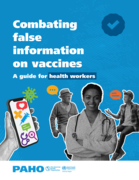
The document "Combating False Information on Vaccines: A Guide for Health Workers" is designed to help health workers address vaccine misinformation. It begins by defining misinformation and explain
...
ing why it spreads rapidly, often due to its emotional appeal and simplistic explanations. The guide identifies common sources of vaccine misinformation, including influential individuals who profit from spreading false information. The document outlines strategies for combating misinformation, emphasizing the importance of health workers as trusted sources. It provides tips for identifying misinformation online, such as checking URLs, dates, and author credentials, and recognizing tactics like evoking strong emotions or pushing conspiracy theories. Two main approaches to fighting misinformation are discussed: prebunking and debunking. Prebunking involves warning individuals about potential misinformation before they encounter it, while debunking aims to correct false information after it has been consumed. The guide offers practical examples for both methods. Additionally, the document highlights the role of health workers in supporting peers and patients to trust immunization. It suggests being kind, nonjudgmental, and transparent when addressing concerns, and using motivational interviewing techniques to understand and respond to patients' doubts. Overall, the guide emphasizes the critical role of health workers in maintaining trust in vaccines and provides comprehensive strategies to identify, address, and prevent the spread of vaccine misinformation in clinical and community settings. The guide is a valuable resource for health workers to enhance their ability to combat vaccine misinformation, support informed decision-making, and promote trust in vaccines within their communities, and it addresses a pressing issue with practical solutions, supports trusted health workers, and ultimately aims to protect public health by promoting accurate information and trust in vaccines.
more
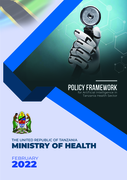
The Policy Framework for Artificial Intelligence in Tanzania's Health Sector was developed through collaboration between multiple stakeholders, including government bodies, academic institutions, non-governmental organisations (NGOs) and internation
...
al partners. The framework demonstrates Tanzania’s dedication to utilising digital technologies and AI to enhance healthcare delivery, facilitate data-driven decision-making, and bolster the resilience of the healthcare system. Although AI integration in Tanzania’s health sector is still in its infancy, a growing number of initiatives are highlighting its potential in clinical care, research, and system management. The Ministry of Health, in collaboration with partners including the President’s Office (PORALG), Fondation Botnar, MUHAS, UDOM and PATH, has spearheaded this initiative with the aim of using AI to minimise errors, improve clinical outcomes and boost the efficiency of the health system.
more

he UNFPA “Programmatic guidelines: Cash and Voucher Assistance in Sexual and Reproductive Health programming in Emergencies” explains how CVA can be effectively integrated into humanitarian responses to help women, girls, and other vulnerable gr
...
oups access lifesaving and comprehensive SRH services. Rooted in UNFPA’s mandate, this document provides practical direction for designing, implementing, and monitoring CVA within SRH programming.
The guidance highlights the barriers that hinder access to SRH care, such as affordability, availability, acceptability, and appropriateness, and illustrates how CVA can address financial obstacles by covering transport, user fees, or other indirect costs, while reinforcing health system strengthening efforts. CVA is presented as a complementary tool that supports both emergency and long-term SRH goals. Within humanitarian emergencies, it can contribute directly to achieving MISP objectives, including:
Enabling survivors of sexual violence to access clinical and psychosocial care;
Supporting the continuation of HIV and STI treatment, including coverage of transport;
Facilitating safe deliveries and emergency obstetric and newborn care; and
Removing financial barriers to voluntary family planning and contraceptive access, while ensuring informed choice and avoiding coercion.
Beyond the MISP, CVA also supports the transition to comprehensive SRH services in protracted emergencies and recovery phases. Examples include using cash or vouchers to encourage antenatal and postnatal care, ensure menstrual hygiene, sustain cancer prevention and treatment, fund obstetric fistula repair, and promote SRH education among adolescents.
more

The Guide on HIV Services for Adolescents Living with HIV (ALHIV) describes
organization of adolescent-friendly services to guide heath management teams and health
care workers (HCWs) on their roles. It also outlines important aspects to consider
...
when
offering comprehensive care to adolescents and their parents/caregivers at health facilities
and in the community. Comprehensive care should include the provision of quality clinical
and psychosocial support (PSS) services with clear linkages to the community. These
services need to be adolescent-friendly at any health facility with clear prescription of
minimal standards, and has to be integrated into existing services at the health facility
more

Artificial intelligence for tuberculosis control: a scoping review of applications in public health
Menon, S.; and K. Ghislein Kuro
(2025)
J Glob Health. 2025;15:04192. This scoping review highlights the potential of AI-driven predictions in national TB programmes to enhance diagnostics, track trends, and strengthen public health surve
...
illance. While promising for reducing transmission and support-
ing TB care in low-resource settings, these models require large-scale validation to ensure real-world applicability, especially for high-risk groups
more

Recognizing this need and the role of NPHIs in ensuring health security across the continent, the Africa CDC has prioritized the strengthening of NPHIs as a critical pillar of both the New Public Health
...
Order and the Africa CDC Strategic Plan 2023-2027. To aid the realization of this goal, the Africa CDC has developed a Plan for the Development of National Public Health Institutes in Africa 2025-2027. The goal is to ensure that NPHIs are not only present in every Member State but are also empowered with the necessary legal frameworks, resources and expertise to effectively lead Africa’s health security efforts.
more

This publication makes the case for working with men and women, boys and girls, together in an intentional and mutually reinforcing way that challenges gender norms in the pursuit of improved health and gender equality. In addition to providing a de
...
finition for the new concept of gender synchronization, this document provides examples of synchronized approaches that have worked first with women and girls, or first with men and boys, and describes interventions that have worked with both sexes from the start. It also provides examples of new and emerging programs that should be watched in the coming years for the knowledge they may contribute to the implementation of gender synchronization.
more

Climate change is damaging human health now and is projected to have a greater impact in the future. Low- and middle-income countries are seeing the worst effects as they are most vulnerable to climate shifts and least able to adapt given weak
...
health systems and poor infrastructure. Low-carbon approach can provide effective, cheaper care while at the same time being climate smart. Low-carbon healthcare can advance institutional strategies toward low-carbon development and health-strengthening imperatives and inspire other development institutions and investors working in this space. Low-carbon healthcare provides an approach for designing, building, operating, and investing in health systems and facilities that generate minimal amounts of greenhouse gases. It puts health systems on a climate-smart development path, aligning health development and delivery with global climate goals. This approach saves money by reducing energy and resource costs. It can improve the quality of care in a diversity of settings. By prompting ministries of health to tackle climate change mitigation and foster low-carbon healthcare, the development community can help governments strengthen local capacity and support better community health.
more

The vision of the new Strategic Action Plan for Strengthening HIS in Myanmar 2017- 2021 is “A strong health information system for a strong health system”. The mission statement of HIS in Myanma
...
r also developed during the strategic planning exercise is “Generating and making accessible comprehensive, integrated and timely health information for decision making at different levels of health system”. The goal of the HIS in Myanmar formulated during the assessment is “ To provide complete, valid, reliable and timely health information for making right decisions at the right time to ensure an equitable, effective, efficient and responsive health system”.
more
