
Filter
1263
Text search:
drug
interactions
Featured
143
297
Language
Document type
707
208
184
72
31
29
24
5
1
1
Countries
65
49
40
34
33
30
25
22
21
20
20
19
17
17
17
16
16
13
13
13
10
10
9
7
7
7
7
7
6
6
6
6
6
5
5
5
5
4
4
3
3
3
3
3
2
2
2
2
2
2
2
2
2
2
2
2
1
1
1
1
1
1
1
1
1
1
1
1
1
1
1
1
1
1
1
1
1
1
1
1
Authors & Publishers
Publication Years
Category
420
131
71
42
30
27
4
Toolboxes
220
148
82
61
59
47
42
30
27
24
22
21
18
16
16
12
8
6
6
4
3
2
2
1
1

The European Mental Health Action Plan 2013–2020
recommended
Mental disorders are one of the top public health challenges in the WHO European Region, affecting about 25% of the population every year. In all countries, mental health problems are much more prevalent among the people who are most deprived. The WHO European Region therefore faces diverse challeng
...

Trouble de l'humeur
Chapitre E.2
Edition en français Traduction : Xavier Benarous Sous la direction de : David Cohen Avec le soutien de la SFPEADA

Troubles anxieux
Chapitre F.1
Edition en français Traduction : Jean-Philippe Raynaud Avec le soutien de la SFPEADA

Autres troubles
Chapitre H.5
Edition en français Traduction : Bojan Mirkovic Sous la direction de : Priscille Gérardin Avec le soutien de la SFPEADA
Psychiatrie de l'enfant
Chapitre B.1
Edition en français
Traduction : Apolline Morville
Sous la direction de : Priscille Gérardin
Avec le soutien de la SFPEADA
Pediatría
Capítulo I.2
Editores: Laura Borredá Belda, Matías Irarrázaval & Andres Martin
Traducción: Alfonso Pastor Romero, Silvia Rodriguez Portillo, Carla Andreia Carvalho Gómez, María Tatiana Stefan & Paula Cox
Le trouble anxiété de séparation (TAS) représente environ la moitié de l’ensemble des troubles anxieux
(Cartwright-Harton et al, 2006). La plupart des troubles anxieux pédiatriques
présentent les mêmes critères diagnostics que chez l’adulte à l’exception du TAS,
actuellement class
...
This document presents an integrated strategy for mental health system development that will lead to enhanced service delivery, improved outcomes, and improved human rights for people with mental disorders.
By using the practical guidance provided in this document, countries can ensure that thei
...

The purpose of this guide is to provide basic information for Federal disaster responders and other service providers who may be deployed or otherwise assigned to provide or coordinate services in American Indian/Alaska Native (AI/AN) communities.
This guide is intended to serve as a general briefi
...
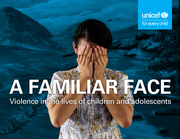
This report presents the most current data on four specific forms of violence – violent discipline and exposure to domestic abuse during early childhood; violence at school; violent deaths among adolescents; and sexual violence in childhood and adolescence. The statistics reveal that children expe
...

In recent years Terre des Hommes Netherlands observed the steady rise of a new form of child sexual exploitation. One that is enabled and fuelled by rapid technological advances, increasing global connectivity, persisting poverty rates, and growing disparity in the global distribution of resources.
...

Dissertationsubmitted for the degree of Doctor of Philosophy, Brunel University
The Infection Prevention and Control (IPC) Assessment Framework (IPCAF) is a tool to support the implementation of the World Health Organization (WHO) Guidelines on core components of IPC programmes at the acute health care facility level. The user should be familiar with the contents of these guide
...

DEPRESSION AND ANXIETY 27 : 390–403 (2010

Recognition, Assessment and Treatment
National Clinical Guideline Number 159
The growing challenges for people in low and middle-income countries to access new medicines.
Analysis 58
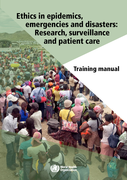
Responses to epidemics, emergencies and disasters raise many ethical issues for the people involved, including public health specialists and policy makers. This training manual provides material on ethical issues in research, surveillance and patient care in these difficult contexts.
Mental health conditions affect one in 10 people at any one time and account for a large proportion of non-fatal disease burden. There is a high degree of comorbidity between mental health conditions such as depression and other noncommunicable diseases (NCDs), including cardiovascular disease, diab
...


Accessed April 16, 2019
