Filter
1363
Text search:
Infection
Prevention
and
Control
(IPC)
Featured
238
287
Language
Document type
431
298
181
139
92
55
39
35
33
25
15
13
4
2
Countries
85
80
63
46
42
36
35
35
32
30
29
24
22
22
22
21
21
21
21
20
17
16
15
15
15
13
13
12
12
11
11
10
10
9
9
9
8
8
8
7
6
6
6
6
5
5
4
4
4
4
4
4
4
4
3
3
3
3
3
3
3
3
3
3
2
2
2
2
2
2
2
2
2
2
2
2
2
1
1
1
1
1
1
1
1
1
1
1
1
1
1
1
1
1
1
1
1
1
1
1
1
1
1
1
1
Authors & Publishers
Publication Years
Category
475
185
71
41
31
31
17
1
Toolboxes
398
181
128
108
87
67
64
61
29
28
25
21
14
13
7
7
5
5
4
2
2
2
2
1
1
1
Epidemic Preparedness and Response in Africa | Guidelines for the Decentralization of Laboratory Capacity
recommended
The decentralization of laboratory capacities is a critical strategy for improving epidemic preparedness and response in Africa. Centralized systems often delay case confirmation, hinder timely interventions,
...
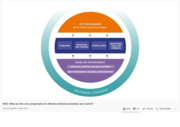
This instructional video from the World Health Organization explains the evidence-based core components of infection prevention and
...

Standard precautions aim to protect both health workers and patients by reducing the risk of transmission of microorganisms from both recognized and unrecognized sources. They are the minimum standa
...
Transmission-based precautions for the prevention and control of infections: aide-memoire
recommended
Transmission-based precautions (TBP) are used in addition to standard precautions for patients with known or suspected infection or colonization with transmissible and/or epidemiologically significa
...
Healthcare-associated infections (HAI) are a significant burden globally, with millions of patients affected each year. These infections affect both high- and limited-resource healthcare settings, but in limited-resource settings, rates are approxim
...
Lessons from three African Countries.
Achieving Health for All, and in particular universal health coverage (UHC), will not happen without fully functioning basic water, sanitation and hygiene (WAS
...
20-22 July 2015, Monrovia, Liberia

AIDS Free Nigeria Training Manual
Annex. This document is an update of a guidance published on 12 July 2021, after the review of new scientific evidence on transmission of SARS-CoV-2 variants of concern (VOC). It contains updated recommendations on the use of masks and respirators
...



The WHO continuously reviews available data on SARS-CoV-2 variants of concern. For this version, the global epidemiological
situation of the COVID-19 pandemic as of 21 January 2022 – at a time when the Omicron VOC had been identified in 171
countries across all six WHO Regions
...


This interim operational guide outlines infection prevention, control, and water, sanitation,
...

BMJ Global Health2019;4:e001504. doi:10.1136/bmjgh-2019-00150