
Filter
1432
Text search:
jobs
Featured
93
355
Language
Document type
753
357
101
66
65
32
27
18
4
4
3
2
Countries
77
55
45
43
40
37
37
35
28
27
26
24
23
22
21
21
21
18
17
16
15
14
14
13
12
12
12
11
11
10
10
10
10
10
9
9
9
9
8
8
7
7
7
7
6
6
6
6
6
5
5
5
5
5
5
5
4
4
4
4
3
3
3
3
3
3
3
3
3
3
3
3
2
2
2
2
2
2
2
2
2
2
2
2
2
2
1
1
1
1
1
1
1
1
1
1
1
1
1
1
1
1
1
1
1
1
1
1
1
1
1
1
1
1
1
Authors & Publishers
Publication Years
Category
570
97
68
50
36
29
4
Toolboxes
186
131
107
89
83
80
52
45
43
32
29
25
24
21
18
16
12
11
9
6
6
5
3
2
1
1
In 1989, the Republic of Benin was facing a great social and
economical crisis. Civil servants of all the sectors in public
administration were on strike. People did not know where to
go for their health care. Salaries were not paid for more than
six months and life for the general population wa
...
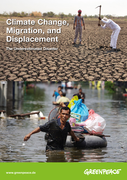
What at first glance appears to be simple causality – climate change leading to more and more migration – has triggered intense academic debate over the past ten years because the circumstances are complex. There is need for a thorough analysis in the ground between denying the problem and asser
...
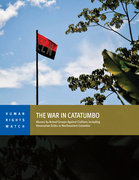
Abuses by ArmThis report is based on research in Catatumbo in April 2019. We interviewed more than 80 people, including abuse victims, their relatives, community leaders, church representatives, human rights officials, local authorities, judicial officials, and members of humanitarian and human righ
...
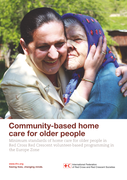
Minimum standards of home care for older people in Red Cross Red Crescent volunteer-based programming in the Europe Zone

Teacher Handbook

UNAIDS 2017 / Reference
Generating evidence for policy and action on HIV and social protection

Thirty years ago, the United Nations General Assembly adopted the Convention on the Rights of the Child at a moment of rapid global change marked by the end of apartheid, the fall of the Berlin Wall and the birth of the World Wide Web. These developments and more brought momentous and lasting evolut
...
UNAIDS | 2016–2021 Strategy
Accessed: 20.11.2019
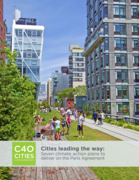
Cities can help nations achieve their Paris Agreement commitment by supporting the implementation of transformational actions to increase the supply of renewable energy, improve building energy efficiency, increase access to affordable, low carbon transport options, and change consumption patterns.
...
Evaluating the Return on Investment of Scaling Up Treatment for Depression, Anxiety, and Psychosis

Rapport de fin de campagne 2016.
Le Tableau 1 ci-dessous présente les résultats de la campagne d’aspersion 2016 qui a été mise en œuvre sur une durée globale de vingt jours opérationnels par district du 11 juillet au 02 Août 2016 dans les trois districts (Nioro, Koumpentoum et Koungheu
...

Accessed Febr. 6, 2020
This report documents scores of serious abuses committed against talibé children by Quranic teachers or their assistants in 2017 and 2018, including deaths, beatings, sexual abuse, chaining and imprisonment, and numerous forms of neglect and endangerment. The abuses took place in at least eight of
...
SHOPS and HIA finalized a scope of work with USAID Senegal in April 2015, and a team of five private sector experts conducted the onsite assessments between May and June 2015. The Private Sector Assessment (PSA) team worked closely with Senegalese key stakeholders throughout the process. The PSA tea
...

Antimicrobial resistance (AMR) is an important public health concern shared by developed and developing countries. In developing countries the burden of infectious diseases is greater and exacerbated by limited access to, and availability and affordability of, antimicrobials required to treat infect
...

As part of the new strategy preparation, USAID/Senegal requested assistance with a gender assessment. This study was conducted from March 20 to April 11, 2010. It was supported jointly by the Women in Development Indefinite Quantity Contract (WID IQC) Task Order 1 ShortTerm Technical Assistance and
...
USAID Senegal and Health in Africa (HIA) initiative of the World Bank Group engaged the Strengthening Health Outcomes through the Private Sector (SHOPS) project to conduct an assessment of the private health sector in Senegal. The assessment’s primary focus is family planning, and its secondary fo
...

Over the reporting period, economic actors continued to carry out their activities with little regard for their impacts on the livelihoods of the communities living in the surrounding areas. In Doo Tha Htoo (Thaton) District, cold dust from a Tatmadaw-run cement factory contaminated nearby waterways
...
