
Filter
1135
Text search:
emotional
disorders
Featured
135
197
Language
Document type
745
128
118
84
26
12
11
4
2
2
2
1
Countries
52
39
25
21
20
19
17
16
15
14
14
14
13
13
10
10
10
8
8
8
8
7
7
7
6
6
5
5
4
4
4
4
4
3
3
3
3
3
3
3
2
2
2
2
2
2
2
2
2
2
2
2
2
2
2
1
1
1
1
1
1
1
1
1
1
1
1
1
1
1
1
1
1
1
1
1
1
Authors & Publishers
Publication Years
Category
261
94
67
55
34
27
Toolboxes
507
70
51
39
37
28
25
21
17
12
9
9
8
5
5
4
4
2
2
2
1
1
Introduction
Chapter A.5
Miscellaneous
Chapter J.8

Introducción
Capítulo A.10
Editores: Juan José García-Orozco, Matías Irarrázaval & Andrés Martin
Traducción: Juan José García-Orozco, Paula Placencia Morán & Laura Revert
Trastornos externalizantes
Capítulo D.1
Edición: Matías Irarrázaval & Andrés Martín
Traducción: Fernanda Prieto Tagle, Marta García Acuña
Trastornos externalizantes
Capítulo D.3
Edición: Matías Irarrázaval & Andres Martin
Traducción: Fernanda Prieto Tagle, Sofía Hacohen Domené

Trastornos de ansiedad
Capítulo F.5
Edición: Matías Irarrázaval & Andres Martin
Traductores: Fernanda Prieto-Tagle & Marcela Mezzatesta
Otros trastornos
Capítulo H.3
Edición 2018
Edición: Matías Irarrázaval & Andres Martin
Traducción: Beatriz Ortega & Macarena Espinoza

Divers
Chapitre J.1
Edition en français
Traduction : Laure Woestelandt, Jordan Sibeoni Sous la direction de : Marie-Rose Moro Avec le soutien de la SFPEADA
Psychiatrie de l'enfant
Chapitre B.2
Edition en français
Traduction : Claire Rousseau
Sous la direction de : Priscille Gérardin
Avec le soutien de la SFPEADA
Psiquiatría y pediatría
Capítulo I.5
Editores: Daniel Martínez Uribe, Matías Irarrázaval & Andres Martin
Traductores: Jon Iñaki Etxeandia Pradera, Joaquín Gil Badenes, Beatriz Ortega, Paula Cox
Miscelánea
Capítulo J.1
Editores: Matías Irarrázaval, Andres Martin & Laura Borredá
Traductores: Laura Álvarez Bravos, Elena Guillot de Mergelina, Álvaro Doña & Beatriz Ortega
Introduction
Chapitre A.4
Edition en français Traduction : Eleanor O’Boyle
Sous la direction de : Priscille Gérardin
Avec le soutien de la SFPEADA
Introduction
Chapitre A.5
Edition en français
Traduction : Eleanor O’Boyle
Sous la direction de : Priscille Gérardin
Avec le soutien de la SFPEADA
Dérivant du grec τραῦμα signifiant « blessure », le mot « traumatisme »
a été utilisé durant des siècles comme un terme médical désignant « une blessure
des tissus vivants causée par un agent externe.» Ainsi, ce n’est qu’en 1889, lorsque
Oppenheim fit la première descrip
...

The Asia-Pacific Community Mental Health Development (APCMHD) project has been established in 2005 to explore diverse leading models or approaches to community mental health service delivery in the Asia-Pacific region. The objective is to illustrate and promote best practice in mental health care in
...

In the last quarter century, several projects emerged to reform mental health services in Latin American and Caribbean countries. Some did not survive the difficulties that inevitably arise in processes of change, and ended up disappearing before the intended changes could be introduced. Others, how
...
The rise of the discourse of 'trauma' as a major articulator of suffering within Western culture is a facet of the medicalization of life that has gathered pace in the last century. In recent years, Western mental health professionals have been increasingly involved in services addressing the plight
...
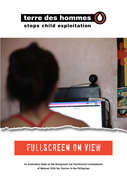
In recent years Terre des Hommes Netherlands observed the steady rise of a new form of child sexual exploitation. One that is enabled and fuelled by rapid technological advances, increasing global connectivity, persisting poverty rates, and growing disparity in the global distribution of resources.
...

Understanding Cultural Diversity in Mental Health
A Practical Guide for Mental Health Service Providers
