
Filter
1392
Filtered Results: 1392
Text search:
Save
the
Children,
et
al.
Featured
Recommendations
124
New Publications
386
Language
Document type
No document type
765
Studies & Reports
284
Guidelines
136
Manuals
96
Strategic & Response Plan
44
Training Material
25
Fact sheets
23
Situation Updates
11
Infographics
3
Brochures
2
Resource Platforms
2
Online Courses
1
Countries / Regions
Global
85
Nepal
41
Malawi
34
India
34
Sierra Leone
32
South Africa
28
Ethiopia
28
Syria
25
Bangladesh
24
Liberia
23
Myanmar / Burma
22
Kenya
21
Nigeria
20
Western and Central Europe
16
Africa
15
Tanzania
15
Haiti
13
Congo, Democratic Republic of
13
Uganda
13
Zambia
13
Philippines
11
Latin America and the Carribbean
11
Rwanda
10
Ukraine
9
Senegal
9
Germany
9
Ghana
8
Burkina Faso
8
Guinea
8
Eastern Europe
8
South Sudan
8
South–East Asia Region
7
Yemen
7
Mozambique
6
Asia
6
Venezuela
6
Middle East and North Africa
6
Somalia
6
Cambodia
5
Jordan
5
West and Central Africa
5
East and Southern Africa
5
Lebanon
5
Namibia
5
Colombia
4
Thailand
4
Lesotho
4
Cameroon
4
Brazil
4
Indonesia
4
Eswatini/ Swaziland
4
Afghanistan
3
USA
3
Western Pacific Region
3
Sri Lanka
3
Sudan
3
Central African Republic
3
Botswana
3
Pakistan
3
China
2
Zimbabwe
2
Italy
2
Eastern Europe and Central Asia
2
Portugal
2
Spain
2
Côte d’Ivoire / Ivory Coast
2
Russia
2
Iraq
2
Kazakhstan
1
Iran
1
Albania
1
Kyrgyzstan
1
Niger
1
Burundi
1
Peru
1
Guinea-Bissau
1
Croatia
1
Hungary
1
Lithuania
1
Saudi Arabia
1
Turkmenistan
1
Japan
1
Tunisia
1
United Kingdom
1
Israel
1
Southern Africa
1
Bolivia
1
Vietnam
1
Greece
1
Georgia
1
Mali
1
Angola
1
Chad
1
Libya
1
Authors & Publishers
Publication Years
Category
Countries
419
Key Resources
152
Women & Child Health
149
Clinical Guidelines
100
Public Health
74
Capacity Building
31
Pharmacy & Technologies
4
Toolboxes
HIV
105
Mental Health
101
COVID-19
90
Disability
72
Planetary Health
72
Conflict
60
Caregiver
43
Refugee
41
Ebola & Marburg
40
Natural Hazards
34
TB
32
NTDs
32
AMR
32
Global Health Education
27
Health Financing Toolbox
23
Rapid Response
18
NCDs
17
Malaria
15
Pharmacy
14
2.0 Rapid Response
8
Specific Hazards
7
Cholera
7
Social Ethics
5
Zika
4
Polio
3
Typhoon
2
South Sudan
1
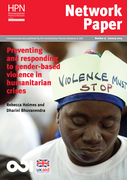
The aim of this paper is to map and critically analyse evidence of good practice in prevention and response to gender-based violence (GBV) in humanitarian contexts which can support humanitarian practitioners and policy makers to improve the quality of GBV programming in the field. The paper is stru...

Réduction des risques, promotion de la résilience et aide au relèvement

The Leonard Cheshire Disability and Inclusive Development Centre | University College London | 4 Taviton Street | London WC1H OBT | United Kingdom| Principal Investigator: Dr Raymond Lang | Email: r.lang@ucl.ac.uk | Tel: +44 (0)207 679 1519 | Research Commissioned by the Southern African Federation ...
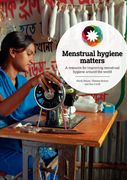
A resource for improving menstraul hygiene around the world.
Comprehensive guidance with examples of good practice, information for colleagues and pupils in class and tips on how to break the taboo

This handbook was designed primarily as a tool for district clinical specialist teams (DCSTs), and for the provincial specialists who will guide and support their work. This handbook will also be useful to managers of health facilities, heads of clinical units and nurses, doctors and allied health w...
NSW Disaster Mental Health Handbook 4
The Disaster Mental Health Manual and associated handbooks are intended as a resource for mental health staff who are seeking background information and practical guidance and resources to assist in a disaster mental health response.

The KMC implementation strategy targets a broad audience. These include policy-makers and programme managers at national, regional and local levels, government and nongovernmental organizations working in the area of maternal and newborn care, global and national professional associations, public an...

This companion to the ALNAP EHA Guide offers protection-specific insights for evaluators and evaluation commissioners across the humanitarian sector. It covers the planning, data management and analysis phases of evaluation and addresses a range of challenges that – whilst not all unique to protec...
Guidelines.
The guidelines set out essential actions that humanitarian actors must take in order to effectively identify and respond to the needs and rights of persons with disabilities who are most at risk of being left behind in humanitarian settings.
The recommended actions in each chapter pl...

The Department of Health (DOH) has developed a National Integrated Sexual and Reproductive Health and Rights (SRHR) Policy.1 This policy addresses the many cross-cutting issues relating to SRH service provision, drawing together the principles, rights, and guidance for planning and implementation th...
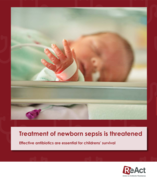
Effective antibiotics are essential for childrens’ survival

The following technical report outlines the rationale, process and results of a joint research study, coordinated by the World Health Organization (WHO) and the Pan-American Health Organization (PAHO), co-chaired by the Ministry of Health and Social Protection and the Ministry of Environment and Sus...

Through public-private partnerships, the government of Rwanda can make more efficient use of public resources by targeting and meeting the needs of specific populations and thus help ensure family planning services and products will be available to all Rwandans in the long term. This report aims to ...

Current evidence that the climate is changing is overwhelming. Impacts of climate change and variability are being observed: more intense heat-waves, fires and floods; and increased prevalence of food- water- and vector-borne diseases. Climate change will put pressure on environmental and health det...
Tuberculosis (TB)
recommended
MEDBOX Issue Brief no. 19: World TB Day: Invest to end TB. Save Lives
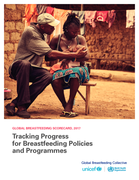
WHO and UNICEF have established recommendations for breastfeeding practices. Although every mother decides how to feed her child, this decision is strongly influenced by economic, environmental, social and political factors. The Global Breastfeeding Scorecard analyzes indicators on how countries pro...

Climate change is one of the most urgent challenges for people and ecosystems worldwide. The recently published sixth Assessment Report (AR6) of the Intergovernmental Panel on Climate Change (IPCC) stresses the occurrence of widespread adverse impacts of climate change. Increased frequency and inten...
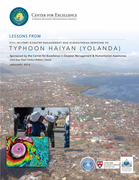
n Autumn 2013, HHI Executive Director, Vincenzo Bollettino, traveled to the Philippines to participate in an assessment of civil-military engagement in the humanitarian response to Typhoon Haiyan. The report was sponsored by the Center for Excellence in Disaster Management and Humanitarian Assistanc...
Integrating WASH and MHCP interventions will always require imagination and creativity to adapt the approach to specific conditions, opportunities and constraints in each context. The book is designed to stimulate reflection and encourage initiatives to seek opportunities for closer integration of t...
The magnitude of urban disasters, high population densities, and a complex social, political and institutional environment has challenged the manner in which humanitarian agencies are used to working. Humanitarian agencies are now grappling with how to change their approaches to this reality. This d...
