
Filter
1889
Text search:
humanitarian
practice
Featured
215
520
Language
Document type
934
345
264
150
94
37
33
15
10
3
1
1
1
Countries
133
71
59
54
47
38
34
33
32
32
32
31
30
27
21
20
20
18
15
15
14
14
13
13
13
13
12
12
12
12
12
11
9
9
9
8
8
8
7
7
7
7
6
6
6
6
6
6
6
5
5
5
5
5
5
5
5
4
4
4
4
4
4
3
3
3
3
3
3
3
2
2
2
2
2
2
2
2
2
2
1
1
1
1
1
1
1
1
1
1
1
1
1
1
1
1
1
1
1
1
1
1
1
1
1
1
1
1
1
Authors & Publishers
Publication Years
Category
450
356
171
107
91
43
7
3
Toolboxes
212
177
171
123
115
75
71
69
66
38
37
35
32
30
22
20
19
18
13
13
13
10
7
6
6
4
1
This report serves the specific purpose of collating legally relevant information on conditions in countries of origin pertinent to the assessment of claims for asylum. It is not intended to be a general report on human rights conditions. The report is prepared within a specified time frame on the b
...

Since the current crisis erupted in 2013, the Central African Republic (CAR) has received a level of international attention unprecedented in its recent turbulent history. Huge efforts have been made by national government, the United Nations (UN) and external donors, as well as communities and civi
...
Community-based approaches to Mental Health and Psychosocial Support (CB MHPSS) in emergencies are based on the understanding that communities can be drivers for their own care and change and should be meaningfully involved in all stages of MHPSS responses. Emergency-affected people are first a
...
UNHCR is committed to strengthening programming to prevent, mitigate and respond to sexual and genderbased violence (SGBV) in all operations. In 2018, through funding from Safe from the Start, UNHCR launched a mainstreaming project with the specific objective of supporting UNHCR’s institutionalisa
...
Health needs of displaced Syrians in refugee hosting countries have become increasingly complex in light of the protracted Syrian conflict. The primary aim of this study was to identify the primary health needs of displaced Syrians in Iraq, Jordan, Lebanon, Turkey, and Syria.
Accessed: 26.10.2019

UNAIDS | 2016–2021 Strategy
Accessed: 20.11.2019
The present report is based on a longitudinal analysis of assessments on mixed migration routes and dynamics, conducted over the course of 2018. It is based on six rapid thematic studies, conducted over the course of 2018, as well as a longitudinal analysis of changes in mixed migration routes and d
...
Briefing note on addressing mental health and psychosocial aspects of COVID-19 Outbreak- Version 1.1
recommended
This briefing note summarises key mental health and psychosocial support (MHPSS) considerations in relation to the 2019 novel coronavirus (COVID-19) outbreak.
Guidance for Asia Pacific National Societies.
This document provides guidance for Asia Pacific National Societies on how to include migrants and displaced people in COVID-19 preparedness and response activities.
Accessed: 16.04.2020
Many migrants find themselves with limited access, if any, to information about risks, prevention measures, health care and other essential services. Migrants in transit, those in need of international protection or without legal status are likely to be particularly vulnerable, as well as those who
...

In 2006, the Special Session of African Union Health Ministers adopted the Maputo Plan of Action for implementing the Continental Policy Framework on sexual and reproductive health and rights (SRHR), which expired at the end of 2015. The goal was for all stakeholders and partners to join forces and
...
A comprehensive briefing by Half of Syria
April 2020
A comprehensive briefing on the critical challenges of the COVID-19 pandemic to Syrians, as reported by Syrian civil society organisations. These challenges have been collated following extensive interviews with the teams of member and partner
...

The COVID-19 Supply Portal is a purpose-built tool to facilitate national authorities and all implementing partners supporting COVID-19 National Action Plans to request critical supplies.
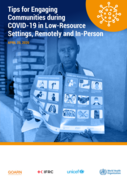
Tips for Engaging Communities during COVID-19 in Low-Resource Settings, Remotely and In-Person
recommended
This brief provides key considerations for engaging communities on COVID-19 and tips for how to engage where there are movement restrictions and physical distancing measures in place, particularly in low-resource settings.
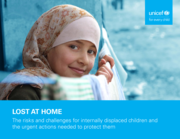
Today, more children than ever before are displaced within their own countries. Their harrowing stories of displacement are unfolding every day, and with increasing frequency. At the end of 2019, approximately 45.7 million people were internally displaced by conflict and violence (Fig. 1.1). Nearly
...

7 June 2020 Version 1
Women in Myanmar have traditionally been underrepresented in public decision-making processes, a trend which is continuing in structures established to respond to COVID-19. This means that even as women are disproportionately affected by the crisis, they have less say in how t
...

In 1964 medical mission was challenged and called to define its distinctiveness and its special role in the context of that particular time. The consultation "Tuebingen I" clearly stated: "The Christian church has a specific task in the field of health and healing"1, and developed a conce
...
แนวปฏิบัติในการจัดการความเสี่ยง ดานภาวะฉุกเฉินและความพิการเพื่อสุขภาพ
