
Filter
1060
Text search:
contaminated
food
and
water
Featured
151
307
Language
Document type
498
203
123
89
51
38
31
12
7
2
2
2
2
Countries
48
45
32
31
22
21
21
21
19
18
18
18
17
17
16
15
14
14
12
11
9
8
7
7
7
7
6
6
6
6
6
6
6
5
5
5
5
4
4
4
4
4
3
3
3
3
3
3
3
2
2
2
2
2
2
2
2
1
1
1
1
1
1
1
1
1
1
1
1
1
1
1
1
1
1
1
1
1
1
1
Authors & Publishers
Publication Years
Category
371
147
78
47
40
32
14
Toolboxes
88
85
72
72
58
40
40
40
39
39
33
33
30
16
16
14
13
9
8
5
4
4
3
1
1
The animal health subsector within the agriculture sector is the gatekeeper of antimicrobial resistance (AMR) in livestock, aquaculture, animal products, and the immediate animal environment. In support of member countries taking responsibility for
...

This interim operational guide outlines infection prevention, control, and water, sanitation, and hygiene measures for home care
...

A companion to the Child Friendly Schools Manual
WASH in Schools aims to improve the health and learning performance of school-aged children – and, by extension, that of their families ...
WASH in Schools aims to improve the health and learning performance of school-aged children – and, by extension, that of their families ...

These guidelines deal specifically with water, sanitation and hygiene, and are designed to be used in schools in low-cost settings in low-
...
The Water, Sanitation, and Hygiene Improvement Training Package is intended to support the training of local outreach workers and their subsequent
...
CORE Group has developed a module to improve preparedness for and response of communities in countries at risk of a cholera epidemic. The module consists of four lesson plans with accompanying flipcharts, intended to be delivered through community h
...
Disinfection of drinking-water supplies has been one of the most significant public health advancements of the last century with respect to reducing waterborne disease.
Although chlorine has been used as the disinfectant of choice for public dr ...
Although chlorine has been used as the disinfectant of choice for public dr ...
Children without access to safe water are more likely to die in infancy -- and throughout childhood -- from diseases caused by
water-borne bacteri
...
Technical Note: Cholera treatment facilities provide inpatient care for cholera patients during outbreaks. Proper case management and isolation of cholera patients is essential to prevent deaths and
...

This report summarizes the World Health Organization’s (WHO) global work on water, sanitation and hygiene (WASH) during 2022. It describes how the Organization continued to deliver its essential W
...
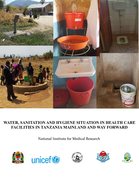

Water, sanitation and hygiene (WASH) are critical in the prevention and care for all of the 17 neglected tropical diseases (NTDs) scheduled for int
...
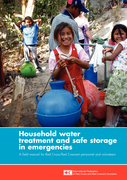
A field manual for Red Cross/Red Crescent personnel and volunteers
This publication provides a practical tool to support countries in strengthening surveillance of WASH in schools. The findings will inform the development of supportive regulations and improvement planning to safeguard children’s health, well-bein
...

An Act to provide for the efficient and comprehensive regulation and control of food, drugs, medical devices, cosmetics, herbal drugs
...

An information package for school staff
