
Filter
1606
Text search:
clean
air
Featured
212
399
Language
Document type
688
279
275
147
69
60
46
14
12
11
5
Countries
145
82
49
45
43
37
34
28
27
23
23
22
21
20
18
17
17
14
14
14
14
13
13
12
12
12
11
11
10
10
10
9
9
8
8
7
7
5
5
5
5
4
4
4
4
4
4
4
3
3
3
3
3
3
3
3
3
3
3
3
2
2
2
2
2
2
2
2
2
2
2
1
1
1
1
1
1
1
1
1
1
1
1
1
1
1
1
1
1
1
1
1
1
1
1
1
1
1
1
Authors & Publishers
Publication Years
Category
609
141
114
96
82
45
38
Toolboxes
202
184
77
71
55
52
52
45
44
37
34
34
31
30
29
29
29
24
22
18
15
11
9
4
3
1
1
The Urban Health Initiative (UHI) goes beyond improving access to health care and promoting healthy behaviours, and focuses on how to build cities that enable and encourage good health.
Waste management options such as recycling, composting, incineration and landfill impact health and well-being in profound ways, particularly for people who work directly with waste or live and work around waste sites.
Preliminary fndings from a global survey of urban young people on the air they breathe and a child health co-benefts analysis of radical decarbonisation of 16 global cities.
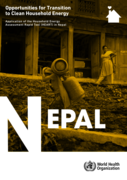
According to the 2016 Nepal Demographic and Health Survey, 66% of Nepali households use mainly solid fuel for cooking on inefficient stoves. Incomplete fuel combustion of solid fuels emits greenhouse gases and harmful smoke, contributing to climate change, forest degradation, ill health and preventa
...
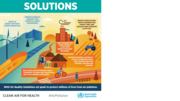
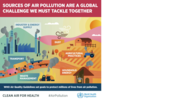
WHO Air Quality Guidelines set goals to protect millions of lives from air pollution
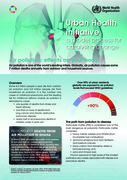
Air pollution is one of the world’s leading killers. Globally, air pollution causes some 7 million deaths annually from outdoor and household sources.

Almost the entire Rwandan population (98.5%) relies on polluting fuels, particularly firewood and charcoal, for cooking. Access to clean energy such as electricity is still limited. In 2022, 70% of the population lived in towns and villages that hav
...

Covid19 - Standard Operating Procedures – UNHAS ROSS
This SOP defines WFP Aviation/UNHAS procedures to be followed when operating in areas affected by the current outbreak of the coronavirus disease (COVID-19). This SOP will be communicated to UNHAS staff, Operators, and user organisations.
Acco
...
Pollution and health: a progress update
recommended
The Lancet Planetary Health Published:May 17, 2022DOI:https://doi.org/10.1016/S2542-5196(22)00090-0
Every year pollution causes 9 million deaths—1 in every 6 deaths worldwide, according to a Lancet Commission on pollution and health.
While the number of deaths caused by household
...
Worldwide, around 2.3 billion people still cook using solid fuels (such as wood, crop waste, charcoal, coal and dung) and kerosene in open fires and inefficient stoves. Most of these people are poor and live in low- and middle-income countries. There is a large discrepancy in access to cleaner cooki
...
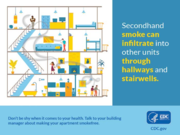
Secondhand smoke can infiltrate into other units through hallways and stairwells. Don’t be shy when it comes to your health. Talk to your building manager about making your apartment smokefree.

COP24 special report: health and climate change
recommended
Exposure to air pollution causes 7 million deaths worldwide every year and costs an estimated US$ 5.11 trillion in welfare losses globally. In the 15 countries that emit the most greenhouse gas emissions, the health impacts of
...
The policy brief focuses on four key areas for intervention - air pollution, energy, transport and food systems. Air pollution causes 7 million deaths annually, and is a leading cause of both NCDs a
...
1 March 2021 This roadmap aims to define the key questions users should consider to assess indoor ventilation and the major steps needed to reach recommended ventilation levels or simply improve indoor air quality (IAQ) in order to reduce the risk o
...

To enhance health co-benefits across urban policies which tackle air pollution and climate change, WHO, in cooperation with various international, national, and local partners, implemented the Urban Health Initiative (UHI) pilot project in Accra, Gh
...
Cardiovascular diseases (CVDs) have collectively remained the leading causes of death worldwide and substantially contribute to loss of health and excess health system costs. The Global Burden of Diseases, Injuries, and Risk Factors (GBD) Study has tracked trends in death and disability since 1990 a
...
This open access book not only describes the challenges of climate disruption, but also presents solutions. The challenges described include air pollution, climate change, extreme weather, and related health impacts that range from heat stress, vect
...
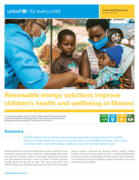
UNICEF Malawi and its partners are prioritizing renewable energy solutions for children and communities across the country to access clean and affordable electricity, with a focus on hard-to-reach, rural communities unable to access the national ele
...
Climate risks have significant effects on public health including: injury, death, communicable diseases such as vector-borne and water-borne diseases, and non-communicable impacts such as malnutrition, heat stress and health effects of air poll
...
