
Filter
286
Text search:
Speak
up
Africa
Featured
Recommendations
32
New Publications
59
Language
Document type
No document type
177
Studies & Reports
42
Guidelines
28
Manuals
21
Training Material
7
Strategic & Response Plan
4
Fact sheets
3
Brochures
1
Situation Updates
1
App
1
Resource Platforms
1
Countries / Regions
Global
17
South Africa
11
Sierra Leone
10
Nigeria
8
Liberia
7
Syria
7
Tanzania
7
Kenya
6
Africa
6
Ethiopia
5
Rwanda
5
Malawi
5
Guinea
4
India
4
Senegal
3
Ghana
3
Uganda
3
South Sudan
3
Zambia
3
Central African Republic
3
Lesotho
3
Congo, Democratic Republic of
2
Cameroon
2
Germany
2
Lebanon
2
China
2
Indonesia
2
Bangladesh
2
Ukraine
2
Myanmar / Burma
2
Middle East and North Africa
2
Latin America and the Carribbean
2
Zimbabwe
1
Nepal
1
Jordan
1
Cambodia
1
Thailand
1
Malaysia
1
Mozambique
1
Benin
1
Namibia
1
Eswatini/ Swaziland
1
Colombia
1
Yemen
1
East and Southern Africa
1
West and Central Africa
1
South–East Asia Region
1
Eastern Europe and Central Asia
1
Western and Central Europe
1
Venezuela
1
Southern Africa
1
Canada
1
Russia
1
Estonia
1
Iran
1
Vietnam
1
North America
1
Japan
1
Authors & Publishers
Publication Years
Category
Countries
65
Public Health
20
Women & Child Health
20
Key Resources
17
Clinical Guidelines
13
Capacity Building
9
Pharmacy & Technologies
2
Annual Report MEDBOX
1
Toolboxes
Mental Health
35
HIV
32
Disability
28
COVID-19
17
Ebola & Marburg
16
Refugee
15
Conflict
13
Caregiver
11
Social Ethics
10
Planetary Health
9
TB
8
NTDs
6
AMR
4
Natural Hazards
3
Rapid Response
3
2.0 Rapid Response
3
Cholera
2
Specific Hazards
2
Global Health Education
2
Pharmacy
2
Health Financing Toolbox
2
Zika
1
NCDs
1
Malaria
1

BMC Medicine (2015) 13:42 DOI 10.1186/s12916-014-0263-6
This real-time learning process was carried out in order to identify the gaps and needs within World Vision’s current Ebola Virus Disease (EVD) response in Sierra Leone and to inform World Vision on how other surrounding countries (specifically those with national offices such as Mali, Ghana, Nig
...

Quick Tips on COVID-19 and Migrant, Refugee and Internally Displaced Children (Children on the Move)
This document will be continuously updated. Version as of April 27th, 2020
Migrant and displaced children are at heightened risk to the immediate and secondary impacts of COVID-19. They often live in cramped conditions with limited access to water, sanitation, and hygiene (WASH), may be in immig
...
The Essential Nutrition Actions and Essential Hygiene Actions Training Guide: Community Workers strengthens the capacity of community workers to deliver and promote the essential nutrition and hygiene actions. It introduces technical content within hands-on sessions to practice counseling and negoti
...

This paper poses two applications of Catholic social teaching’s concepts of subsidiarity and participation to academic community engagement. The first pertains to the very general use of the term community. The second refers to a distinction between reciprocity and collaboration.
...
WHO published and launched the third part of the Wheelchair Service Training Package (WSTP) series consisting of two sub-packages: the Wheelchair Service Training Package for Managers (WSTPm) and the Wheelchair Service Training Package for Stakeholders (WSTPs). WHO recognises that in order to develo
...

How to respond to, mitigate, and prevent risks to children’s protection and well-being is a profound, if unanswered, question. Practitioners agree that it is necessary to develop or strengthen protective factors at multiple levels, such as the family, community, and national levels.
The clinical guidelines and protocols for the practice of emergency medicine presented in this document are designed to be a useful resource not only for those wishing to become emergency medicine specialists, but also for general practitioners and other healthcare providers tasked with caring for p
...

The document covers: introduction on contact tracing in the Ebola response; general considerations for contact tracing; case definition; planning and preparation; personnel; implementation, and tools for contact tracing.
What are the local beliefs and practices around illnesses and death, the transmission of disease and spirituality, which affect decision-making (around health-seeking behaviour, caring for relatives and nature of burials) and can inform effective behaviour change interventions for preventing Ebola i
...
A Guidance and Resource Package for Country Offices for Coordination, Planning, Key Messages and Actions
Leishmaniasis is a climate-sensitive disease. Changes in temperature, rainfall, and humidity can have strong impacts on
the sandfly vector, altering their distribution and influencing their survival and population sizes. Increased temperatures shorten vector development time, reduce Leishmania para
...
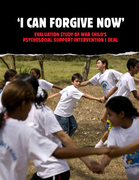
Despite growing evidence on the impact of psychosocial support interventions, there is an urgent need for a stronger evidence base on approaches that effectively support children affected by armed conflict. To contribute to this evidence base, and building on a pilot study conducted in Uganda in 200
...
