Filter
1351
Text search:
clean
drinking
water
Featured
Recommendations
148
New Publications
431
Language
Document type
No document type
729
Studies & Reports
210
Guidelines
161
Manuals
83
Strategic & Response Plan
60
Training Material
44
Fact sheets
24
Situation Updates
16
Brochures
11
Infographics
10
Resource Platforms
2
Videos
1
Countries / Regions
India
115
Global
49
Sierra Leone
41
Myanmar / Burma
41
Ethiopia
37
Bangladesh
37
Kenya
36
Liberia
34
Nepal
34
Nigeria
26
South Africa
25
Tanzania
23
Uganda
22
Malawi
21
Haiti
20
Syria
18
Ghana
17
Rwanda
16
Latin America and the Carribbean
15
Zimbabwe
14
Philippines
14
South Sudan
14
Zambia
13
Congo, Democratic Republic of
11
Indonesia
11
Pakistan
10
Mozambique
10
Yemen
9
Guinea
8
Sudan
8
Namibia
8
Western and Central Europe
8
Ukraine
7
South–East Asia Region
7
Senegal
6
Somalia
6
Lesotho
6
Africa
6
Cambodia
5
Central African Republic
5
Middle East and North Africa
5
Burkina Faso
4
Papua New Guinea
4
Western Pacific Region
4
Venezuela
4
Laos
4
Vietnam
4
Cameroon
3
Iraq
3
Afghanistan
3
Germany
3
Brazil
3
Burundi
3
Botswana
3
Madagascar
3
West and Central Africa
3
Asia
3
Eastern Europe
3
Timor Leste/ East Timor
3
USA
2
Jordan
2
Lebanon
2
China
2
Colombia
2
Bosnia and Herzegovina
2
Mali
1
Côte d’Ivoire / Ivory Coast
1
Niger
1
Togo
1
Turkey
1
Egypt
1
Thailand
1
Singapore
1
Vanuatu
1
Peru
1
North Macedonia
1
Serbia
1
Greece
1
Angola
1
Chile
1
East and Southern Africa
1
Eastern Europe and Central Asia
1
Paraguay
1
Fiji
1
Albania
1
Tajikistan
1
Russia
1
Kazakhstan
1
Authors & Publishers
Publication Years
Category
Countries
589
Key Resources
176
Women & Child Health
80
Clinical Guidelines
72
Public Health
66
Capacity Building
45
Pharmacy & Technologies
12
Toolboxes
Planetary Health
109
COVID-19
89
Cholera
61
Natural Hazards
55
Ebola & Marburg
46
Conflict
45
Global Health Education
40
Caregiver
40
Disability
38
AMR
38
NTDs
37
Refugee
29
Mental Health
29
HIV
28
Rapid Response
27
Pharmacy
17
TB
15
2.0 Rapid Response
15
Specific Hazards
13
NCDs
9
Zika
6
Social Ethics
6
Malaria
5
Polio
3
South Sudan
2
Typhoon
2
Health Financing Toolbox
2
This guidance is intended to be one stop shop to improve the quality and effectiveness of health interventions in emergency, to respond to the most frequent scenarios and conditions.
The main document contains the most common elements to be found in emergencies. As much as possible they are one pag
...
The protection of children and educational facilities is particularly important. Precautions are necessary to prevent the potential spread of COVID-19 in school settings; however, care must also be taken to avoid stigmatizing students and staff who may have been exposed to the virus. It is important
...
A United Nations System Commitment for
Action to assist Member States delivering on
the post-2020 global biodiversity framework
A fact sheet from the National Academies and the U.S. Department of Homeland Security
WHO Guidance for Climate Resilient and Environmentally Sustainable Health Care Facilities
recommended
The aim of this guidance is to enhance the capacity of health care facilities to protect and improve the health of their target communities in an unstable and changing climate; and to empower health care facilities to be environmentally sustainable, by optimizing the use of resources and minimizing
...
Climate change presents the single biggest threat to human development, and its widespread impacts disproportionately burden the poorest and most vulnerable households in fragile and rural developing contexts – particularly women and children.
According to the Intergovernmental Panel on Climate C
...
As part of a wider organisational undertaking to better capture and communicate the effectiveness of its work, Oxfam developed an evaluative method to assess the quality of targeted humanitarian responses. This method uses a global humanitarian indicator tool which is intended to enable Oxfam GB to
...
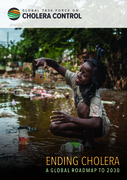
Ending Cholera. A global roadmap to 2030
recommended
Ending Cholera—A Global Roadmap to 2030 operationalises the new global strategy for cholera control at the country level and provides a concrete path toward a world in which cholera is no longer a threat to public health
A role for nuclear techniques
Antimicrobials play a critical role in the treatment of human and animal (aquatic and terrestrial) diseases, which has led to their widespread application and use. Antimicrobial resistance (AMR) is the ability of microorganisms to stop an antibiotic, such as an antimic
...
The main message emerging from this new comprehensive global assessment is that premature death and disease can be prevented through healthier environments – and to a significant degree. Analysing the latest data on the environment-disease nexus and the devastating impact of environmental hazards
...
In Climate Change 2014: Impacts, Adaptation, and Vulnerability. Part A: Global and Sectoral Aspects. Contribution of Working Group II to the Fifth Assessment Report of the Intergovernmental Panel on Climate Change