
Filter
3271
Text search:
border
control
Featured
388
833
Language
Document type
1398
641
551
285
222
61
49
45
6
5
4
3
Countries
212
108
93
84
80
76
59
55
48
47
47
47
44
43
42
40
40
39
34
32
32
31
30
28
24
24
24
22
22
21
20
20
20
18
17
15
15
14
14
14
13
13
13
12
12
11
11
10
10
10
10
10
10
9
9
8
8
8
8
7
7
7
7
7
6
6
6
6
5
5
5
5
5
5
5
5
5
4
4
4
4
4
4
4
3
3
3
3
3
3
3
3
3
2
2
2
2
2
2
2
2
2
2
2
2
2
2
2
2
2
2
2
1
1
1
1
1
1
1
1
1
1
1
1
1
1
1
1
1
1
1
1
1
1
1
1
1
1
1
1
1
1
1
1
1
1
1
1
Authors & Publishers
Publication Years
Category
874
364
261
251
216
71
60
Toolboxes
299
212
212
202
164
146
132
124
109
98
93
86
84
79
70
65
53
53
38
38
38
36
33
19
1
1
1

The review’s objectives are to review progress in TB control with emphasis on DOTS strategy implementation, summarize the experience, lessons learnt and methods of work and to make recommendations for international donors, technical agencies and t
...
Tobacco control legislation: an introductory guide
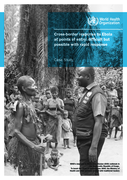
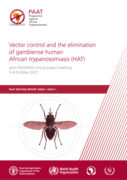
The main purpose of the meeting was to review tsetse control tools, activities and their contribution to the elimination of gHAT and the monitoring thereof. Seven endemic countries provided reports on recent and ongoing vector
...
Communicable Diseases Control in Emergencies
recommended
A field manual
Report of a WHO technical consultation meeting
Ouagadougou, Burkina Faso
The elimination scenario planning (ESP) manual provides malaria-endemic countries with a comprehensive framework to assess different scenarios for moving towards this goal, depending on programme coverage and funding availability. It also helps countries set realistic timelines and provides essentia
...
This document provides a summary of infection control recommendations when providing direct and non-direct care to patients with suspected or confirmed Filovirus haemorrhagic fever (HF), including Ebola or Marburg haemorrhagic fevers. These recommen
...
The guideline elaborates on the prevention and control strategy developed by the South-East Asia Regional Office of WHO, which consists of six key components.
Health care-associated infections (HAI) are one of the most common adverse events in care delivery and a major public health problem with an impact on morbidity, mortality and quality of life. At any one time, up to 7% of patients in developed and 10% in developing countries will acquire at least on
...
A handbook for leaders and managers
Joining efforts to control two trelated global epidemics.

14–22 April 2015

Report of a mission 20–24 April 2015
This practical manual is designed to support implementation of the World Health Organization (WHO) Guidelines on core components of infection prevention and control programmes at the national level, with special focus on countries with limited resou
...
IPCAT2 will assist countries to determine the core components already in place, that is, existing strengths, and to identify gaps or weaknesses to guide action planning. IPCAT2 corresponds to the six core component recommendations of the guidelines targeted at the national level.
It is very impor
...

This document provides the specifications for major pesticide application equipment used for control of vectors of diseases. The specification guidelines contained herein are intended to assist national authorities and other public health users in s
...
The Global vector control response 2017–2030 (GVCR) provides a new strategy to strengthen vector control worldwide through increased capacity, improved surveillance, better coordination and integr
...
