
Filter
1395
Text search:
World
Health
Organization
WHO,
Regional
Office
African
Region
Featured
141
381
Language
Document type
667
348
178
77
76
17
12
11
6
1
1
Countries
85
65
59
51
50
44
40
35
30
26
25
24
23
21
20
19
19
18
17
16
15
13
13
12
11
11
11
10
10
10
10
9
8
8
6
6
6
6
6
6
5
5
5
5
5
5
5
5
5
4
4
4
4
4
4
4
4
3
3
3
3
3
3
3
3
3
2
2
2
2
2
2
2
2
2
2
2
2
1
1
1
1
1
1
1
1
1
1
1
1
1
1
1
1
1
1
1
1
1
1
1
1
1
1
1
Authors & Publishers
Publication Years
Category
477
112
99
96
75
23
17
Toolboxes
92
86
70
65
62
62
53
53
51
47
41
38
34
33
30
29
28
26
19
13
11
8
8
4
3
1
1
ajtmh.20-1538 Volume 104, 6. Mapping is a prerequisite for effective implementation of interventions against neglected tropical diseases (NTDs). Before the accelerated World Health
...
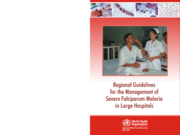
hese are two parallel guidelines, one for small hospitals and another one for large hospitals. In view of heavy burden of malaria and prevalence of drug resistant falciparum malaria in the South-East Asia Region, the guidelines were developed for us
...

A guide to increasing coverage and equity in all communities in the African Region
Expanded Programs on Immunization (EPI) is responsible for vaccines and vaccination to control, eliminate and eradicate vaccine preventable diseases (VPDs). Havi ...
Expanded Programs on Immunization (EPI) is responsible for vaccines and vaccination to control, eliminate and eradicate vaccine preventable diseases (VPDs). Havi ...
The aim of the framework is to provide guidance to Member States and partners on region-specific priority actions towards the goals, targets and milestones of the GTS. The central pillar of the framework is the adoption of programme phasing and tran
...

The WHO country office for Ghana, began the year 2019 with a 4-day staff retreat at the Busua Beach Resort in the Western Region from 04 to 08 Marc
...
This document offers guidance to Member States in the African region on the key steps used to conduct contact tracing related to the COVID-19 response. It is to be used by national and local
...
The socioeconomic factors and public health inadequacies that facilitated the rapid spread of this infection continue to exist. As it is a new and emerging disease it has not received sufficient coverage yet in the medical curricula of Member States
...

Adolescent girls and young women (AGYW) remain disproportionately affected by HIV in Eastern and Southern Africa (ESA), with 26 per cent of new infections attributed to this population. AGYW face many personal, social and structural barriers to access, uptake and use of traditional HIV prevention me
...

An interregional meeting on leishmaniasis among neighbouring endemic
countries in the Eastern Mediterranean, African and European regions was organized by the World
...
The Facilitator's Guide provides instruction and suggestions for teaching the training modules for the Technical Guidelines for Integrated Disease Surveillance and Response in the Africa Region, 2nd edition. This training is intended for district le
...
This report includes analysis from informal regional consultations in the African Region, the Caribbean and North America, Latin America, South-Eas
...
The role of evidence in the journey towards universal health coverage is paramount. Financial risk protection monitoring, the major focus of this report, informs where the WHO
...
The World Health Organization (WHO) Global Status Report on Noncommunicable Diseases 2010 projec
...

The South African WHO Country Cooperation Strategy (CCS) 2023–2027 focuses on four key strategic priorities based on the country’s health needs
...
The Global Campaign Against Epilepsy “Out of the Shadows”
Emergency medical teams (EMT) are first response health care providers – doctors, nurses, paramedics, and others – during outbreaks and emergencies or disasters, working with governments, charities such as nongovernmental organizations (NGOs), a
...
A handbook for leaders and managers
