Filter
117
Text search:
Government
of
Sierra
Leone,
Ministry
of
Health
and
Sanitation,
Health
Education
Division
Featured
Recommendations
13
New Publications
58
Language
Document type
No document type
81
Studies & Reports
15
Guidelines
7
Manuals
6
Strategic & Response Plan
3
Training Material
2
Situation Updates
2
Resource Platforms
1
Countries / Regions
Sierra Leone
54
Liberia
16
Guinea
10
Global
6
Senegal
2
Kenya
2
Africa
2
Mali
1
Côte d’Ivoire / Ivory Coast
1
Ethiopia
1
Uganda
1
Niger
1
Togo
1
Nepal
1
Jordan
1
Syria
1
Cambodia
1
Rwanda
1
South Africa
1
Malawi
1
Mozambique
1
Authors & Publishers
Publication Years
Category
Countries
45
Key Resources
10
Women & Child Health
6
Public Health
3
Clinical Guidelines
1
Toolboxes
Ebola & Marburg
34
COVID-19
13
Planetary Health
5
Disability
4
Conflict
3
Refugee
3
HIV
3
Mental Health
3
AMR
3
Caregiver
3
Global Health Education
2
2.0 Rapid Response
2
Cholera
1
Natural Hazards
1
Rapid Response
1
Pharmacy
1
Health Financing Toolbox
1
Malaria
1
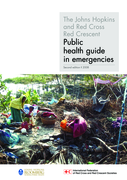
2nd edition. Essential guideline for humanitarian assistance
20-22 July 2015, Monrovia, Liberia


Updated September 2014

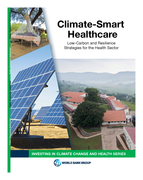
Climate change is damaging human health now and is projected to have a greater impact in the future. Low- and middle-income countries are seeing th
...
31 Janaury 2021
SCORE for health data technical package. The first global assessment on the status and capacity of
...

7 Febr. 2021
As COVID-19 continues to wreak havoc in countries – decimating people’s livelihoods, and leaving health systems struggling to provide healthcare
...

War Trauma Foundation strengthens mental health care and psychosocial support through capacity building and development
...
The report summarizes key global health expenditure patterns and trends, and illustrates the potential
...
This timely report comes at a decisive moment in history where
we can reshape urban environments and health systems for the
majority of the world
...
Refugee Health
recommended
An approach to emergency situations. Relief workers face rapidly changing and complex environments, new disease patterns, enormous humanitarian needs and relatively limited resources. The authors
...