
Filter
5931
Text search:
patient
management
Featured
701
1452
Language
5477
302
128
112
59
57
36
26
15
9
7
6
6
5
4
4
3
3
3
3
3
3
2
2
2
1
1
1
1
1
1
1
1
1
1
1
1
1
1
1
1
Document type
2990
1117
839
413
214
145
127
28
17
15
14
9
1
1
1
Countries / Regions
351
232
188
169
145
143
127
125
124
110
93
93
81
78
78
72
72
67
65
62
61
53
52
50
49
48
41
41
40
36
36
36
35
34
33
31
31
30
28
26
25
24
21
21
19
19
19
19
18
16
14
14
13
12
11
9
9
9
9
8
8
8
8
7
7
7
7
7
7
7
7
6
6
6
6
5
5
5
5
4
4
4
4
4
4
4
4
4
4
4
4
4
4
3
3
3
3
3
3
3
3
2
2
2
2
2
2
2
2
2
2
2
2
2
2
2
2
2
2
1
1
1
1
1
1
1
1
1
1
1
1
1
1
1
1
1
1
Authors & Publishers
962
306
243
139
133
120
96
87
63
55
45
39
38
37
34
32
31
30
29
29
27
26
25
25
25
24
23
23
22
22
22
21
21
21
21
21
21
20
20
19
19
18
18
17
17
17
16
15
15
15
15
15
14
14
14
14
14
14
13
13
12
12
12
12
12
11
11
11
11
11
11
10
10
10
10
10
10
10
10
10
10
10
9
9
9
9
9
9
9
8
8
8
8
8
8
8
8
8
8
8
7
7
7
7
7
7
7
7
7
7
7
7
7
6
6
6
6
6
6
6
6
6
6
6
6
6
6
6
6
6
6
6
6
6
6
6
6
6
6
6
6
5
5
5
5
5
5
5
5
5
5
5
5
5
5
5
5
5
5
5
5
5
5
5
5
5
5
5
5
5
5
5
5
5
5
4
4
4
4
4
4
4
4
4
4
4
4
4
4
4
4
4
4
4
4
4
4
4
4
4
4
4
4
4
4
4
4
4
4
4
4
4
4
4
4
4
4
4
4
4
4
4
4
4
4
4
4
4
4
4
4
4
3
3
3
3
3
3
3
3
3
3
3
3
3
3
3
3
3
3
3
3
3
3
3
3
3
3
3
3
3
3
3
3
3
3
3
3
3
3
3
3
3
3
3
3
3
3
3
3
3
3
3
3
3
3
3
3
3
3
3
3
3
3
3
3
3
3
3
3
3
3
3
3
3
3
3
3
3
3
3
3
3
3
3
3
3
3
3
3
3
3
3
3
3
3
3
3
3
3
3
3
3
3
3
3
3
3
3
3
3
3
3
3
3
3
3
3
3
3
3
3
3
3
3
3
3
3
3
3
2
2
2
2
2
2
2
2
2
2
2
2
2
2
2
2
2
2
2
2
2
2
2
2
2
2
2
2
2
2
2
2
2
2
2
2
2
2
2
2
2
2
2
2
2
2
2
2
2
2
2
2
2
2
2
2
2
2
2
2
2
2
2
2
2
2
2
2
2
2
2
2
2
2
2
2
2
2
2
2
2
2
2
2
2
2
2
2
2
2
2
2
2
2
2
2
2
2
2
2
2
2
2
2
2
2
2
2
2
2
2
2
2
2
2
2
2
2
2
2
2
2
2
2
2
2
2
2
2
2
2
2
2
2
2
2
2
2
2
2
2
2
2
2
2
2
2
2
2
2
2
2
2
2
2
2
2
2
2
2
2
2
2
2
2
2
2
2
2
2
2
2
2
2
2
2
2
2
2
2
2
2
2
2
2
2
2
2
2
2
2
2
2
2
2
2
2
2
2
2
2
2
2
2
2
2
2
2
2
2
2
2
2
2
2
2
2
2
2
2
2
2
2
2
2
2
2
2
2
2
2
2
2
2
2
2
2
2
2
2
2
2
2
2
2
2
2
2
2
2
2
2
2
2
2
2
2
2
2
2
2
2
2
2
2
2
2
2
2
2
2
2
2
2
2
2
2
2
2
2
2
2
2
2
2
2
2
2
2
2
2
2
2
2
2
2
2
2
2
2
2
2
2
2
2
2
2
2
2
2
2
2
2
2
2
2
2
2
2
2
2
2
2
2
2
2
2
2
2
2
2
2
2
2
2
2
2
2
2
2
2
2
2
2
2
2
2
2
2
2
2
2
2
2
2
2
2
1
1
1
1
1
1
1
1
1
1
1
1
1
1
1
1
1
1
1
1
1
1
1
1
1
1
1
1
1
1
1
1
1
1
1
1
1
1
1
1
1
1
1
1
1
1
1
1
1
1
1
1
1
1
1
1
1
1
1
1
1
1
1
1
1
1
1
1
1
1
1
1
1
1
1
1
1
1
1
1
1
1
1
1
1
1
1
1
1
1
1
1
1
1
1
1
1
1
1
1
1
1
1
1
1
1
1
1
1
1
1
1
1
1
1
1
1
1
1
1
1
1
1
1
1
1
1
1
1
1
1
1
1
1
1
1
1
1
1
1
1
1
1
1
1
1
1
1
1
1
1
1
1
1
1
1
1
1
1
1
1
1
1
1
1
1
1
1
1
1
1
1
1
1
1
1
1
1
1
1
1
1
1
1
1
1
1
1
1
1
1
1
1
1
1
1
1
1
1
1
1
1
1
1
1
1
1
1
1
1
1
1
1
1
1
1
1
1
1
1
1
1
1
1
1
1
1
1
1
1
1
1
1
1
1
1
1
1
1
1
1
1
1
1
1
1
1
1
1
1
1
1
1
1
1
1
1
1
1
1
1
1
1
1
1
1
1
1
1
1
1
1
1
1
1
1
1
1
1
1
1
1
1
1
1
1
1
1
1
1
1
1
1
1
1
1
1
1
1
1
1
1
1
1
1
1
1
1
1
1
1
1
1
1
1
1
1
1
1
1
1
1
1
1
1
1
1
1
1
1
1
1
1
1
1
1
1
1
1
1
1
1
1
1
1
1
1
1
1
1
1
1
1
1
1
1
1
1
1
1
1
1
1
1
1
1
1
1
1
1
1
1
1
1
1
1
1
1
1
1
1
1
1
1
1
1
1
1
1
1
1
1
1
1
1
1
1
1
1
1
1
1
1
1
1
1
1
1
1
1
1
1
1
1
1
1
1
1
1
1
1
1
1
1
1
1
1
1
1
1
1
1
1
1
1
1
1
1
1
1
1
1
1
1
1
1
1
1
1
1
1
1
1
1
1
1
1
1
1
1
1
1
1
1
1
1
1
1
1
1
1
1
1
1
1
1
1
1
1
1
1
1
1
1
1
1
1
1
1
1
1
1
1
1
1
1
1
1
1
1
1
1
1
1
1
1
1
1
1
1
1
1
1
1
1
1
1
1
1
1
1
1
1
1
1
1
1
1
1
1
1
1
1
1
1
1
1
1
1
1
1
1
1
1
1
1
1
1
1
1
1
1
1
1
1
1
1
1
1
1
1
1
1
1
1
1
1
1
1
1
1
1
1
1
1
1
1
1
1
1
1
1
1
1
1
1
1
1
1
1
1
1
1
1
1
1
1
1
1
1
1
1
1
1
1
1
1
1
1
1
1
1
1
1
1
1
1
1
1
1
1
1
1
1
1
1
1
1
1
1
1
1
1
1
1
1
1
1
1
1
1
1
1
1
1
1
1
1
1
1
1
1
1
1
1
1
1
1
1
1
1
1
1
1
1
1
1
1
1
1
1
1
1
1
1
1
1
1
1
1
1
1
1
1
1
1
1
1
1
1
1
1
1
1
1
1
1
1
1
1
1
1
1
1
1
1
1
1
1
1
1
1
1
1
1
1
1
1
1
1
1
1
1
1
1
1
1
1
1
1
1
1
1
1
1
1
1
1
1
1
1
1
1
1
1
1
1
1
1
1
1
1
1
1
1
1
1
1
1
1
1
1
1
1
1
1
1
1
1
1
1
1
1
1
1
1
1
1
1
1
1
1
1
1
1
1
1
1
1
1
1
1
1
1
1
1
1
1
1
1
1
1
1
1
1
1
1
1
1
1
1
1
1
1
1
1
1
1
1
1
1
1
1
1
1
1
1
1
1
1
1
1
1
1
1
1
1
1
1
1
1
1
1
1
1
1
1
1
1
1
1
1
1
1
1
1
1
1
1
1
1
1
1
1
1
1
1
1
1
1
1
1
1
1
1
1
1
1
1
1
1
1
1
1
1
1
1
1
1
1
1
1
1
1
1
1
1
1
1
1
1
1
1
1
1
1
1
1
1
1
1
1
1
1
1
1
1
1
1
1
1
1
1
1
1
1
1
1
1
1
1
1
1
1
1
1
1
1
1
1
1
1
1
1
1
1
1
1
1
1
1
1
1
1
1
1
1
1
1
1
1
1
1
1
1
1
1
1
1
1
1
1
1
1
1
1
1
1
1
1
1
1
1
1
1
1
1
1
1
1
1
1
1
1
1
1
1
1
1
1
1
1
1
1
1
1
1
1
1
1
1
1
1
1
1
1
1
1
1
1
1
1
1
1
1
1
1
1
1
1
1
1
1
1
1
1
1
1
1
1
1
1
1
1
1
1
1
1
1
1
1
1
1
1
1
1
1
1
1
1
1
1
1
1
1
1
1
1
1
1
1
1
1
1
1
1
1
1
1
1
1
1
1
1
1
1
1
1
1
1
1
1
1
1
1
1
1
1
1
1
1
1
1
1
1
1
1
1
1
1
1
1
1
1
1
1
1
1
1
1
1
1
1
1
1
1
1
1
1
1
1
1
1
1
1
1
1
1
1
1
1
1
1
1
1
1
1
1
1
1
1
1
1
1
1
1
1
1
1
1
1
1
1
1
1
1
1
1
1
1
1
1
1
1
1
1
1
1
1
1
1
1
1
1
1
1
1
1
1
1
1
1
1
1
1
1
1
1
1
1
1
1
1
1
1
1
1
1
1
1
1
1
1
1
1
1
1
1
1
1
1
1
1
1
1
1
1
1
1
1
1
1
1
1
1
1
1
1
1
1
1
1
1
1
1
1
1
1
1
1
1
1
1
1
1
1
1
1
1
1
1
1
1
1
1
1
1
1
1
1
1
1
1
1
1
1
1
1
1
1
1
1
1
1
1
1
1
1
1
1
1
1
1
1
1
1
1
1
1
1
1
1
1
1
1
1
1
1
1
1
1
1
1
1
1
1
1
1
1
1
1
1
1
1
1
1
1
1
1
1
1
1
1
1
1
1
1
1
1
1
1
1
1
1
1
1
1
1
1
1
1
1
1
1
1
1
1
1
1
1
1
1
1
1
1
1
1
1
1
1
1
1
1
1
1
1
1
1
1
1
1
1
1
1
1
1
1
1
1
1
1
1
1
1
1
1
1
1
1
1
1
1
1
1
1
1
1
1
1
1
1
1
1
1
1
1
1
1
1
1
1
1
1
1
1
1
1
1
1
1
1
1
1
1
1
1
1
1
1
1
1
1
1
1
1
1
1
1
1
1
1
1
1
1
1
1
1
1
1
1
1
1
1
1
1
1
1
1
1
1
1
1
1
1
1
1
1
1
1
1
1
1
1
1
1
1
1
1
1
1
1
1
1
1
1
1
1
1
1
1
1
1
1
1
1
1
1
1
1
1
1
1
1
1
1
1
1
1
1
1
1
1
1
1
1
1
1
1
1
1
1
1
1
1
1
1
1
1
1
1
1
1
1
1
1
1
1
1
1
1
1
1
1
1
1
1
1
1
1
1
1
1
1
1
1
1
1
1
1
1
1
1
1
1
1
1
1
1
1
1
1
1
1
1
1
1
1
1
1
1
1
1
1
1
1
1
1
1
1
1
1
1
1
1
1
1
1
1
1
1
1
1
1
1
1
1
1
1
1
1
1
1
1
1
1
1
1
1
1
1
1
1
1
1
1
1
1
1
1
1
1
1
1
1
1
1
1
1
1
1
1
1
1
1
1
1
1
1
1
1
1
1
1
1
1
1
1
1
1
1
1
1
1
1
1
1
1
1
1
1
1
1
1
1
1
1
1
1
1
1
1
1
1
1
1
1
1
1
1
1
1
1
1
1
1
1
1
1
1
1
1
1
1
1
1
1
1
1
1
1
1
1
1
1
1
1
1
1
1
1
1
1
1
1
1
1
1
1
1
1
1
1
1
1
1
1
1
1
1
1
1
1
1
1
1
1
1
1
1
1
1
1
1
1
1
1
1
1
1
1
1
1
1
1
1
1
1
1
1
1
1
1
1
1
1
1
1
1
1
1
1
1
1
1
1
1
1
1
1
1
1
1
1
1
1
1
1
1
1
1
1
1
1
1
1
1
1
1
1
1
1
1
1
1
1
1
1
1
1
1
1
1
1
1
1
1
1
1
1
1
1
1
1
1
1
1
1
1
1
1
1
1
1
1
1
1
1
1
1
1
1
1
1
1
1
1
1
1
1
1
1
1
1
1
1
1
1
1
1
1
1
1
1
1
1
1
1
1
1
1
1
1
1
1
1
1
1
1
1
1
1
1
1
1
1
1
1
1
1
1
1
1
1
1
1
1
1
1
1
1
1
1
1
1
1
1
1
1
1
1
1
1
1
1
1
1
1
1
1
1
1
1
1
1
1
1
1
1
1
1
1
1
1
1
1
1
1
1
1
1
1
1
1
1
1
1
1
1
1
1
1
1
1
1
1
1
1
1
1
1
1
1
1
1
1
1
1
1
1
1
1
1
1
1
1
1
1
1
1
1
1
1
1
1
1
1
1
1
1
1
1
1
1
1
1
1
1
1
1
1
1
1
1
1
1
1
1
1
1
1
1
1
1
1
1
1
1
1
1
1
1
1
1
1
1
1
1
1
1
1
1
1
1
1
1
1
1
1
1
1
1
1
1
1
1
1
1
1
1
1
1
1
1
1
1
1
1
1
1
1
1
1
1
1
1
1
1
1
1
1
1
1
1
1
1
1
1
1
1
1
1
1
1
1
1
1
1
1
1
1
1
1
1
1
1
1
1
1
1
1
1
1
1
1
1
1
1
1
1
1
1
1
1
1
1
1
1
1
1
1
1
1
1
1
1
1
1
1
1
1
1
1
1
1
1
1
1
1
1
1
1
1
1
1
1
1
1
1
1
1
1
1
1
1
1
1
1
1
1
1
1
1
1
1
1
1
1
1
1
1
1
1
1
1
1
1
1
1
1
1
1
1
1
1
1
1
1
1
1
1
1
1
1
1
1
1
1
1
1
1
1
1
1
1
1
1
1
1
1
1
1
1
1
1
1
1
1
1
1
1
1
1
1
1
1
1
1
1
1
1
1
1
1
1
1
1
1
1
1
1
1
1
1
1
1
1
1
1
1
1
1
1
1
1
1
1
1
1
1
1
1
1
1
1
1
1
1
1
1
1
1
1
1
1
1
1
1
1
1
1
1
1
1
1
1
1
1
1
1
1
1
1
1
1
1
1
1
1
1
1
1
1
1
1
1
1
1
1
1
1
1
1
1
1
1
1
1
1
1
1
1
1
1
1
1
1
1
1
1
1
1
1
1
1
1
1
1
1
1
1
1
1
1
1
1
1
1
1
1
1
1
1
1
1
1
1
1
1
1
1
1
1
1
1
1
1
1
1
1
1
1
1
1
1
1
1
1
1
1
1
1
1
1
1
1
1
1
1
1
1
1
1
1
1
1
1
1
1
1
1
1
1
1
1
1
1
1
1
1
1
1
1
1
1
1
1
1
1
1
1
1
1
1
1
1
1
1
1
1
1
1
1
1
1
1
1
1
1
1
1
1
1
1
1
1
1
1
1
1
1
1
1
1
1
1
1
1
1
1
1
1
1
1
1
1
1
1
1
1
1
1
1
1
1
1
1
1
1
1
1
1
1
1
1
1
1
1
1
1
1
1
1
1
1
1
1
1
1
1
1
1
1
1
1
1
1
1
1
1
1
1
1
1
1
1
1
1
1
1
1
1
1
1
1
1
1
1
1
1
1
1
1
1
1
1
1
1
1
1
1
1
1
1
1
1
1
1
1
1
1
1
1
1
1
1
1
1
1
1
1
1
1
1
1
1
1
1
1
1
1
1
1
1
1
1
1
1
1
1
1
1
1
1
1
1
1
1
1
1
1
1
1
1
1
1
1
1
1
1
1
1
1
1
1
1
1
1
1
1
1
1
1
1
1
1
1
1
1
1
1
1
1
1
1
1
1
1
1
1
1
1
1
1
1
1
1
1
1
1
1
1
1
1
1
1
1
1
1
1
1
1
1
1
1
1
1
1
1
1
1
1
1
1
1
1
1
1
1
1
1
1
1
1
1
1
1
1
1
1
1
1
1
1
1
1
1
1
1
1
1
1
1
1
1
1
1
1
1
1
1
1
1
1
1
1
1
1
1
1
1
1
1
1
1
1
1
1
1
1
1
1
1
1
1
1
1
1
1
1
1
1
1
1
1
1
1
1
1
1
1
1
1
1
1
1
1
1
1
1
1
1
1
1
1
1
1
1
1
1
1
1
1
1
1
1
1
1
1
1
1
1
1
1
1
1
1
1
1
1
1
1
1
1
1
1
1
1
1
1
1
1
1
1
1
1
1
1
1
1
1
1
1
1
1
1
1
1
1
1
1
1
1
1
1
1
1
1
1
1
1
1
1
1
1
1
1
1
1
1
1
1
1
1
1
1
1
1
1
1
1
1
1
1
1
1
1
1
1
1
1
1
1
1
1
1
1
1
1
1
1
1
1
1
1
1
1
1
1
1
1
1
1
1
1
1
1
1
1
1
1
1
1
1
1
1
1
1
1
1
1
1
1
1
1
1
1
1
1
1
1
1
1
1
1
1
1
1
1
1
1
1
1
1
1
1
1
1
1
1
1
1
1
1
1
1
1
1
1
1
1
1
1
1
1
1
1
1
1
1
1
1
1
1
1
1
1
1
1
1
1
1
1
1
1
1
1
1
1
1
1
1
1
1
1
1
1
1
1
1
1
1
1
1
1
1
1
1
1
1
1
1
1
1
1
1
1
1
1
1
1
1
1
1
1
1
1
1
1
1
1
1
1
1
1
1
1
1
1
1
1
1
1
1
1
1
1
1
1
1
1
1
1
1
1
1
1
1
1
1
1
1
1
1
1
1
1
1
1
1
1
1
1
1
1
1
1
1
1
1
1
1
1
1
1
1
1
1
1
1
1
1
1
1
1
1
1
1
1
1
1
1
1
1
1
1
1
1
1
1
1
1
1
1
1
1
1
1
1
1
1
1
1
1
1
1
1
1
1
1
1
1
1
1
1
1
1
1
1
1
1
1
1
1
1
1
1
1
1
1
1
1
1
1
1
1
1
1
1
1
1
1
1
1
1
1
1
1
1
1
1
1
1
1
1
1
1
1
1
1
1
1
1
1
1
1
1
1
1
1
1
1
1
1
1
1
1
1
1
1
1
1
1
1
1
1
1
1
1
1
1
1
1
1
1
1
1
1
1
1
1
1
1
1
1
1
1
1
1
1
1
1
1
1
1
1
1
1
1
1
1
1
1
1
1
1
1
1
1
1
1
1
1
1
1
1
1
1
1
1
1
1
1
1
1
1
1
1
1
1
1
1
1
1
1
1
1
1
1
1
1
1
1
1
1
1
1
1
1
1
1
1
1
1
1
1
1
1
1
1
1
1
1
1
1
1
1
1
1
1
1
1
1
1
1
1
1
1
1
1
1
1
1
1
1
1
1
1
1
1
1
1
1
1
1
1
1
1
1
1
1
1
1
1
1
1
1
1
1
1
1
1
1
1
1
1
1
1
1
1
1
1
1
1
1
1
1
1
1
1
1
1
1
1
1
1
1
1
1
1
1
1
1
1
1
1
1
1
1
1
1
1
1
1
1
1
1
1
1
1
1
1
1
1
1
1
1
1
1
1
1
1
1
1
1
1
1
1
1
1
1
1
1
1
1
1
1
1
1
1
1
1
1
1
1
1
1
1
1
1
1
1
1
1
1
1
1
1
1
1
1
1
1
1
1
1
1
1
1
1
1
1
1
1
1
1
1
1
1
1
1
1
1
1
1
1
1
1
1
1
1
1
1
1
1
1
1
1
1
1
1
1
1
1
1
1
1
1
1
1
1
1
1
1
1
1
1
1
1
1
1
1
1
1
1
1
1
1
1
1
1
1
1
1
1
1
1
1
1
1
1
1
1
1
1
1
1
1
1
1
1
1
1
1
1
1
1
1
1
1
1
1
1
1
1
1
1
1
1
1
1
1
1
1
1
1
1
1
1
1
1
1
1
1
1
1
1
1
1
1
1
1
1
1
1
1
1
1
1
1
1
1
1
1
1
1
1
1
1
1
1
1
1
1
1
1
1
1
1
1
1
1
1
1
1
1
1
1
1
1
1
1
1
1
1
1
1
1
1
1
1
1
1
1
1
1
1
1
1
1
1
1
1
1
1
1
1
1
1
1
1
1
1
1
1
1
1
1
1
1
1
1
1
1
1
1
1
1
1
1
1
1
1
1
1
1
1
1
1
1
1
1
1
1
1
1
1
1
1
1
1
1
1
1
1
1
1
1
1
1
1
1
1
1
1
1
1
1
1
1
1
1
1
1
1
1
1
1
1
1
1
1
1
1
1
1
1
1
1
1
1
1
1
1
1
1
1
1
1
1
1
1
1
1
1
1
1
1
1
1
1
1
1
1
1
1
1
1
1
1
1
1
1
1
1
1
1
1
1
1
1
1
1
1
1
1
1
Publication Years
1812
3510
577
31
1
Category
2254
631
328
282
247
133
92
2
Toolboxes
586
478
426
331
284
281
224
212
171
148
98
94
89
83
83
75
61
59
58
34
34
30
29
27
26
1
1

The development of this draft Proposed programme budget 2022–2023 comes at a unique moment for WHO. The world is in the grip of the coronavirus disease (COVID-19) pandemic and faces health, social and economic consequences on an unprecedented scale. Although it is not known when the COVID-19 pande
...
mic will end, recent encouraging vaccine results, in addition to the examples of countries that have achieved good results through public health measures, hold out the prospect of better days ahead. The full impact of the pandemic cannot yet be determined. But whatever its implications, the Secretariat will rise to the challenge and is ready to adapt so that it is fully equipped to support Member States for any eventuality in the future – to make sure that the world will never again have to face this kind of crisis.
more
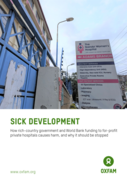
Development finance institutions owned by European governments and the World Bank Group are spending hundreds of millions of dollars on expensive for-profit hospitals in the Global South that block patients from getting care, or bankrupt them, with some even imprisoning patients who cannot afford th
...
eir bills. At the height of the COVID-19 pandemic, some of these same hospitals denied entry to patients suffering from the virus or sold intensive care beds at eyewatering prices to the highest bidder. These development institutions have woefully inadequate safeguards, invest via a complex web of tax-avoiding financial intermediaries, and offer little to zero evidence on the impacts their investments are having. Oxfam is calling on rich-country governments and the World Bank Group to immediately halt their spending on for-profit private healthcare, and for an urgent independent investigation to be conducted into all active and historic investments.
more

The GFF needs an additional US$2.5 billion from 2021 to 2025 to enable countries to protect health gains and accelerate progress toward the 2030 Goals. Of this amount, the GFF urgently needs to secure new pledges of US$1.2 billion by the end of 2021 to help its current 36 partner countries protect
...
and maintain essential health services and implement time-sensitive service delivery and health system improvements to enable a sharp bend of the curve back to a positive trajectory to close the gap to the SDGs.
more
Over the 20 years that followed, this unique partnership has invested more than US$53 billion, saving 44 million lives and reducing the combined death rate from the three diseases by more than half in the countries in which the Global Fund invests.
Ending the epidemics of HIV, tuberculosis and malaria by 2030 is within reach, but not yet fully in our grasp.
With only 11 years left, we have no time to waste. We must step up the fight now.

The burden of diabetes is enormous, positioning it as one of the main challenges facing public health today. Currently, it is estimated that 62 million people are living with diabetes in the Region of the Americas and projections show its prevalence will continue rising over the following years. The
...
Region shows the highest number of years of healthy life lost (through either disability or premature death) due to diabetes worldwide. The high costs associated with its treatment produce a heavy economic burden. Its complications can seriously affect the quality of life of people living with diabetes, their families, and society and overload health systems. This report shows the latest internationally comparable data on diabetes and its main risk factors by year, country, and sex.
more

La carga de la diabetes es enorme, posicionándola como uno de los principales desafíos que enfrenta la salud pública en la actualidad. Actualmente, se estima que 62 millones de personas viven con diabetes en la Región de las Américas y las proyecciones muestran que su prevalencia seguirá aumen
...
tando en los próximos años. La Región muestra el mayor número de años de vida saludable perdidos (ya sea por discapacidad o muerte prematura) debido a la diabetes en todo el mundo. Los altos costes asociados a su tratamiento producen una pesada carga económica. Sus complicaciones pueden afectar seriamente la calidad de vida de las personas que viven con diabetes, sus familias y la sociedad y sobrecargar los sistemas de salud. Este informe muestra los últimos datos comparables internacionalmente sobre la diabetes y sus principales factores de riesgo por año, país y sexo. También incluye un resumen de la respuesta de los sistemas de salud de los países a la diabetes, incluidos planes nacionales, objetivos, vigilancia, directrices y acceso a medicamentos y tecnologías esenciales, y sintetiza información sobre las complicaciones relacionadas con la diabetes y la estrecha relación entre la diabetes y otras patologías, como enfermedades cardiovasculares, tuberculosis y COVID-19.
more

To support the achievement of health equity in the Region, the regional inter-agency movement Every Woman Every Child Latin America and the Caribbean (EWEC-LAC) advocates for and supports the use of equity and evidence-based policies, strategies and interventions to accelerate equitable progress in
...
the health of women, children and adolescents. Although progress has been made, great inequities persist. Women from the LAC region’s poorest countries are almost four times more likely to die due to complications during childbirth than those living in the wealthiest countries. Through the years, several tools, instruments and methods (TIMs) have been developed by global, regional and country partners that can be used to conduct systematic equity-based analyses and/or re-designs of health systems, programs, strategies and interventions. The main purpose of this document is to present an overview of existing TIMs that can be used by policymakers, program managers, development partners, nongovernmental organizations, academia and civil society partners to strengthen systematic identification, analysis and responding to social inequities in the health of women, children and adolescents in LAC. The TIMs included were identified through a systematic search process
more
Cholera remains a significant public health threat in many countries worldwide. In resource-constrained settings, it disproportionately affects thousands of poor and vulnerable population

WHO/Europe has launched a new guide, providing support to countries on how to apply behavioural and cultural insights (BCI) for health. It presents a simple step-wise approach, complemented by a rich collection of detailed considerations, tools and exercises. The guide is the first of its kind, spec
...
ifically developed for use by public health professionals developing policies, services and communications informed by BCI across health topics.
Some of the most persistent public health challenges involve human behaviour. Using a BCI lens means that health policies, services and communications can be tailored to the needs and circumstances of people and communities, and thereby help combat these challenges. The new Tailoring Health Programmes (THP) guide describes how this can be done.
Building on several topic-specific guides that focused on applying BCI to routine and influenza vaccination and tackling antimicrobial resistance, as well as external evaluations and a rigorous peer-review process, this guide is the result of over a decade of work by WHO/Europe. The THP approach has already been adopted in over 20 countries and has received positive feedback from public health agencies.
“This guide is the culmination of a decade of work involving many colleagues at country, regional and global levels. The guide is our “BCI bible”, guiding our work with and in countries to help tackle persistent health challenges,” said Katrine Bach Habersaat, Regional Advisor for BCI at WHO/Europe.
Karina Godoy, Senior Analyst and National Focal Point for Behavioural Insights at the Public Health Agency of Sweden, who is employing the approach described in the guide across several health projects, comments: “The THP guide is easy to use and at the same time provides detailed guidance and inspiration where needed. We have decided to translate the document into Swedish and use the approach widely”.
more

There is growing understanding and high-level endorsement of the importance of strong collaborative multisectoral approaches to address a broad range of social, economic and governance issues for the prevention and control of noncommunicable disease (NCDs) and mental health conditions. In 2019, Worl
...
d Health Organization (WHO) Member States requested the WHO Director-General to provide an analysis across countries of successful approaches for the prevention and control of NCDs that used multisectoral action.This report describes the experiences of different countries, areas and territories in implementing multisectoral actions to tackle NCDs and is the first step to address their request for an analysis of such efforts
more

The world is off track to make significant progress towards universal health coverage (UHC) (SDG target 3.8) by 2030 as improvements to health services coverage have stagnated since 2015, and the proportion of the population that faced catastrophic levels of out-of-pocket (OOP) health spending has i
...
ncreased.
more
Previous advocacy efforts have achieved tangible goals in terms garnering political commitments
to increase financing for TB—as seen at the 2018 UN High-Level Meeting on TB. The challenge
now is to ensure that these commitments are actually met within a global biomedical research
ecosystem that
...
is designed and incentivized to prioritize the health needs of wealthy populations
more

Trustworthy, evidence-based health guidelines form the basis of national policies affecting both patients and health-care workers. Emphasizing the link between robust evidence and people’s trust in their health systems, Dr Hans Henri P. Kluge, WHO Regional Director for Europe said at the launch ev
...
ent, “Trust and transformation are key words for us, especially when we talk about improving and strengthening our health systems. Transformation should first and foremost serve the interests of patients and health-care workers”.
While it is not always easy to demonstrate the immediate effect of guidelines on people’s health, there is no viable alternative to utilizing guidelines based on the best available evidence.
Yet, developing robust guidelines remains a challenge for most countries. “Guidelines need to be both simple to use and timely, they need to address people’s real needs, especially at the local level, and should ultimately reflect the resources available,” said Dr Natasha Azzopardi-Muscat, Director, Country Health Policies and Systems, WHO/Europe. “This means that any successful guideline needs to be adjusted and adapted to local contexts and realities.”
more

WHO today released its first roadmap to tackle postpartum haemorrhage (PPH) – defined as excessive bleeding after childbirth - which affects millions of women annually and is the world’s leading cause of maternal deaths.
Despite being preventable and treatable, PPH results in around 70 000 de
...
aths every year. For those who survive, it can cause disabilities and psychological trauma that last for years.
“Severe bleeding in childbirth is one of the most common causes of maternal mortality, yet it is highly preventable and treatable,” said Dr Tedros Adhanom Ghebreyesus, WHO Director-General. “This new roadmap charts a path forward to a world in which more women have a safe birth and a healthy future with their families.”
The Roadmap aims to help countries address stark differences in survival outcomes from PPH, which reflect major inequities in access to essential health services. Over 85% of deaths from PPH happen in sub-Saharan Africa and South Asia. Risk factors include anaemia, placental abnormalities, and other complications in pregnancy such as infections and pre-eclampsia.
Many risk factors can be managed if there is quality antenatal care, including access to ultrasound, alongside effective monitoring in the hours after birth. If bleeding starts, it also needs to be detected and treated extremely quickly. Too often, however, health facilities lack necessary healthcare workers or resources, including lifesaving commodities such as oxytocin, tranexamic acid or blood for transfusions.
“Addressing postpartum haemorrhage needs a multipronged approach focusing on both prevention and response - preventing risk factors and providing immediate access to treatments when needed - alongside broader efforts to strengthen women’s rights,” said Dr Pascale Allotey, WHO Director for Sexual and Reproductive Health and HRP, the UN’s special programme on research development and training in human reproduction. “Every woman, no matter where she lives, should have access to timely, high quality maternity care, with trained health workers, essential equipment and shelves stocked with appropriate and effective commodities – this is crucial for treating postpartum bleeding and reducing maternal deaths.”
more
The Water and Sanitation for Health Facility Improvement Tool (WASH FIT) presents a framework and acts as a guide to support multisectoral action to improve water, sanitation and hygiene (WASH) in health care. Central to the WASH FIT methodology is training and incremental improvements.
Implementat
...
ion of WASH FIT requires six preparatory steps at the national level, one of which is conducting national sensitization and training of trainers, followed by facility-level training. At the facility level, step 1 (of five) involves establishing and training a WASH FIT team.
The WASH FIT methodology is outlined in WASH FIT: A practical guide for improving quality of care through water, sanitation and hygiene in health care facilities. Second edition. (the WASH FIT guide), which includes a set of templates designed to help users with each phase of the improvement cycle.
more
WHO has updated its guidelines for COVID-19 therapeutics, with revised recommendations for patients with non-severe COVID-19. This is the 13th update to these guidelines.
Updated risk rates for hospital admission in patients with non-severe COVID-19
The guidance includes updated risk rates for
...
hospital admission in patients with non-severe COVID-19.
The current COVID-19 virus variants tend to cause less severe disease while immunity levels are higher due to vaccination, leading to lower risks of severe illness and death for most patients.
This update includes new baseline risk estimates for hospital admission in patients with non-severe COVID-19. The new ‘moderate risk’ category now includes people previously considered to be high risk including older people and/or those with chronic conditions, disabilities, and comorbidities of chronic disease. The updated risk estimates will assist healthcare professionals to identify individuals at high, moderate or low risk of hospital admission, and to tailor treatment according to WHO guidelines:
**High: **People who are immunosuppressed remain at higher risk if they contract COVID-19, with an estimated hospitalization rate of 6%.
**Moderate: **People over 65 years old, those with conditions like obesity, diabetes and/or chronic conditions including chronic obstructive pulmonary disease, kidney or liver disease, cancer, people with disabilities and those with comorbidities of chronic disease are at moderate risk, with an estimated hospitalization rate of 3%.
Low: Those who are not in the high or moderate risk categories are at low risk of hospitalization (0.5%). Most people are low risk.
Review of COVID-19 treatments for people with non-severe COVID-19
WHO continues to strongly recommend nirmatrelvir-ritonavir (also known by its brand name ‘Paxlovid’) for people at high-risk and moderate risk of hospitalization. The recommendations state that nirmatrelvir-ritonavir is considered the best choice for most eligible patients, given its therapeutic benefits, ease of administration and fewer concerns about potential harms. Nirmatrelvir-ritonavir was first recommended by WHO in April 2022.
If nirmatrelvir-ritonavir is not available to patients at high-risk of hospitalization, WHO suggests the use of molnupiravir or remdesivir instead.
WHO suggests against the use of molnupiravir and remdesivir for patients at moderate risk, judging the potential harms to outweigh the limited benefits in patients at moderate risk of hospital admission.
For people at low risk of hospitalization, WHO does not recommend any antiviral therapy. Symptoms like fever and pain can continue to be managed with analgesics like paracetamol.
WHO also recommends against use of a new antiviral (VV116) for patients, except in clinical trials.
The update also includes a strong recommendation against the use of ivermectin for patients with non-severe COVID-19. WHO continues to advise that in patients with severe or critical COVID-19, ivermectin should only be used in clinical trials.
more

Ukraine: Russian invasion has forced older people with disabilities to endure isolation and neglect – new report
Many temporary shelters inaccessible to people with physical disabilities
Overburdened care system often provides few alternatives to institutions for older people
Authorities
...
and humanitarian actors must ensure an inclusive response
Displaced older people with disabilities in Ukraine are physically and financially unable to access adequate housing and care amid Russia’s ongoing invasion, sometimes leaving few alternatives to being placed in residential institutions, Amnesty International said in a new report.
more

This document lays out economic arguments for investing in the Access to COVID-19 Tools Accelerator (ACT-Accelerator). Framed within an overall context that recognizes the broader human health and societal impacts of the COVID-19 crisis, ACT-Accelerator's Economic Investment Case argues that investm
...
ent in ACT-Accelerator is the world’s best bet and most viable solution for restarting the global economy. It is intended for governments, multilaterals, civil society, businesses and foundations and all those interested in the work required to change the course of the pandemic. The global deployment of ACT-Accelerator’s comprehensive package of tools will reduce the severity of COVID-19 disease, enabling countries to transition out of the crisis thereby restarting domestic and international economic engines driving our global economy.
more

The World Heart Federation (WHF) has been advocating globally for stronger
legislation and policy regarding cardiovascular disease (CVD) for many years. Now, as focus shifts from global to national progress, we call on members and colleagues to advocate for greater action on CVD in your local setti
...
ngs. This ‘Road to 2018 Toolkit’ provides World Heart Federation members with information
and specific, practical tools to support national CVD advocacy, especially around the United Nations High-Level Meeting on NCDs in 2018.
more
