
Filter
593
Text search:
transgender
women
Featured
68
178
Language
Document type
290
118
96
30
22
16
10
3
2
1
Countries / Regions
58
21
18
18
17
15
13
9
8
8
8
7
7
6
6
6
6
5
5
5
4
4
4
4
4
4
3
3
3
3
2
2
2
2
2
2
2
2
2
2
2
2
2
2
1
1
1
1
1
1
1
1
1
1
1
1
1
1
1
1
1
1
1
1
1
1
1
1
1
Authors & Publishers
Publication Years
Category
222
44
36
20
19
9
Toolboxes
191
43
25
20
17
15
14
11
6
5
5
4
3
3
2
2
1
1
1

WHO Guideline on self-care interventions for health and well-being, 2022 revision: executive summary
recommended
A global shortage of an estimated 18 million health workers is anticipated by 2030, a record 130 million people are in need of humanitarian assistance, and there is the global threat of pandemics such as COVID-19. At least 400 million people worldwide lack access to the most essential health service
...

These guidelines provide updated evidence-based recommendations on the priority HCV-related topics from the 2018 WHO Guidelines for the care and treatment of persons diagnosed with chronic hepatitis C infection and the 2017 WHO Guidelines on hepatitis B and C testing. These priority areas are:
...

This Guideline, the first for the country, draws from national health sector reforms and integration agenda as outlined in the key national strategic documents. The Guide applies lessons learnt from the SRH/HIV Linkages project and its scale-up; other national experiences and from regional and globa
...
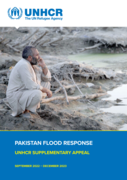
Pakistan, one of the countries that is most vulnerable to climate change, received more than three times its usual rainfall in August 2022. Torrential rains and flash-flooding began in early July 2022, severely damaging living areas, schools and other communal buildings in refugee villages and host
...

Addressing comorbidities and risk factors for TB is a crucial component of Pillar one of the End TB Strategy, which focuses on integrated patient-centred care and prevention, including action on TB and comorbidities. The Framework for collaborative action on TB and comorbidities aims to support coun
...

An estimated 1.3 billion people – or 16% of global population worldwide – experience a significant disability today. Persons with disabilities have the right to the highest attainable standard of health as those without disabilities. However, the WHO Global report on health equity for persons w
...

What are the FP and CAC competencies?
Through the clear articulation of the family planning and comprehensive abortion care (FP and CAC) competencies for the primary health care workforce, the aim is to advance improvements in FP and CAC service delivery by aligning health worker education approach
...
This document, Programme and curriculum development guide, presents a systematic approach to developing programmes and curricula for implementation of the family planning (FP) and comprehensive abortion care (CAC) competencies,and the theory behind the approach. Specifically, the aim is for effectiv
...
Die steigende Zahl der Menschen in Berlin ohne bzw. mit geringen Deutschkenntnissen führt zu einem wachsenden Mehrbedarf an Dolmetschleistungen in der Stadt. Sprachliche Hilfe bei der Verständigung in zahlreichen Lebensbereichen wird nötig – ob auf dem Amt, bei Arzt/Ärztin, vor Gericht oder de
...

In the last decade, Timor-Leste has made remarkable progress in strengthening its health system and improving the health status of its population. This has resulted in an increased life expectancy, and the achievement of Millennium Development Goals such as a reduction in infant and under-five morta
...

The overall objective of the framework is to support WHO and Members States in meaningful engagement of people living with NCDs, and mental health and neurological conditions to co-create and enhance related policies, programmes and services. This framework will contribute to advancing understanding
...
Despite the development of point-of-care diagnostic tests for syphilis, chlamydia, gonorrhoea, and trichomoniasis, none comply with all WHO criteria. This analysis overviews landscape analyses of point-of-care diagnostic technologies for Chlamydia trachomatis, Neisseria gonorrhoeae, Trichomonas vagi
...

The objective of Critical Considerations and Actions for Achieving Universal Access to Sexual and Reproductive Health in the Context of Universal Health Coverage through a Primary Health Care Approach is to provide guidance to WHO Member States for ensuring progress towards universal access to compr
...

The 2030 health-related Sustainable Development Goals call on countries to end AIDS as a public health threat and also to achieve universal health coverage. The World Health Organization (WHO) promotes primary health care (PHC) as the key mechanism for achieving universal health coverage, and the PH
...

Over the 20 years that followed, this unique partnership has invested more than US$53 billion, saving 44 million lives and reducing the combined death rate from the three diseases by more than half in the countries in which the Global Fund invests.

While there has been real progress in addressing the burden of disease in the WHO African region, the COVID-19 pandemic has highlighted the link between health, economics and security, as the region saw decades of progress threatened, including positive trends in decreasing inequality. In the Africa
...

WHO-OHCHR launch new guidance to improve laws addressing human rights abuses in mental health care
Ahead of World Mental Health Day, the World Health Organization (WHO) and the Office of the High Commissioner on Human Rights (OHCHR) are jointly launching a new guidance, entitled "Mental health, h
...
This article analyzes the impact of the COVID-19 pandemic on foreign aid. Using examples from Canadian foreign aid, it argues that, despite the terrible toll it is exacting, the crisis has accelerated some significant positive pre-existing trends, both by destabilizing the perception of aid as flowi
...

Vaccines are powerful weapons in the fight against pandemic viruses as shown by responses to both the 2009 H1N1 influenza and the COVID-19 pandemics. However, planning for accessing, allocating and deploying vaccines in a pandemic situation is a complex endeavour, beset with multiple challenges at a
...

Sexual abuse perpetrated against children is one of the most significant crises of our time. Child sexual abuse is a significant risk factor for children, in common with other forms of child maltreatment. Sexual abuse can have severe short- and long-term consequences on the physical, mental, social,
...
