
Filter
1451
Text search:
WHO
South
East
Asia
Regional
Office
Featured
Recommendations
149
New Publications
367
Language
Document type
No document type
698
Studies & Reports
341
Guidelines
202
Manuals
80
Strategic & Response Plan
62
Fact sheets
18
Training Material
17
Situation Updates
16
Resource Platforms
9
Infographics
4
Brochures
2
Online Courses
2
Countries / Regions
Global
103
South–East Asia Region
70
India
65
Myanmar / Burma
50
Asia
46
Nepal
44
Bangladesh
27
Western and Central Europe
25
Indonesia
21
Africa
21
Philippines
20
Cambodia
16
Ethiopia
14
Uganda
13
Thailand
13
Western Pacific Region
12
Syria
11
Kenya
11
Tanzania
11
Pakistan
9
Middle East and North Africa
9
Eastern Europe
9
Afghanistan
8
South Africa
8
Ukraine
7
Sri Lanka
7
Yemen
7
Laos
7
Liberia
6
Nigeria
6
Haiti
6
South Sudan
6
Zambia
6
Rwanda
6
Sierra Leone
5
Congo, Democratic Republic of
5
Ghana
5
East and Southern Africa
5
West and Central Africa
5
Latin America and the Carribbean
5
Venezuela
5
Russia
5
Vietnam
5
Somalia
4
China
4
Malawi
4
Mozambique
4
Sudan
4
Central African Republic
4
Timor Leste/ East Timor
4
Moldova
4
Senegal
3
Zimbabwe
3
Jordan
3
Lebanon
3
North Macedonia
3
Eastern Europe and Central Asia
3
Iran
3
Georgia
3
Guinea
2
Burkina Faso
2
Turkey
2
Malaysia
2
Papua New Guinea
2
Eswatini/ Swaziland
2
Mexico
2
Palestine
2
Albania
2
Kazakhstan
2
Belarus
2
Bosnia and Herzegovina
2
Morocco
1
USA
1
Saudi Arabia
1
Cameroon
1
Niger
1
Iraq
1
Egypt
1
Singapore
1
Argentina
1
Namibia
1
Peru
1
Brazil
1
Hungary
1
Croatia
1
Colombia
1
Ecuador
1
Greece
1
Madagascar
1
Lesotho
1
Other region
1
Paraguay
1
Bhutan
1
Poland
1
North Korea
1
Djibouti
1
Armenia
1
Mongolia
1
Tajikistan
1
Qatar
1
Romania
1
Kyrgyzstan
1
Gabon
1
Turkmenistan
1
Japan
1
Belgium
1
Maldives
1
Tunisia
1
Authors & Publishers
Publication Years
Category
Countries
347
Clinical Guidelines
152
Key Resources
108
Public Health
104
Women & Child Health
101
Capacity Building
25
Pharmacy & Technologies
18
Toolboxes
HIV
158
Mental Health
123
COVID-19
105
Planetary Health
90
TB
71
NTDs
63
Disability
51
AMR
49
Global Health Education
47
Refugee
42
Rapid Response
37
Natural Hazards
35
Caregiver
33
NCDs
28
Health Financing Toolbox
27
2.0 Rapid Response
24
Conflict
23
Malaria
23
Pharmacy
16
Zika
15
Cholera
11
Ebola & Marburg
10
Specific Hazards
7
Polio
6
Typhoon
3
Social Ethics
1
Findings, interpretations and conclusions
expressed in this document are based on infor-
mation gathered by GIZ and its consultants,
partners and contributors from reliable sources.

Technical Note
Recently, the approach to hazardous events has undergone a considerable shift, away from reactive activities focused on managing and responding to events and towards a more proactive process of emergency and disaster risk management (DRM). The ultimate goal of this shift in focus is
...

On Global Handwashing Day, WHO and UNICEF have released the first-ever global Guidelines on Hand Hygiene in Community Settings to support governments and practitioners in promoting effective hand hygiene outside health care – across households, pu
...
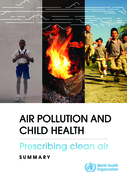
This report summarizes the latest scientific knowledge on the links between exposure to air pollution and adverse health effects in children. It is intended to inform and motivate individual and collective action by health care professionals to prevent damage to children’s health from exposure to
...


Every year, an estimated 15 million babies are born preterm – before 37 weeks of pregnancy. That is more than 1 in 10 live births. Approximately 1 million children die each year worldwide due to complications from their early birth. Those that survive often face a lifetime of ill-health including
...
China and Eurasia Forum Quarterly, Volume 6, No. 3 (2008) p. 101-128 © Central Asia-Caucasus Institute & Silk Road Studies Program
ISSN: 1653-4212
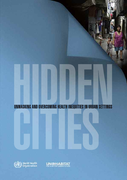
The World Health Organization (WHO) and United NationsHuman Settlements Programme (UN-HABITAT) joint globalreport, Hidden cities: unmasking and overcoming healthinequities in urban settings, exposes the extent to whichcertain city dwellers suffer di
...

9 June 2021
Since its launch, GLASS has expanded in scope and coverage and as of May 2021, 109 countries and territories worldwide have enrolled in GLASS. A key new component in GLASS is the inclusion of antimicrobial consumption (AMC) surveillance at the national level highlighted in this fourth G
...

Руководство предназначено для оказания помощи правительствам стран, в которых наблюдаются низкие уровни потребления контролируемых веществ, в исчислении их потр
...
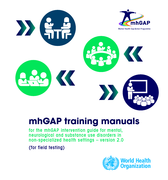
As part of the Mental Health Gap Action Programme, WHO has developed training manuals (Training of trainers and supervisors training manual and Training of health-care providers training manual) to support implementation of the mhGAP Intervention Gu
...
The WHO Global strategy on human resources for health: workforce 2030 encourages development partners and global health initiatives to leverage their support to health systems in countries to sustainably strengthen the health workforce. To assess th
...

The Strategy to respond to antimalarial drug resistance in Africa is a technical and advocacy document, grounded in the best available evidence to date and aimed at minimizing the threat and impact of antimalarial drug resistance of Plasmodium falciparum parasites in Africa. Its objectives are to: i
...

The key to a lasting world free of all forms of poliovirus lies in rapidly interrupting all remaining endemic transmission of WPV in the endemic areas of Pakistan and Afghanistan. This is the only way to ensure that such strains do not re-emerge globally through international spread. It lays the cor
...
This ten year global plan for measles and rubella outlines the strategy that needs to be fully implemented to achieve the measles and rubella goals endorsed by the World Health Assembly. The plan sets out the: vision, goals and targets for the 2011-2020 period, recommended strategies, guiding princi
...
