
Filter
685
Filtered Results: 685
Text search:
Martinez,
L.
Featured
Recommendations
49
New Publications
101
Language
Document type
No document type
258
Studies & Reports
209
Guidelines
122
Manuals
35
Training Material
24
Strategic & Response Plan
18
Fact sheets
14
Brochures
3
Situation Updates
1
Resource Platforms
1
Countries / Regions
Latin America and the Carribbean
43
Global
34
Paraguay
30
Colombia
22
Venezuela
12
Western and Central Europe
12
Brazil
11
Russia
11
Africa
7
Ecuador
7
Kenya
6
Haiti
6
Mexico
5
Cameroon
5
Peru
5
Argentina
5
Chile
4
Syria
4
Mozambique
4
Middle East and North Africa
4
Spain
4
Bolivia
4
South Africa
4
Uganda
4
Eastern Europe
4
Indonesia
4
Nepal
3
Ukraine
3
Rwanda
3
Malawi
3
Zimbabwe
3
Philippines
3
Tanzania
3
Germany
3
Liberia
3
India
3
Sierra Leone
2
Burkina Faso
2
Afghanistan
2
Cambodia
2
Asia
2
Congo, Democratic Republic of
2
South–East Asia Region
2
Yemen
2
Zambia
2
El Salvador
1
Lesotho
1
Turkey
1
Benin
1
Canada
1
Singapore
1
Morocco
1
Guinea
1
Guinea-Bissau
1
West and Central Africa
1
Western Pacific Region
1
Eastern Europe and Central Asia
1
North America
1
Uruguay
1
East and Southern Africa
1
Latvia
1
Côte d’Ivoire / Ivory Coast
1
Romania
1
Central African Republic
1
Ethiopia
1
Angola
1
South Sudan
1
Madagascar
1
Eswatini/ Swaziland
1
Pakistan
1
Guatemala
1
Authors & Publishers
Publication Years
Category
Countries
200
Women & Child Health
55
Clinical Guidelines
54
Public Health
44
Key Resources
18
Capacity Building
8
Pharmacy & Technologies
4
Toolboxes
Mental Health
87
COVID-19
85
NTDs
64
TB
45
Planetary Health
39
HIV
37
NCDs
32
AMR
22
Disability
21
Caregiver
19
Health Financing Toolbox
15
Zika
15
Global Health Education
13
Refugee
12
Malaria
11
Rapid Response
8
Ebola & Marburg
7
Conflict
7
Natural Hazards
6
Pharmacy
3
Specific Hazards
1
Cholera
1
Social Ethics
1
2.0 Rapid Response
1
Polio
1

Cardiovascular disease (CVD) is the leading cause of global deaths, with the majority occurring in low- and middle-income countries (LMIC). The primary and secondary prevention of CVD is suboptimal throughout the world, but the evidence-practice gaps are much more pronounced in LMIC. Barriers at the...
Version 02, veröffentlicht am 23.12.2020
Tax capacity—the policy, institutional, and technical capabilities to collect tax revenue—is part of a deeper process of state building that is essential for achieving the sustainable development goals. This Staff Discussion Note shows that developing countries have made some progress in revenue...
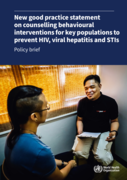
Policy Brief. Good practice statement: When planning and implementing a response for HIV, viral hepatitis and sexually transmitted diseases (STIs), policy-makers and providers should be aware that
counselling behavioural interventions aimed to change behaviours to reduce risks associated
with th...
PLoS ONE 13(9): e0204088. .https://doi.org/10.1371/journal.pone.0204088.
Behaviour-change interventions have been consistently considered an essential part of comprehensive HIV, STI and unintended pregnancy prevention. In 2015, the World Health Organization reviewed and assessed existing evidence ...
Étude menée dans le cadre du Projet "Ville Handicap" dans les communes d'Antsiranana et de Mahajanga
This summary assesses the current state of evidence on each approach in tabular form, providing: the definition and objectives; evidence of effectiveness; operational considerations (e.g., training, staffing, and logistics); cost considerations and evidence on cost-effectiveness; operational success...
Recommandations formalisées d'experts
mBio, Vol. 6 Issue 2, March/April 2015
Available evidence demonstrates that direct patient contact and contact with infectious body fluids are the primary modes for Ebola virus transmission, but this is based on a limited number of studies. In this review, the authors address what we know and what ...

Buruli ulcer (BU) is a bacterial skin infection that is caused by Mycobacterium ulcerans and mainly affects people who reside in the rural areas of Africa and in suburban and beach resort communities in Australia.
[Preface]. For more than forty years Primary Health Care (PHC) has been recognized as the cornerstone of an effective and responsive health system. The Alma-Ata Declaration of 1978 reaffirmed the right to the highest attainable level of health, with equity, solidarity and the right to health as its ...

9 June 2021
Since its launch, GLASS has expanded in scope and coverage and as of May 2021, 109 countries and territories worldwide have enrolled in GLASS. A key new component in GLASS is the inclusion of antimicrobial consumption (AMC) surveillance at the national level highlighted in this fourth G...

INTRODUCTION: The COVID-19 pandemic has disrupted health systems around the world. The objectives of this study are to estimate the overall effect of the pandemic on essential health service use and outcomes in Mexico, describe observed and predicted trends in services over 24 months, and to estimat...

An estimated 1.3 billion people – or 16% of global population worldwide – experience a significant disability today. Persons with disabilities have the right to the highest attainable standard of health as those without disabilities. However, the WHO Global report on health equity for persons w...
As we approach World Asthma Day on the May 2, 2023, we reflect on the theme “ Asthma Care for All”. Prevalence of Asthma is increasing amongst children, adolescents and adults. Under-diagnosis, underutilization of inhaled corticosteroids, inaccessibility of treatment, and unaffordability of medi...

Asthma is the most common noncommunicable disease in children, and among the most common in adults. According to the most recent estimates from the Global Asthma Network Phase I study, around one in 10 children and adults have symptoms of asthma and one in 20 school-aged children have severe asthma ...

Rev. Panam Salud Publica. 2017;41:e153. doi: 10.26633/RPSP.2017.153
Worldwide, over 6 million people are infected with Trypanosoma cruzi, the pathogen that causes Chagas disease (CD). In the Americas, CD creates the greatest burden in disability-adjusted life years of any parasitic infection. In Co...

Intensive Care Med (2009) 35:9–29DOI 10.1007/s00134-008-1336-9
Although thousands of papers have been devoted tohospital-acquired pneumonia (HAP), many controversiesremain, and management of HAP is probably often sub-optimal. Several reviews or guidelines have been pub-lished rec...

Seizures constitute the most common neurological problem in children and the majority of epilepsy has its onset in childhood. Appropriate diagnosis and management of childhood epilepsy is essential to improve quality of life in these children. Evidence-based clinical practice guidelines, modified to...
Conference Report Sao Paulo, Brazil 22-24 October 2015
