
Filter
1936
Text search:
Global
Humanitarian
Assistance
Featured
180
548
Language
Document type
905
419
192
161
128
48
47
24
7
2
1
1
Countries
136
98
75
55
53
49
47
45
40
39
31
31
29
27
27
26
26
25
23
23
20
20
17
16
16
15
15
15
14
14
14
14
13
12
11
11
11
10
10
10
10
10
9
9
8
8
8
8
8
8
7
7
7
6
6
6
6
5
5
5
5
4
4
4
4
4
4
4
4
3
3
3
3
3
3
3
3
2
2
2
2
2
2
2
2
2
2
2
1
1
1
1
1
1
1
1
1
1
1
1
1
1
1
1
1
1
1
1
1
1
1
1
1
1
1
1
1
1
1
Authors & Publishers
Publication Years
Category
603
337
121
84
56
36
4
Toolboxes
247
246
127
117
108
98
78
66
64
63
39
39
32
20
18
16
16
14
13
11
11
10
4
3
2
2
1
Addendum: 2020 mid-year COVID-19 resvision, summary of the reprioritisation & additional requirements in response to COVID-19
In June and July 2020, a mid-year revision of the 2020 South Sudan Regional Refugee Response Plan (RRRP) was undertaken as an inter-agency consultative process to discuss
...

Strengthening global health security to protect the world against future epidemics and pandemics requires well-tested and decentralized capacities for the local detection and rapid containment of outbreaks of infectious disease. For such capacitie
...
Disaster Recovery Toolkit
Disaster Recovery Toolkit
Disaster Recovery Toolkit

The Humanitarian Pandemic Preparedness (H2P) Initiative and its many partners have developed ready-to-use training curricula for district- and community-level leaders, and community volunteers and workers in order to minimize morbidity and mortality
...

Independent Monitoring Board of the Global Polio Eradication Initiative (Twelfth Report: October 2015)
Responding to a poliovirus event and outbreak, Part 1: General (SOPs) describes the general principles and steps to facilitate timely and effective responses to poliovirus events and outbreaks, and incorporate lessons learned from recent previous outbreak response efforts. This document summarizes r
...

- Build community resilience to coastal hazards by improving capacity of inclusive disaster management systems.
- Reduce the mortality rate of persons with disabilities in situations of risk.
- Raise awareness about inclusive policies, practices and disaster risk reduction strategies that address
...
English Analysis on World about Agriculture, Climate Change and Environment, Drought, Flood and more; published on 27 Oct 2021 by GCA
The marathon to eradicate polio is on its final lap: the world is more than 99% of the way to success. After millennia of living with poliovirus and suffering the paralysis it causes, today nearly all the world’s people live in polio-free countries; two of the three strains of wild poliovirus (WPV
...
Cholera remains an issue of major public health importance in Kenya. Kenya has in recent years experienced outbreaks affecting different parts of the country
THE SYRIAN ARAB REPUBLIC, IRAQ, JORDAN, LEBANON, TURKEY, WEST BANK AND GAZA STRIP, EGYPT
This brief focuses specifically on the Grand Nord (Great North): the Beni and Lubero territories of northern North Kivu that are the epicentre of the outbreak. Further participatory enquiry should be undertaken with the affected populations, but given ongoing transmission, conveying key consideratio
...

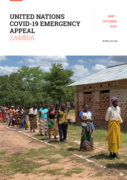
The Government of Republic of Zambia reported the first confirmed cases of COVID-19 on 18th March 2020. As of April 27th, 2020, there were 89 confirmed cases, three deaths and 42 recoveries. Confirmed cases are located in three provinces: Lusaka (83 cases), Copperbelt province (5 cases) and Central
...
The report also provides country-specific examples showing how direct engagement translated into the adoption of concrete measures, including national legislation and policies. Finally, the report presents key recommendations aimed at intensifying the actions of the international and the
...
