
Filter
4767
Text search:
preventive
Featured
Recommendations
436
New Publications
1306
Language
Document type
No document type
2649
Studies & Reports
725
Guidelines
600
Manuals
257
Strategic & Response Plan
230
Fact sheets
115
Training Material
64
Situation Updates
46
Resource Platforms
32
Infographics
23
Online Courses
9
Brochures
7
Dashboards/Maps
6
Videos
3
Countries / Regions
India
238
Global
203
Kenya
165
Western and Central Europe
115
Nigeria
109
Uganda
105
Ethiopia
104
Tanzania
101
Sierra Leone
91
Liberia
87
Malawi
86
Nepal
85
South Africa
81
Bangladesh
72
Ghana
70
Zambia
69
Latin America and the Carribbean
68
Myanmar / Burma
66
Namibia
62
Africa
62
Rwanda
60
Ukraine
49
Philippines
45
Eastern Europe
41
Syria
40
Cambodia
33
Senegal
32
Zimbabwe
32
Mozambique
32
South–East Asia Region
31
Asia
29
Congo, Democratic Republic of
28
Lesotho
28
South Sudan
27
East and Southern Africa
25
Russia
25
Haiti
24
Indonesia
24
Brazil
24
Botswana
24
West and Central Africa
23
Guinea
20
Germany
20
Middle East and North Africa
18
Eastern Europe and Central Asia
17
Burkina Faso
16
Yemen
16
Venezuela
16
Cameroon
15
Vietnam
14
Madagascar
13
Mali
12
Eswatini/ Swaziland
12
Moldova
12
Somalia
11
Pakistan
11
Afghanistan
11
Lebanon
11
Central African Republic
10
Western Pacific Region
10
Benin
9
Thailand
8
Peru
8
North Macedonia
8
Iraq
7
Sudan
7
Burundi
7
Colombia
7
Laos
7
Georgia
7
North America
7
Jordan
6
China
6
Sri Lanka
6
Palestine
6
Tajikistan
6
USA
5
Turkey
5
Angola
5
Chile
5
Albania
5
Armenia
5
Mexico
4
Southern Africa
4
Niger
3
Egypt
3
Chad
3
Gambia
3
Ecuador
3
El Salvador
3
Libya
3
Paraguay
3
Italy
3
Timor Leste/ East Timor
3
Iran
3
Kyrgyzstan
3
France
3
United Kingdom
3
Portugal
3
Spain
3
Belarus
3
Guinea-Bissau
2
Saudi Arabia
2
Togo
2
Malaysia
2
Argentina
2
Dominican Republic
2
Serbia
2
Honduras
2
Bolivia
2
Bhutan
2
Poland
2
Mongolia
2
Canada
2
Lithuania
2
Turkmenistan
2
Japan
2
Azerbaijan
2
Côte d’Ivoire / Ivory Coast
1
Mauritania
1
Ireland
1
Papua New Guinea
1
Switzerland
1
Hungary
1
Croatia
1
Guatemala
1
Nicaragua
1
North Korea
1
Djibouti
1
Qatar
1
Bulgaria
1
Estonia
1
Romania
1
Uzbekistan
1
Kazakhstan
1
Jamaica
1
Denmark
1
Belgium
1
South Korea
1
Bosnia and Herzegovina
1
Latvia
1
Belize
1
Costa Rica
1
Oman
1
Panama
1
Authors & Publishers
Publication Years
Category
Countries
1984
Clinical Guidelines
335
Public Health
293
Key Resources
229
Women & Child Health
207
Capacity Building
81
Pharmacy & Technologies
40
Toolboxes
TB
415
HIV
413
COVID-19
401
Mental Health
274
NTDs
176
Caregiver
123
Malaria
122
Ebola & Marburg
115
Conflict
104
Planetary Health
103
NCDs
100
Rapid Response
88
Refugee
82
Disability
77
Global Health Education
76
AMR
76
Pharmacy
57
2.0 Rapid Response
48
Cholera
46
Health Financing Toolbox
45
Natural Hazards
41
Zika
30
Polio
22
Specific Hazards
14
Social Ethics
5
Typhoon
4
South Sudan
1
Regulations by the Minister of Health (the “Minister”) Governing The Control and Abatement of the Spread and Eradication of the Ebola Virus Disease (EVD) in Liberia, hereinafter


PLoS ONE 18(5): e0285031. https://doi.org/10.1371/journal.pone.0285031
The study aims to integrate HPV vaccination into routine care in adolescent HIV clinics. To achieve success, we will co-design a package of implementation strategies using a previously successful implementation research approach
...
Tax capacity—the policy, institutional, and technical capabilities to collect tax revenue—is part of a deeper process of state building that is essential for achieving the sustainable development goals. This Staff Discussion Note shows that developing countries have made some progress in revenue
...

To deliver on the Global Fund Strategy milestones
for 2028 and ensure we keep the SDG 3 target
within reach, we need to raise US$18 billion to
fund the Global Fund’s next three-year grant cycle.
With the COVID-19 pandemic and the ensuing energy and cost-of-living crises, many OECD countries have had to face significant economic and societal challenges over the last five years. The succession of crises has had important implications for health systems and the available resources allocated to
...

The Global Health Expenditure Report delves into the intricate landscape of global economies and health systems. This year, it focuses on health spending in 2022, the third year of the COVID-19 pandemic. It shows how countries around the world responded to the health and economic shocks of the pande
...

The role of evidence in the journey towards universal health coverage is paramount. Financial risk protection monitoring, the major focus of this report, informs where the WHO African Region stands in reducing the financial hardship people face due to health expenses. This report details the status
...
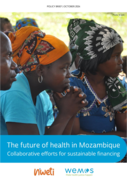
As part of the project ‘Equitable health financing for a strong health system in Mozambique’, N’weti and Wemos developed this policy brief with actionable policy recommendations for the Mozambican government and international organizations on how to increase resources for health in a sustainab
...

This paper was commissioned by N´weti and Wemos as part
of the project “Equitable health financing for a strong health
system in Mozambique”. Its purpose is to contribute to the
debate of the Mozambican Ministry of Health’s draft Health
Sector Financing Strategy (HSFS) 2025 – 2034
Each year since 2007, G-FINDER has provided policy-makers, donors, researchers and industry with a comprehensive analysis of global investment into research and development of new products to
prevent, diagnose, control or cure neglected diseases in low- and middle-income countries, making it the go
...

Reflecting its commitment to achieving the Sustainable Development Goals (SDGs), Namibia volunteered to undertake a second national review of the SDGs in 2021. The focus is on three SDG dimensions, namely, Economic, Social, and Environmental. These three dimensions are comprehensively integrated in
...

Africa’s health sector is facing an unprecedented financing crisis, driven by a sharp decline of 70% in Official Development Assistance (ODA) from 2021 to 2025 and deep-rooted structural vulnerabilities. This collapse is placing immense pressure on Africa’s already fragile health systems as ODA
...

Achieving financial risk protection for the whole population requires significant financing for health. Health systems in low- and middle-income countries (LMIC) are plagued with persistent underfunding, and recent reductions in official development assistance have been registered. To create fiscal
...

This comprehensive HPFM report thoroughly explores Kenya’s health financing landscape. It provides an in-depth analysis of the current state of affairs and sheds light on required strategic changes in health financing. The report points out the need to improve public financial management within th
...

The COVID-19 pandemic exposed critical gaps in the global response to health crises, particularly in the financing of pandemic prevention, preparedness, response, recovery, and reconstruction. This chapter presents a comprehensive framework for pandemic financing that spans the entire pandemic cycle
...

There has never been a more critical moment to invest in WHO, and strengthen the unique role it plays in global health. Now is the time to sustainably finance WHO and invest in a healthy return for all.

All malaria-endemic countries in the Region of the Americas have taken on the challenge to eliminate the disease and to put in place measures to orient their health programs and strategies in that direction. This manual explains how to implement measures to achieve malaria elimination and prevent it
...

The Malaria Ministerial Conference, co-hosted by WHO and the Government of Cameroon on 6 March 2024, brought together more than 400 stakeholders, including Ministers of Health and senior representatives from the African countries hardest hit by malaria, global health leaders, scientists, civil socie
...

The guidelines are primarily intended for health-care professionals working in first- or second-level health-care facilities, including emergency, inpatient and outpatient services. They are also directed at policy-makers, health-care planners and programme managers, academic institutions, non-gover
...
