
Filter
2131
Text search:
World
Health
Organization,
Health
Cluster
Featured
223
634
Language
Document type
1105
365
294
134
115
46
30
27
8
4
1
1
1
Countries
100
56
50
47
45
45
44
43
42
41
40
37
36
34
34
29
29
28
27
26
26
23
22
22
22
21
20
19
17
16
14
12
12
11
11
11
11
11
11
11
11
11
9
9
8
8
8
8
8
8
8
7
7
7
6
6
6
5
5
4
4
4
3
3
3
3
3
3
3
3
3
2
2
2
2
2
2
2
2
2
2
2
2
2
2
2
2
2
1
1
1
1
1
1
1
1
1
1
1
1
1
1
1
1
1
1
1
1
1
1
1
1
1
1
1
1
1
1
1
Authors & Publishers
Publication Years
Category
831
199
162
130
127
28
14
Toolboxes
243
133
128
84
74
66
59
58
52
51
50
39
36
33
32
31
29
28
25
18
17
17
15
14
3
2
1

The recommendations in this guideline are intended to inform the development of relevant national- and local-level health policies and clinical protocols. Therefore, the target audience includes national and local public
...
WHO has issued a new recommendation on the length of bladder catheterization following surgical repair of a simple obstetric urinary fistula. Currently the length of catheterization is not standard and ranges from 5 to 42 days. The new guidance recommends a 7–10 day period of bladder catheterizati
...
This guidance document sets out a methodology to identify and track financing to the WASH sector in a coherent and consistent manner across several countries. It is designed to help countries track financing to the WASH sector on a regular and comparable basis and analyse this information to support
...

The strategic priorities of the CCS 2014–2018 are:
(1) Strengthening the health system.
(2) Enhancing the achievement of communicable disease control targets.
(3) Controlling the growth of the noncommunicable disease burden.
(4 ...
(1) Strengthening the health system.
(2) Enhancing the achievement of communicable disease control targets.
(3) Controlling the growth of the noncommunicable disease burden.
(4 ...

This new guideline on non-clinical interventions to reduce unnecessary caesarean sections incorporates the views, fears and beliefs of both women and health professionals about caesarean sections. It also considers the complex dynamics and limitatio
...
Q3: What approaches are available to enable non-specialized health care providers to identify children with intellectual disabilities, including intellectual disabilities due to specific causes?

The following protocol has been designed to investigate the First Few X cases (FFX) and their close contacts. It is envisioned that the FFX 2019-nCoV investigation will be conducted across several countries or sites with geographical and demographical diversity. Using a standardized protocol such a
...

The following protocol has been designed to investigate the extent of infection, as determined by seropositivity in the general population, in any country in which COVID-19 virus infection has been reported. Each country may need to tailor some aspects of this protocol to align with public
...

9 September 2020
In a snapshot, fair allocation of vaccines will occur in the following way:
An initial proportional allocation of doses to countries until all countries reach enough quantities to cover 20% of their population
This document is also available in Arabic | Chinese | French | R
...
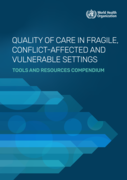
Quality of care in fragile, conflict-affected and vulnerable settings: tools and resources compendium
recommended
This compendium represents a curated, pragmatic and non-prescriptive collection of tools and resources to support the implementation of interventions to improve quality of care in such contexts. Relevant tools and resources are listed under five areas: Ensuring access and basic infrastructure for qu
...
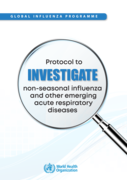
This protocol provides an approach for public health authorities and investigators at all levels to plan for and conduct investigations of nonseasonal influenza and other emerging respiratory diseases and provides tips and reminders for linking the
...

Workplaces outside of healthcare facilities can be also settings for transmission of COVID-19. Outbreaks of COVID-19 has been reported in various types of workplaces and job categories.
All workers should be protected from acquiring COVID-19 because of their work. The prevention of COVID-19 in
...

Infection prevention and control in the context of coronavirus disease (COVID-19): A living guideline
recommended
This second edition of the Infection prevention and control in the context of coronavirus disease (COVID-19): A living guideline provides the most up to date technical guidance on mask use in community settings in the context of COVID-19.
In this edition, new information includes updated mask re
...
