
Filter
864
Text search:
World
Health
Organization
(WHO),
Regional
Office
for
South-East-Asia
Featured
Recommendations
118
New Publications
231
Language
Document type
No document type
396
Studies & Reports
179
Guidelines
159
Manuals
44
Strategic & Response Plan
39
Training Material
13
Fact sheets
10
Situation Updates
8
Resource Platforms
8
Infographics
4
Brochures
2
Online Courses
2
Countries / Regions
South–East Asia Region
67
Global
63
India
45
Asia
38
Myanmar / Burma
27
Nepal
23
Bangladesh
17
Philippines
12
Indonesia
11
Western Pacific Region
11
Africa
11
Thailand
10
Cambodia
9
Western and Central Europe
9
Afghanistan
5
Sri Lanka
5
Pakistan
4
China
4
South Africa
4
Eastern Europe
4
Laos
4
Russia
4
Vietnam
4
Nigeria
3
Ethiopia
3
Ghana
3
Uganda
3
Syria
3
Kenya
3
East and Southern Africa
3
West and Central Africa
3
Middle East and North Africa
3
Venezuela
3
Timor Leste/ East Timor
3
Burkina Faso
2
Congo, Democratic Republic of
2
Haiti
2
South Sudan
2
Tanzania
2
Rwanda
2
Mozambique
2
Sudan
2
Yemen
2
Latin America and the Carribbean
2
Iran
2
Sierra Leone
1
Liberia
1
Senegal
1
Morocco
1
USA
1
Saudi Arabia
1
Cameroon
1
Iraq
1
Jordan
1
Lebanon
1
Zambia
1
Papua New Guinea
1
Namibia
1
Eswatini/ Swaziland
1
Brazil
1
Ukraine
1
Ecuador
1
Greece
1
Mexico
1
Eastern Europe and Central Asia
1
Other region
1
Paraguay
1
Bhutan
1
Palestine
1
North Korea
1
Albania
1
Mongolia
1
Tajikistan
1
Kazakhstan
1
Georgia
1
Tunisia
1
Bosnia and Herzegovina
1
Authors & Publishers
Publication Years
Category
Countries
187
Clinical Guidelines
125
Public Health
75
Women & Child Health
67
Key Resources
42
Capacity Building
21
Pharmacy & Technologies
14
Toolboxes
HIV
88
Mental Health
72
TB
60
COVID-19
59
NTDs
49
Planetary Health
41
AMR
36
Caregiver
31
Global Health Education
29
Rapid Response
25
NCDs
21
Disability
19
Malaria
19
Pharmacy
16
2.0 Rapid Response
16
Zika
12
Refugee
9
Health Financing Toolbox
9
Conflict
7
Natural Hazards
7
Ebola & Marburg
6
Specific Hazards
6
Cholera
4
Polio
4
Typhoon
1

These guidelines provide updated evidence-based recommendations on the priority HCV-related topics from the 2018 WHO Guidelines for the care and treatment of persons diagnosed with chronic hepatitis
...

The objective of this manual is to guide managers of schistosomiasis and soil-transmitted helminthiases control programmes towards the elimination of these diseases as public health problems informed by evidence generated through monitoring and eval
...

The mhGAP community toolkit: field test version is an integral part of WHO's Mental Health Gap Action Programme (mhGAP), and aims at scaling up services f
...
2nd edition. The 2018 Roadmap incorporates an additional critical population: adolescents. Despite making up 1 in 6 of the world’s people, adolescents have been largely overlooked as global momentum to address TB has grown. Spanning the ages of 10
...
Vitamin D deficiency is thought to be common among pregnant women, particularly during the winter months, and has been found to be associated with an increased risk of pre-eclampsia, gestational diabetes mellitus, preterm birth, and other tissue-specific conditions.
This guideline is intended
...

WHO has published the first-ever guidance on the clinical management of diphtheria. The only previously available guidance was an operational protocol. The new guidance followed the rigorous process for
...
This guideline provides global, evidence-informed recommendations on daily iron supplementation in infants and children, as a public-health intervention for the prevention of anaemia and iron defici
...

The report is geared towards mayors, local government officials and city policy planners.It highlights key areas where city leaders can tackle the drivers of NCDs, including tobacco use, air pollution, poor diets and lack of exercise, and improve road safety.
From anti-tobacco actions in Beijing a
...

Download (7.4 MB)
Overview
Epilepsy is one of the most common neurological disorders globally. The WHO epilepsy technical brief aims to strengthen action for epilepsy and complements the Intersect
...
TB remains one of the world’s deadliest infectious diseases, second only to COVID-19, and drug-resistant TB strains are still a major concern. In the fight against TB, urgent investment is critical, especially in the context of the ongoing pandemi
...
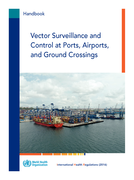
The purpose of this handbook is to provide guidance to Member States on the practical aspects of maintaining sanitary standards at international borders at ports, airports, and ground crossings (points of entry) as set out in the International Health
...

These guidelines provide new and updated recommendations on the use of point-of-care testing in children under 18 months of age and point-of-care tests to monitor treatment in people living with HIV; the treatment monitoring algorithm; and timing of antiretroviral therapy (ART) among people living w
...

Ahead of World Malaria Day, the WHO Global Malaria Programme published a new operational strategy outlining its priorities and key activities up to 2030 to help change the trajectory of malaria tren
...

Despite the significant role of vector control in national leishmaniasis control programmes, the programmatic community perceives vector control as the weakest component of leishmaniasis control strategies in terms of resources, scientific evidence of the usefulness of interventions and capacity
...
Laboratory biosafety manual
recommended
4th edition
The WHO Laboratory Biosafety Manual (LBM) has been in broad use at all levels of clinical and public health laboratories, and other biomedical sectors globally, serving as a de facto gl
...

The coronavirus disease (COVID-19) pandemic exacerbated pre-existing inequalities in the treatment and care of noncommunicable diseases (NCDs). This report examines the effect of the COVID-19 pandemic on access to NCD medicines, and the policies and strategies implemented by countries and
...

mhGAP is based on evidence-based technical guidelines (4) and provides a set of tools and
training packages to extend service provision. The mhGAP Intervention Guide (mhGAP-IG)
for MNS disorders in non-specialized
...

On Global Handwashing Day, WHO and UNICEF have released the first-ever global Guidelines on Hand Hygiene in Community Settings to support governments and practitioners in promoting effective hand hygiene outside
...
The threat posed by antimicrobial resistance (AMR) to public health as well as global health security has been reiterated in umerous World
...
The WHO Living guideline: Drugs to prevent COVID-19 contains the Organization’s most up-to-date recommendations for the use of drugs to prevent C
...
