
Filter
1189
Text search:
maladies
non
transmissibles
Featured
78
155
Language
Document type
338
304
172
99
95
43
36
25
19
16
15
10
10
5
1
Countries
376
82
51
42
39
36
23
20
17
17
16
14
11
11
10
9
9
8
8
8
7
6
6
5
4
4
3
3
3
3
3
3
3
2
2
2
2
2
2
2
2
2
2
1
1
1
1
1
1
1
1
1
1
1
1
1
1
1
1
1
1
1
1
1
1
1
1
1
1
1
1
1
1
1
Authors & Publishers
Publication Years
Category
625
276
121
43
38
24
7
Toolboxes
546
56
41
24
24
22
18
18
17
16
15
11
10
10
9
9
7
7
6
5
4
2
2

Africa CDC Non Communicable Diseases, Injuries Prevention and Control and Mental Health Promotion Strategy
recommended
Non-communicable diseases (NCDs) & injuries and mental health conditions constitute a serious impediment to achieving the vision of Agenda 2063 to build an integrated, prosperous, and peaceful Africa driven by its own citizens. Each year, these cond
...
The Africa Centres for Disease Control and Prevention (Africa CDC) was established in 2017, after the west Africa Ebola virus disease outbreak. Upon creation, the
role of Africa CDC was to mandate strengthening of the capacity of public health institutions in Africa to prevent, detect, and respond
...
This guideline provides evidence-informed guidance on the use of non-sugar sweeteners to reduce the risk of unhealthy weight gain and diet-related noncommunicable diseases in adults and children. The guidance in this guideline is not based on toxic
...
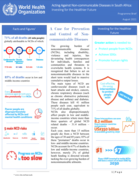
The growing burden of noncommunicable diseases (NCDs), including disability, violence and injuries, has devastating health consequences for individuals, families and communities and threatens to overwhelm health systems. It is recognized that failure to act on noncommunicable diseases in the short t
...
The uploaded document explores the Mediterranean diet and physical activity as effective strategies to prevent and manage non-communicable diseases (NCDs). It discusses the diet's nutritional components, such as olive oil, fruits, and vegetables, an
...
The document discusses physical inactivity as a major risk factor for non-communicable diseases (NCDs), which contribute to two-thirds of global deaths, primarily in low- and middle-income countries. It emphasizes the global prevalence of physical i
...

The article examines the nutritional and lifestyle-related risk factors contributing to the prevalence of non-communicable diseases (NCDs) such as cardiovascular diseases, diabetes, and cancer in the Eastern Mediterranean Region (EMR). It highlights
...
Diabetes mellitus (hereafter referred to as diabetes) is a chronic, progressive disease characterized by elevated blood glucose levels. Diabetes can lead to complications such as cardiovascular disease (CVD) and premature death, and can damage eyes, kidneys and nerves. Globally, more than 400 millio
...
The article "Time to Align: Development Cooperation for the Prevention and Control of Non-Communicable Diseases" argues for greater international cooperation and investment in addressing non-communi
...
The article "The Rising Burden of Non-Communicable Diseases in the Americas and the Impact of Population Aging" examines how the aging population in the Americas is contributing to the growing burden of no
...
Non-communicable diseases (NCDs) are major global public health concerns that cause nearly three-quarters of the burden of mortality worldwide. Cardiovascular diseases, cancer, chronic respiratory diseases, and diabetes alone account for over eight
...

The article "Non-communicable diseases, injuries, and mental ill-health in Africa: the role of the Africa Centres for Disease Control and Prevention" examines the role of the Africa CDC in addressing non
...
Ce rapport inclut des analyses tirées des consultations régionales informelles menées dans la Région africaine, dans les Caraïbes et en Amérique du Nord, dans la Région européenne, dans la Région de la Méditerranée orientale, en Amérique latine ainsi que dans la Région de l’Asie du Su
...

This report is one of the first major products of the newly established Precision Public Health Metrics unit of the UCN cluster of the WHO Regional Office for Africa. The report presents national trends in communicable and non-communicable disease b
...
The NCD Alliance website provides information and resources on preventing and controlling non-communicable diseases (NCDs), including cardiovascular diseases, cancer, respiratory diseases, diabetes, and mental health conditions. The Alliance advocat
...
The document titled "Use of Non-Sugar Sweeteners: WHO Guideline" provides recommendations from the World Health Organization on the use of non-sugar sweeteners (NSS) to reduce sugar intake, manage w
...

The document, "Progress on the Prevention and Control of Non-Communicable Diseases," reports on global efforts to reduce the impact of NCDs, such as heart disease, cancer, diabetes, and chronic respiratory diseases, following the commitments made at
...
The document, "Progress on the Prevention and Control of Non-Communicable Diseases," reports on global efforts to reduce the impact of NCDs, such as heart disease, cancer, diabetes, and chronic respiratory diseases, following the commitments made at
...

The document, "Progress on the Prevention and Control of Non-Communicable Diseases," reports on global efforts to reduce the impact of NCDs, such as heart disease, cancer, diabetes, and chronic respiratory diseases, following the commitments made at
...
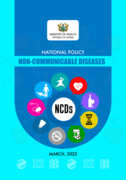
Non- Communicable Diseases (NCDs) over the years have not been given much attention in Ghana and in most Low and Middle- Income Countries (LMICs). The overwhelming burden of communicable diseases and the scarcity of resources has led to the health o
...
